Torque converter
A torque converter is the fluid coupling in an automatic transmission that transfers engine power to the gearbox and multiplies torque when the car pulls away.

What it means
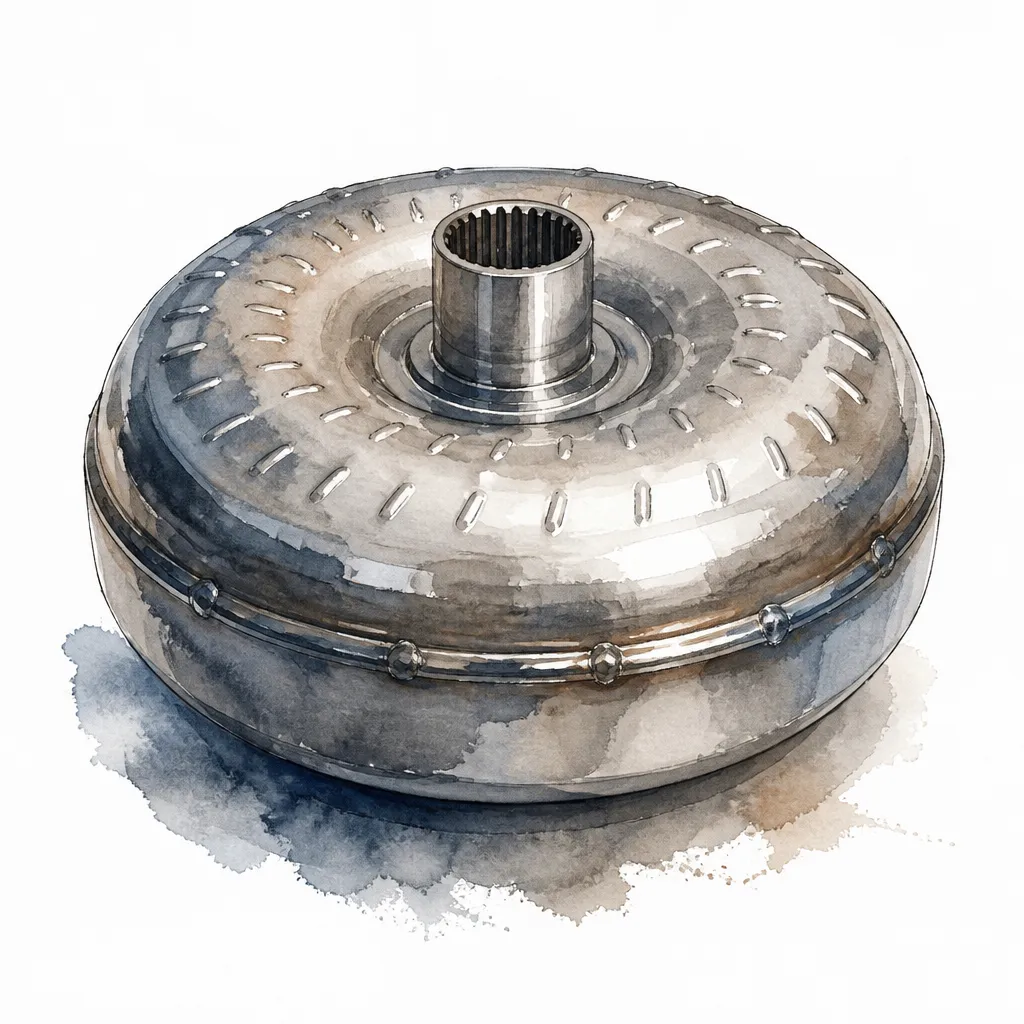
A conventional automatic gearbox has no clutch pedal. In its place sits a torque converter, a sealed doughnut-shaped unit filled with transmission fluid that bolts between the engine and the gearbox. One half, the impeller, is driven by the engine and flings fluid outward; the other half, the turbine, is connected to the gearbox and is spun by that fluid. Because the link is fluid rather than solid, the engine can idle while the car stands still, and the converter actively multiplies torque off the line, which is why an automatic feels strong pulling away. A stator in the middle redirects the fluid to make that multiplication possible. At cruising speed a lock-up clutch inside the converter clamps the two halves together so no power is lost to fluid slip. A failing converter shows up as shudder under light throttle, a flare in engine speed without acceleration, or overheated, burnt-smelling fluid.
Why it matters in Singapore
Almost every car on Singapore roads is an automatic, and the torque converter does its hardest work in exactly the conditions found here: constant crawling in expressway jams, repeated pull-aways at traffic lights, and long idles in carparks, all in tropical heat that pushes transmission fluid temperatures up. Hot, tired fluid is the main thing that wears a converter and its lock-up clutch. Keeping the fluid in good condition is the single biggest factor in how long the converter lasts.

How Revol Carz handles this
Revol Carz Garage diagnoses converter-related symptoms by reading transmission fault codes, checking fluid condition, and confirming whether shudder traces to the lock-up clutch on a road test. We service automatic transmissions on BMW, Mercedes, Audi, and Volkswagen with the correct fluid specification, and advise honestly when a fault points to the converter rather than the fluid.