Turbocharger
A turbocharger is an exhaust-driven device that compresses intake air so a smaller engine produces more power, now standard on most modern European cars.

What it means
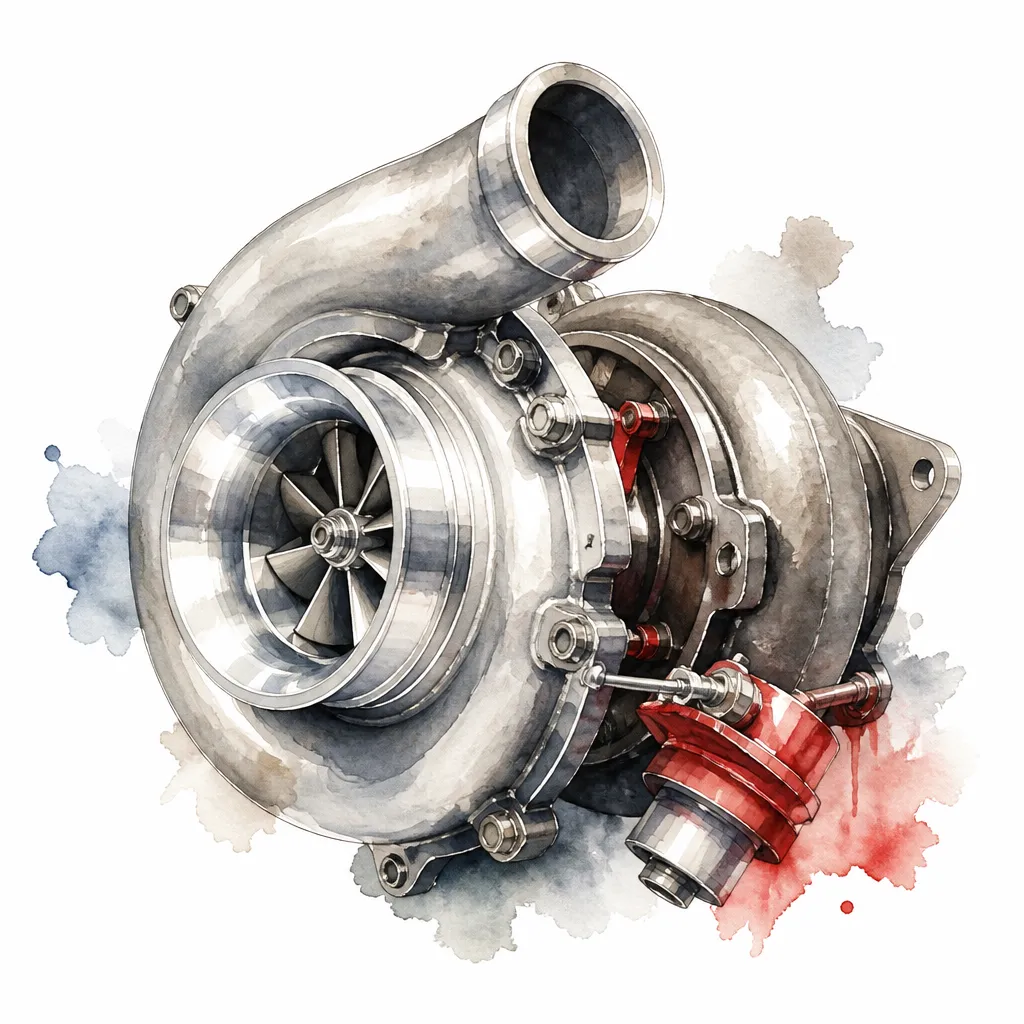
A turbocharger has two halves joined by a single shaft. On one side, hot exhaust gas leaving the engine spins a turbine wheel. That shaft drives a compressor wheel on the other side, which packs more air into the cylinders than the engine could draw on its own. More air means more fuel can be burned, so a 2.0-litre turbo engine can match the power of a much larger naturally aspirated one while using less fuel at light loads. The shaft spins at well over 100,000 rpm and runs at high temperature, so it relies on a constant feed of clean engine oil for both lubrication and cooling. When the oil is dirty or the interval is stretched, the bearings inside the turbo are usually the first part of the engine to suffer. Failure shows up as blue exhaust smoke, a whistling or whining noise, or a sudden loss of boost and power.
Why it matters in Singapore
Almost every recent BMW, Mercedes, Audi, and Volkswagen sold here is turbocharged, so this is not an exotic part, it is the norm. Singapore's stop-start traffic is hard on turbos: short trips never let the oil reach full operating temperature, and switching the engine off straight after a hard drive can bake oil onto the hot bearing housing. Over a typical 10-year COE life that adds up, which is why oil quality and a sensible service interval matter more here than the owner's manual suggests.

How Revol Carz handles this
Revol Carz Garage checks turbo health as part of European car servicing: we inspect for oil leaks around the turbo, listen for bearing noise, watch boost behaviour on a diagnostic scan, and flag worn oil feed lines before they starve the unit. Sticking to OEM-grade synthetic oil and a conservative interval is the single best way to make a turbo last the life of the car.