Intercooler
An intercooler is a heat exchanger that cools the hot compressed air leaving the turbocharger before it enters the engine, restoring density for more power and safer combustion.

What it means
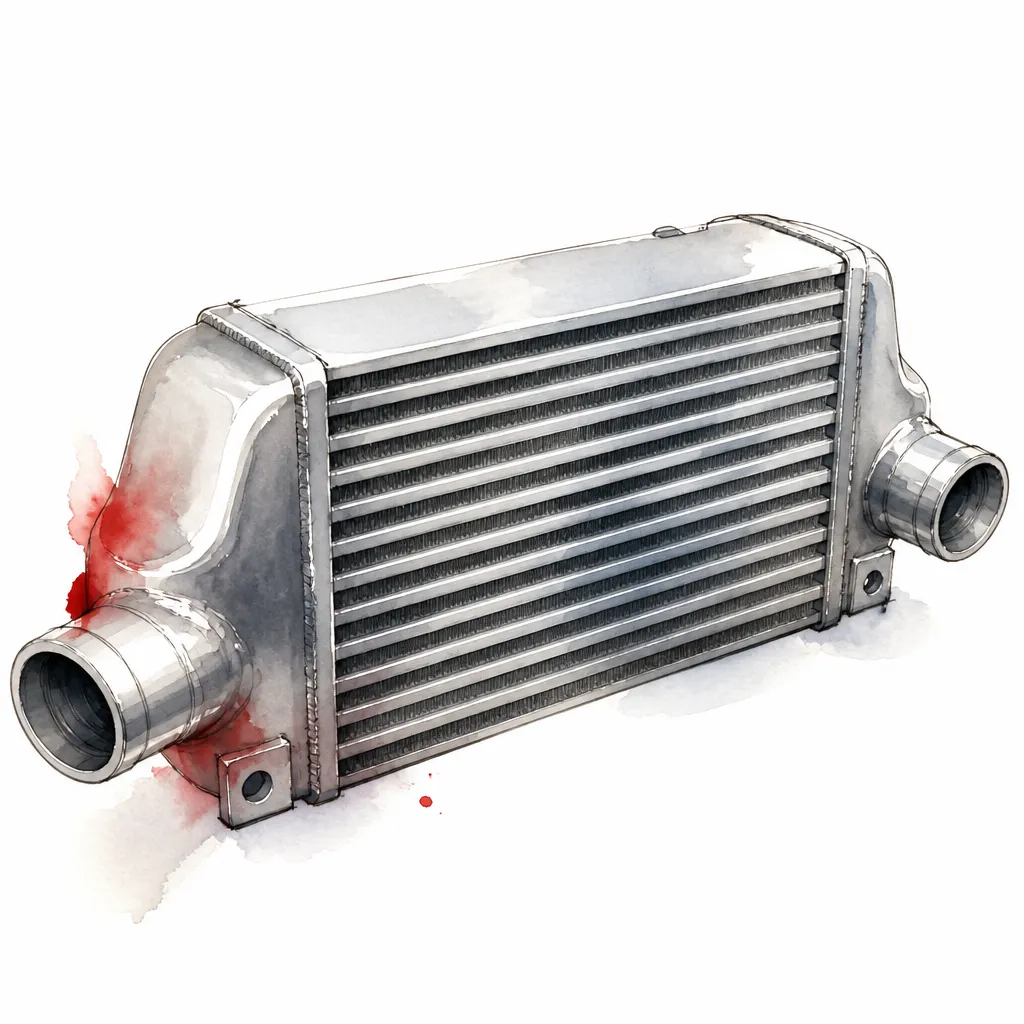
When a turbocharger compresses air, that air heats up sharply, often to well over 100 degrees Celsius. Hot air is less dense, so it carries less oxygen for a given volume, which works against the whole point of forced induction. The intercooler sits between the turbo and the engine and acts as a radiator for the intake charge. Most European cars use an air-to-air design: cooler outside air passes over a finned core while the compressed charge flows through it, dropping the intake temperature before it reaches the cylinders. Denser, cooler air means more oxygen per stroke and a lower risk of knock, the uncontrolled combustion that can damage pistons. A blocked, leaking, or oil-fouled intercooler quietly robs the engine of power and efficiency. Because it sits low at the front of the car, the core is also vulnerable to stone damage and road debris.
Why it matters in Singapore
Singapore's tropical heat means the air entering the intercooler is already warm, so the unit has less of a temperature gap to work with than it would in a cooler climate. In slow, crawling traffic there is little airflow through the front of the car, so intake temperatures climb fastest exactly when the cooling is needed most. A clean, undamaged intercooler and well-sealed charge pipes help a turbo engine hold steady power on a hot day rather than feeling flat.

How Revol Carz handles this
Revol Carz Garage inspects the intercooler and its charge pipes during European car servicing, checking for oil residue that points to a tired turbo, cracked or loose hose clamps that leak boost, and physical damage to the core. Where a pipe or clamp has failed we replace it with the correct OEM-grade part so the engine sees the full, properly cooled charge again.