Alternator
The alternator is the engine-driven generator that charges the car's battery and powers the electrical system while the engine is running.

What it means
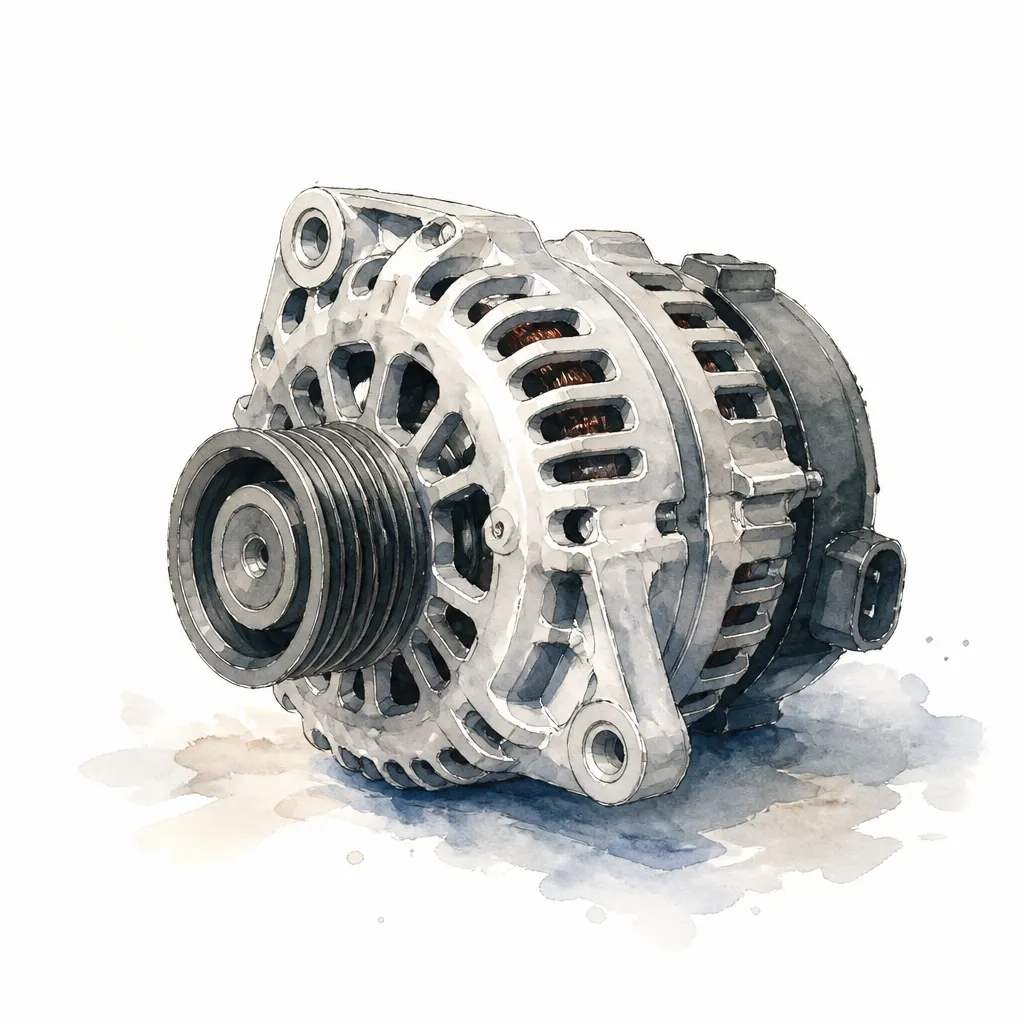
An alternator converts mechanical energy from the engine (via a belt) into electrical energy. It charges the battery and powers everything electrical on the car: ignition, lights, infotainment, climate, fuel pumps, and dozens of control modules. A failing alternator is one of the more common silent failure modes on European cars. Symptoms include: dim headlights at idle, dashboard battery warning, intermittent electrical glitches, and eventually a no-start condition as the battery drains. Diagnosis involves measuring battery voltage with the engine off (should be around 12.6V on a healthy battery), then again with the engine running (should be around 13.8 to 14.4V if the alternator is working). Out-of-range readings at either point point to alternator or battery failure. On modern BMWs and Mercedes, the energy management system also factors in, which is why brand-specific diagnostics often catch issues before they show up as obvious symptoms.
Why it matters in Singapore
Singapore's tropical heat and stop-and-go traffic shortens alternator life compared to the original design assumptions. An alternator that might last 200,000 km in Europe can fail well before that here. Catching alternator failure before it leaves you stranded is one of the easier preventive checks at any major service.

How Revol Carz handles this
Revol Carz Garage tests the charging system at every major service: battery state-of-charge, alternator output, and parasitic drain. Where alternator replacement is needed, we use OEM units and reset the battery registration where the car requires it.