Brake calliper
The brake calliper is the hydraulic clamp that squeezes the brake pads against the brake disc when the brake pedal is pressed.

What it means
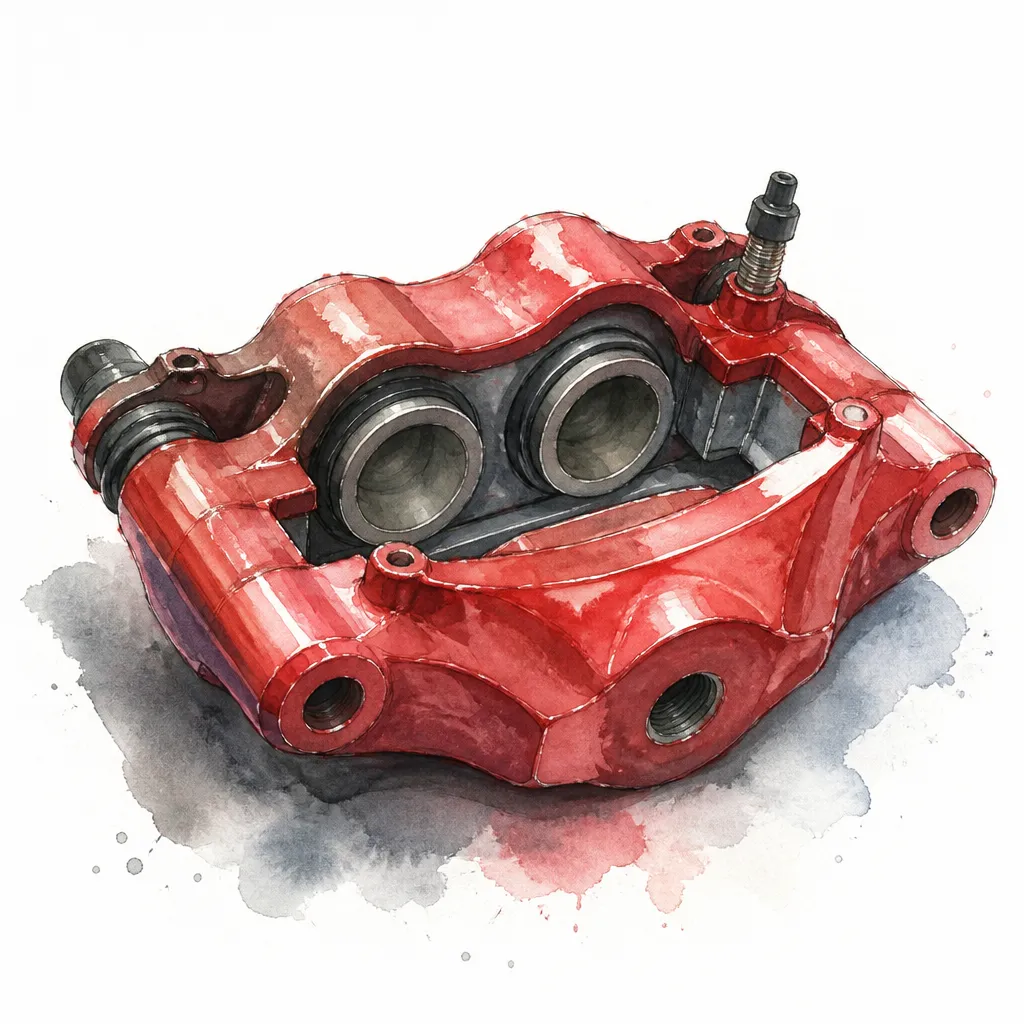
A brake calliper sits over the edge of the brake disc and contains one or more pistons driven by hydraulic pressure from the brake fluid. When you press the pedal, the master cylinder pushes fluid through the brake lines into the calliper, the pistons extend, and the pads clamp the disc. When you release the pedal, the pistons retract slightly and the pads back off. Callipers come in two main types: floating (one or two pistons on one side, the calliper itself slides on guide pins) and fixed (multiple pistons on each side, the calliper does not move). Performance European cars often use four-piston or six-piston fixed callipers. Common calliper issues include sticking guide pins (causes uneven pad wear), corroded pistons (causes a permanently dragging brake), torn dust boots (lets contaminants reach the piston seal), and seized handbrake mechanisms on rear callipers. Most calliper problems are repairable with a service kit; severe cases need a replacement calliper.
Why it matters in Singapore
Singapore's humidity is a slow killer of brake-calliper internals. Moisture creeps past torn dust boots, corrodes pistons and bores, and produces dragging brakes that wear pads unevenly and waste fuel. Catching calliper issues at the regular brake service avoids the more expensive repair when a seized calliper destroys a fresh set of pads in days.

How Revol Carz handles this
Revol Carz Garage inspects each calliper at every brake service: checks piston travel, pad-wear evenness, dust-boot condition, and guide-pin lubrication. We service or replace with OEM-spec parts as required.