Brake discs
Brake discs, also called rotors, are the spinning metal discs the brake pads clamp against to slow the car down.

What it means
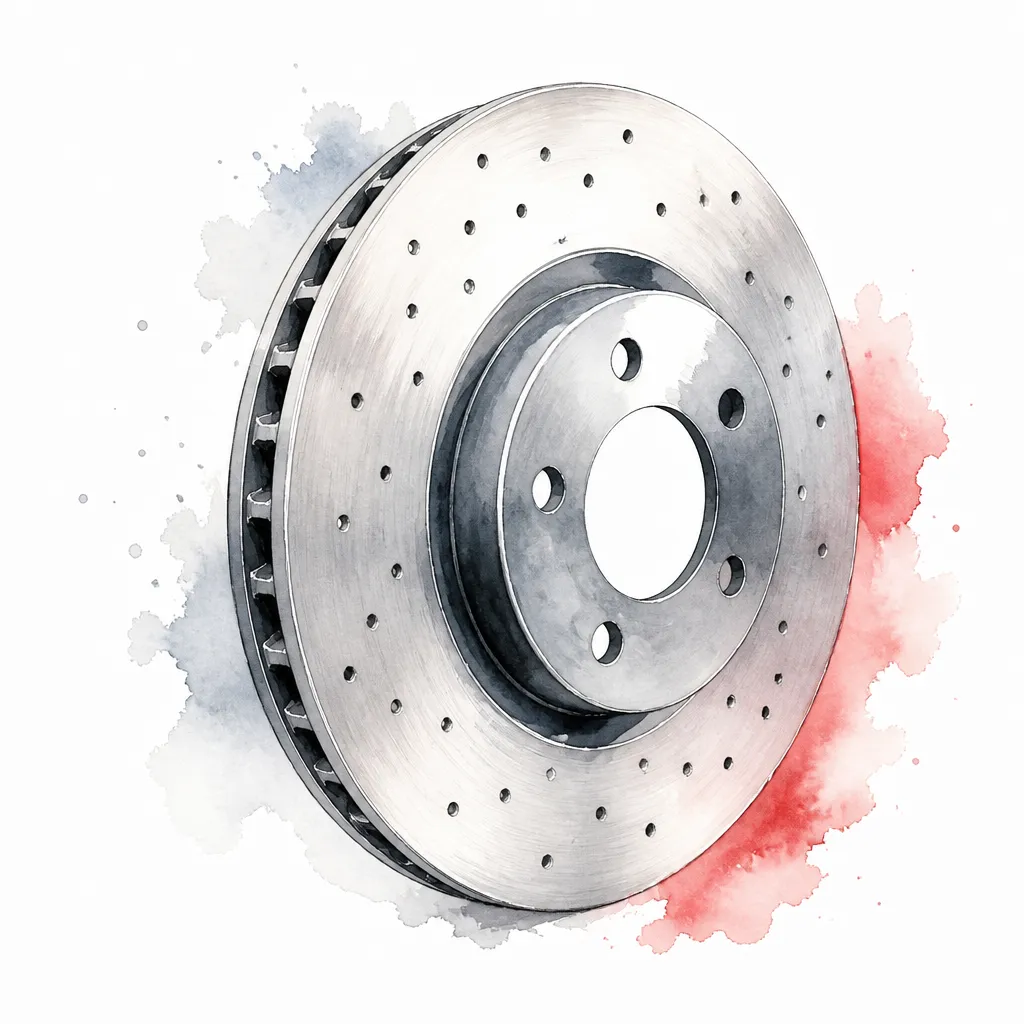
Brake discs are typically cast iron, sometimes drilled or slotted on performance variants for cooling and water shedding. As pads wear, the disc face wears too, gradually losing thickness from both sides. Each disc has a manufacturer-specified minimum thickness stamped on the hub or in the service manual; once worn below that, the disc must be replaced because thinner discs warp under heat and lose stopping power. Discs can also develop a lip at the outer edge (where the pad does not reach), get warped from prolonged hard braking and rapid cooling, or develop deep scoring from a worn pad backing plate. Light scoring and minor warping can sometimes be machined out at a brake shop, but on most modern European cars the cost of machining is close enough to a new OEM disc that replacement is the standard call. Discs are usually replaced in axle pairs (both fronts or both rears) for even braking.
Why it matters in Singapore
Singapore's combination of stop-and-go traffic, monsoon downpours that cool hot discs rapidly, and the tendency to brake hard at the last moment all stress brake discs. A disc set that lasts the life of two pad changes in Europe often needs replacement at the second pad change here. Pairing disc and pad replacement keeps braking feel consistent and avoids the noisy wear that comes from putting fresh pads on worn discs.

How Revol Carz handles this
Revol Carz Garage measures disc thickness at every brake service, recommends replacement when discs are at or near the minimum, and uses OEM discs sized for your specific vehicle.