Brake pads
Brake pads are the friction blocks that the brake calliper squeezes against the brake disc to slow the car down.

What it means
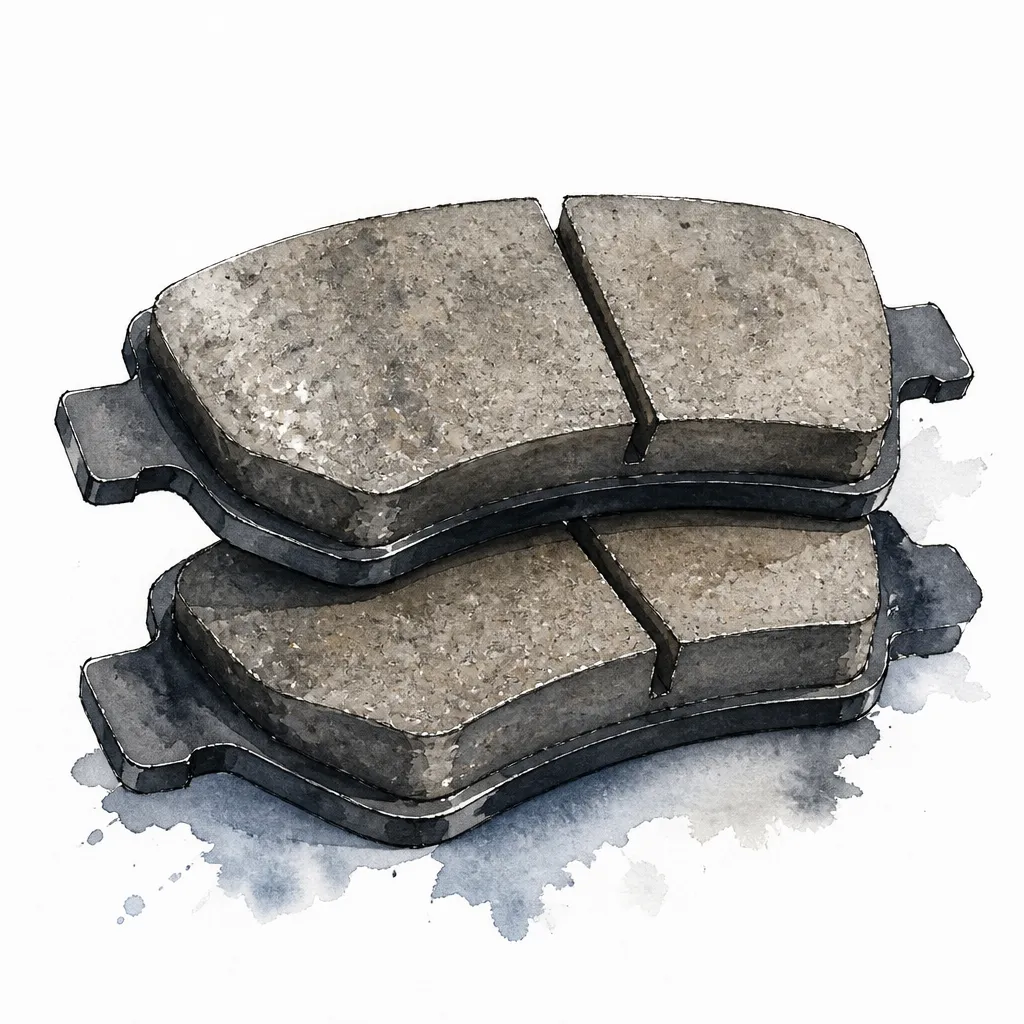
Each wheel on a modern car has two brake pads (sometimes more on performance cars) clamped around a brake disc by the calliper. When you press the brake pedal, hydraulic pressure pushes the calliper pistons, which press the pads against the spinning disc. The friction converts the car's kinetic energy into heat and the car slows. Pads wear gradually as that friction takes thin layers off the friction material. Most modern European cars use a wear-sensor system: an electrical contact embedded in the pad that triggers a dashboard warning when the pad reaches its replacement thickness. Different pad compounds suit different driving styles: standard pads are quiet and dust-tolerant, ceramic pads dust less and last longer, performance pads grip harder but wear faster and produce more dust. OEM pads are calibrated to match the original disc compound and the vehicle's brake system.
Why it matters in Singapore
Singapore's stop-and-go traffic and frequent expressway-to-arterial transitions are hard on brake pads. A pad set that lasts 60,000 km in Europe often needs replacement at 35,000 to 45,000 km here. Catching pad wear at the warning light, before metal-on-disc grinding starts, is the difference between a routine pad change and a much more expensive pad-plus-disc replacement.

How Revol Carz handles this
Revol Carz Garage replaces brake pads using OEM-spec pads matched to your specific vehicle, inspects discs and callipers at the same visit, and resets the wear sensor where applicable.