Cabin filter
The cabin filter, sometimes called the pollen filter, is the filter element that cleans the air entering the car's HVAC system before it reaches the cabin vents.

What it means
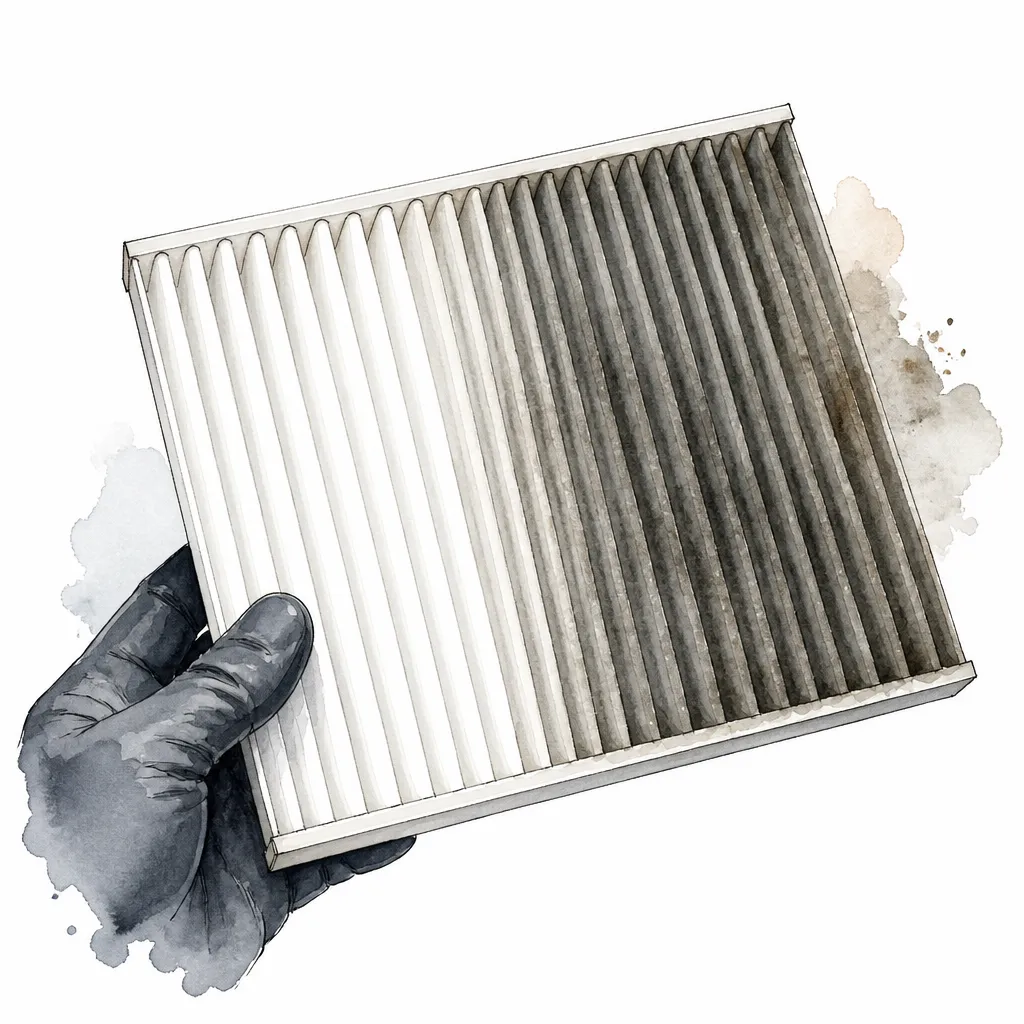
Almost every modern car has a cabin filter mounted inside the HVAC ducting, usually behind the glove box. It catches dust, pollen, soot, and (on premium cars) finer particulates and odours through an activated-carbon layer. A clean cabin filter keeps the air entering the cabin noticeably clearer, the air-conditioning more effective, and the heater core protected from clogging. A neglected cabin filter restricts airflow, makes the AC blower work harder (which shortens its life), and on humid days creates the musty smell associated with mould growing in the ducting. Replacement is typically a five-minute job on most cars, with intervals between 15,000 and 30,000 km depending on the manufacturer. Premium European cars often use multi-stage cabin filters with HEPA-equivalent particulate layers and activated carbon, and these can be more expensive than a generic part.
Why it matters in Singapore
Singapore's humidity is the cabin filter's enemy. A wet, contaminated filter is the most common source of cabin musty smells that owners try to mask with deodorisers. The fix is almost always a cabin filter change plus a brief AC dry-cycle. Annual cabin-filter replacement is a sensible default here regardless of the manufacturer's interval.

How Revol Carz handles this
Revol Carz Garage replaces cabin filters with OEM parts at every major service or on customer request, and recommends an HVAC inspection if mould smell persists after replacement.