Control arm
A control arm is the hinged suspension link that locates a wheel and lets it move up and down while keeping the steering and alignment geometry correct.

What it means
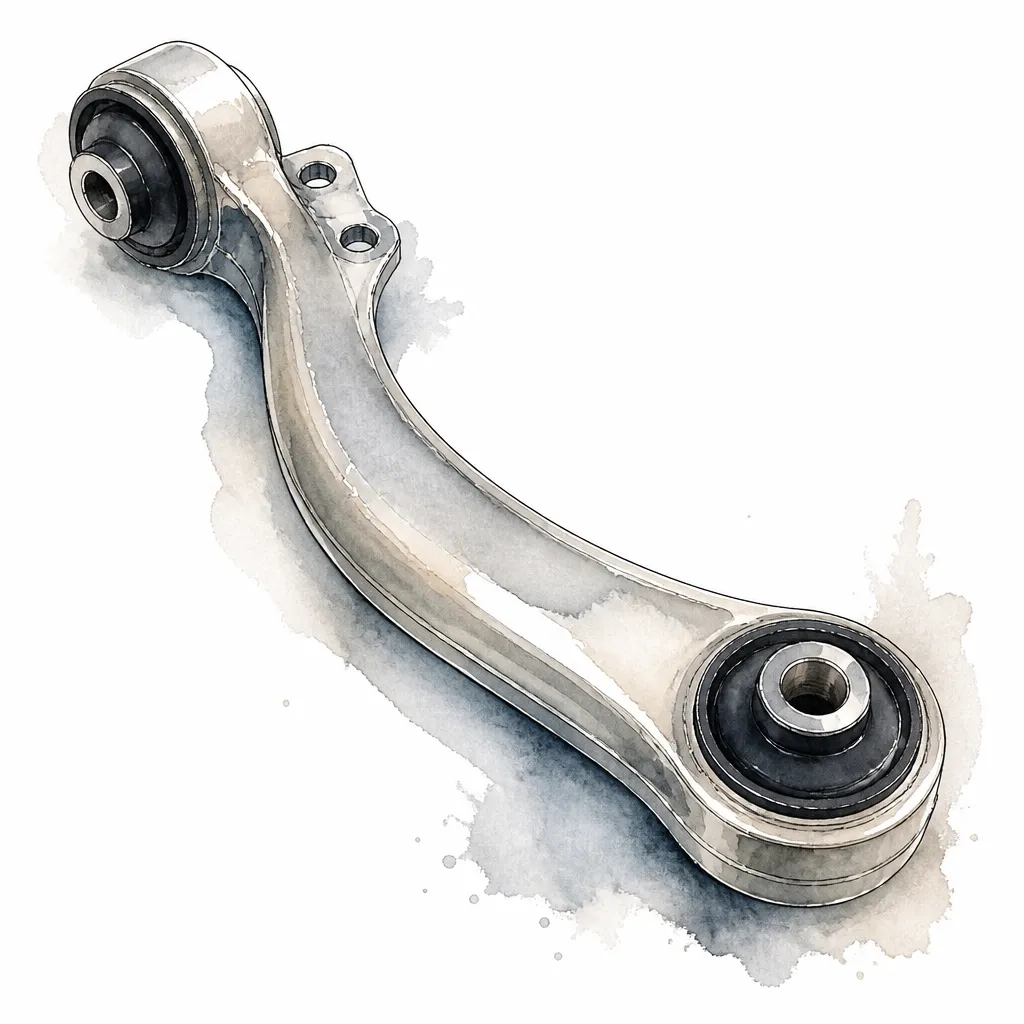
A control arm, sometimes called a wishbone, is a metal link that connects the wheel hub to the body or subframe of the car. It pivots on rubber bushings at the chassis end and is joined to the hub by a ball joint at the wheel end. This lets the wheel travel up and down over bumps while the arm holds it in the correct position, controlling where the wheel sits and how it points. Most modern European cars use several control arms per wheel, an upper and lower or a multi-link cluster, to give precise handling and a comfortable ride. The arm itself is strong and rarely fails, but its bushings and ball joint are wear items. As they perish, the wheel is no longer held tightly: the car develops knocking over bumps, vague steering, and alignment that will not stay set. Because the arm carries the alignment geometry, a worn one is a common reason a car keeps eating tyres unevenly.
Why it matters in Singapore
Control arm bushings live a hard life on Singapore roads. Kerbs at carpark entrances, expansion joints, speed humps in every estate, and the constant heat that ages rubber all wear the bushings faster than gentler conditions would. A car with tired control arm bushings will knock over humps and fail to hold an alignment, which quietly wears tyres and can be picked up at LTA inspection. Replacing the arm or its bushings restores both the ride and the geometry.

How Revol Carz handles this
Revol Carz Garage checks control arms, bushings, and ball joints during servicing on BMW, Mercedes, Audi, and Volkswagen, looking for play, perished rubber, and knocking on a road test. Where an arm or bush has worn, we replace it with OEM-grade parts and follow up with a wheel alignment so the geometry is set correctly afterward.