Wheel alignment
Wheel alignment is the precise adjustment of how the wheels point and tilt relative to the road and to each other, set on a calibrated alignment rack.

What it means
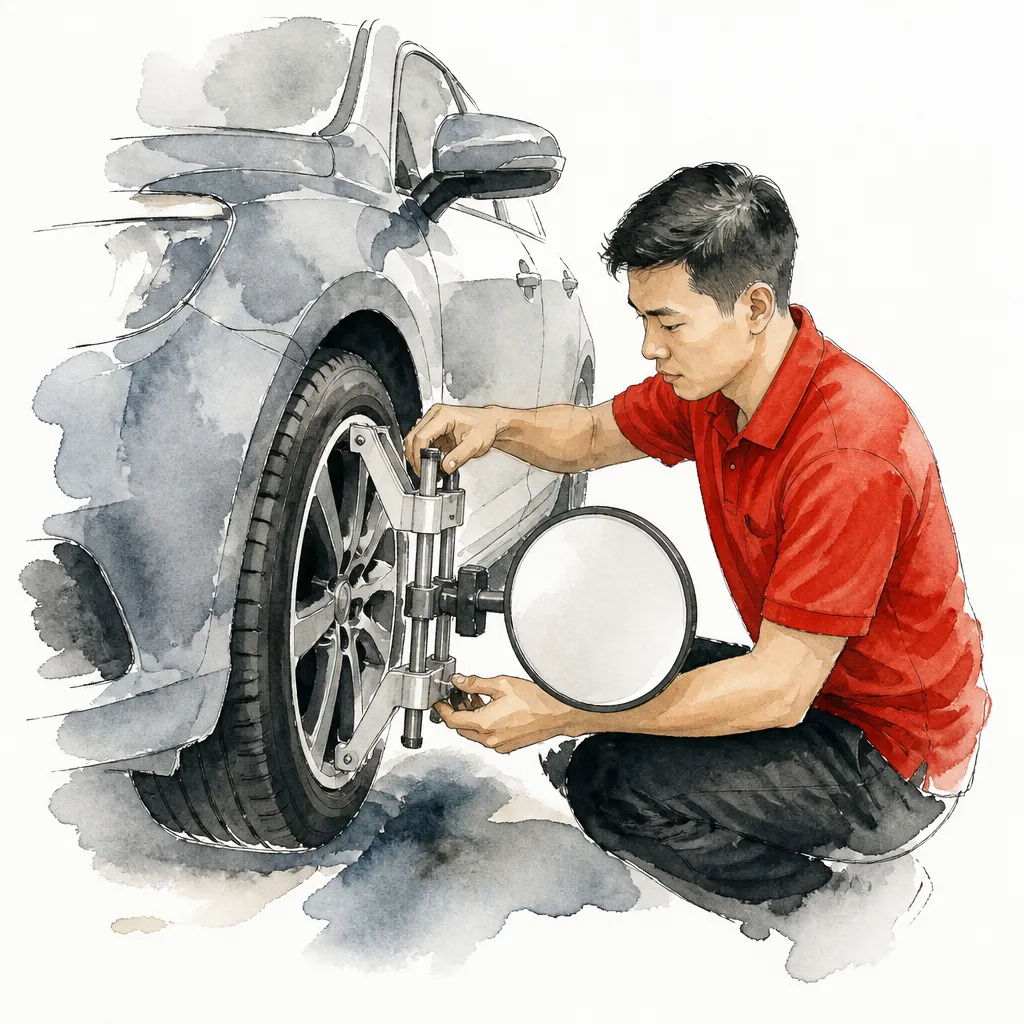
Wheel alignment has three main angles. Toe is whether the front of each wheel points slightly inward or outward; correct toe makes the car track straight and stops tyres from scrubbing sideways as they roll. Camber is the inward or outward tilt of the wheel from vertical; correct camber spreads the tyre's contact patch evenly and prevents one-sided wear. Caster is the forward-or-back tilt of the steering axis; correct caster makes the steering self-centre and gives stable straight-line behaviour. Each manufacturer publishes a target alignment specification with tolerances. Over time, the spec drifts as suspension bushings wear and as kerbs, potholes, and impact from speed bumps move components out of position. The result is uneven tyre wear, a steering wheel that sits crooked when driving straight, and a car that pulls to one side. Fixing alignment requires a calibrated rack that measures all three angles on all four wheels simultaneously and adjusts them back to spec.
Why it matters in Singapore
Singapore roads are smoother than many countries, but kerb scrapes in tight HDB and multi-storey carparks are frequent. So are ERP gantries and speed bumps. Most alignment drift here comes from accumulated minor impacts rather than rough roads. An annual alignment check, or one after any significant kerb hit, extends tyre life noticeably.

How Revol Carz handles this
Revol Carz Garage runs four-wheel alignment on a calibrated rack, sets each angle to the manufacturer's spec for your specific car, and provides a printed before-and-after report so the change is visible.