Suspension bushing
A suspension bushing is the rubber or polyurethane sleeve at a suspension pivot point that absorbs vibration and locates the component in place.

What it means
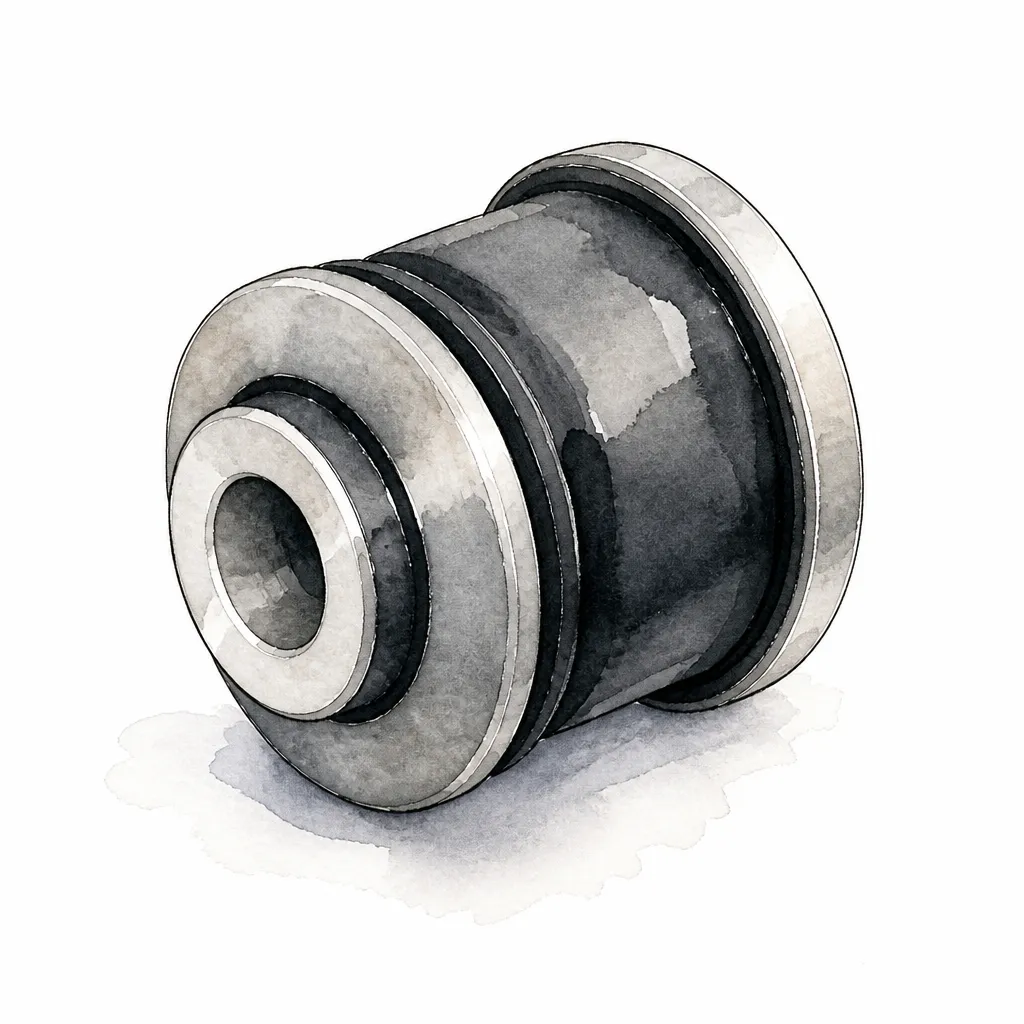
A suspension bushing is a sleeve, usually rubber bonded between two metal collars, that sits wherever a suspension arm bolts to the car. It does two jobs at once. It lets the arm pivot through its small arc of travel without metal grinding on metal, and it absorbs road vibration and noise before it reaches the cabin. Bushings are found on control arms, anti-roll bar links and mounts, subframe mounts, and shock absorber mounts. Because they are mostly rubber, they are a wear item: over years the rubber hardens, cracks, and loses its grip on the metal, so the arm starts to move further than it should. Worn bushings show up as clunks over bumps, vague or wandering steering, uneven tyre wear, and a general looseness to the way the car handles. Some owners switch to polyurethane bushings, which last longer and tighten up handling, at the cost of letting a little more vibration through.
Why it matters in Singapore
Rubber bushings have a hard life in Singapore. Constant tropical heat bakes the rubber and accelerates the hardening and cracking that ends a bushing's life. Stop-start city traffic keeps the suspension working through endless small movements, and speed humps and kerbs add sharp loads. By the time a car nears the end of its ten-year COE span, several bushings are usually past their best, which is often the real cause of a handling complaint blamed on something else.

How Revol Carz handles this
Revol Carz Garage checks suspension bushings during routine servicing on BMW, Mercedes, Audi, and Volkswagen, looking for cracked or collapsed rubber and feeling for play in each arm. When bushings are worn we replace them with OEM-grade parts and follow up with a wheel alignment, since pressing in new bushings shifts the suspension geometry.