Differential
A differential is the geared unit that lets the driven wheels turn at different speeds through a corner while still receiving engine power.

What it means
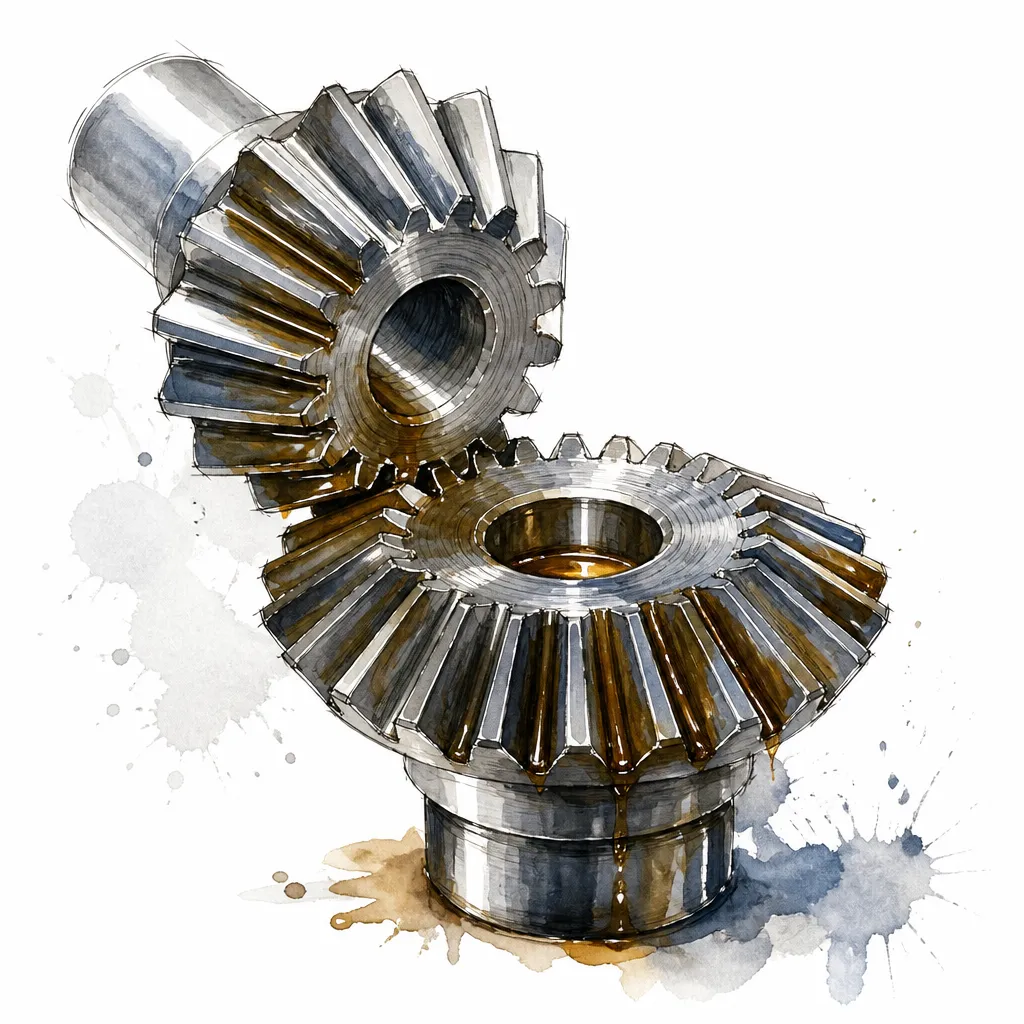
When a car goes around a corner, the outer wheel travels a longer path than the inner wheel and so must turn faster. If both driven wheels were locked to a single solid shaft, one would have to scrub and skip. The differential solves this. It is a set of bevel gears that splits drive between the left and right wheels while allowing each to spin at its own speed. On a rear-wheel-drive car the differential sits in the rear axle; on a front-wheel-drive car it is built into the gearbox housing; on an all-wheel-drive car there is one at each axle and often a centre unit too. The gears run in a heavy oil that must be kept topped up and clean. A neglected differential announces itself with a whine that changes with speed, a clunk when taking up drive, or in worst cases play in the gears. Some performance cars add a limited-slip differential, which can send more torque to the wheel with grip.
Why it matters in Singapore
Singapore's roads are full of tight turns: multi-storey carpark spirals, U-turn slots, and dense junctions, so the differential is working constantly even at low speed. Many European cars sold here are rear-wheel or all-wheel drive, so they carry differentials that, like any oil-filled unit, benefit from a fluid change at sensible intervals. Tropical heat and stop-start use age that oil, and a whine that is caught early is far cheaper to address than a worn gear set.

How Revol Carz handles this
Revol Carz Garage inspects differential and final-drive units during servicing on BMW, Mercedes, Audi, and Volkswagen, checking oil level and condition and listening for whine or play on a road test. Where the manufacturer specifies a differential oil change, we carry it out with the correct grade, and advise honestly if a noise points to wear inside the unit.