CV joint
A CV joint is the constant-velocity joint on a driveshaft that delivers power to a wheel while it steers and moves with the suspension, protected by a rubber boot.

What it means
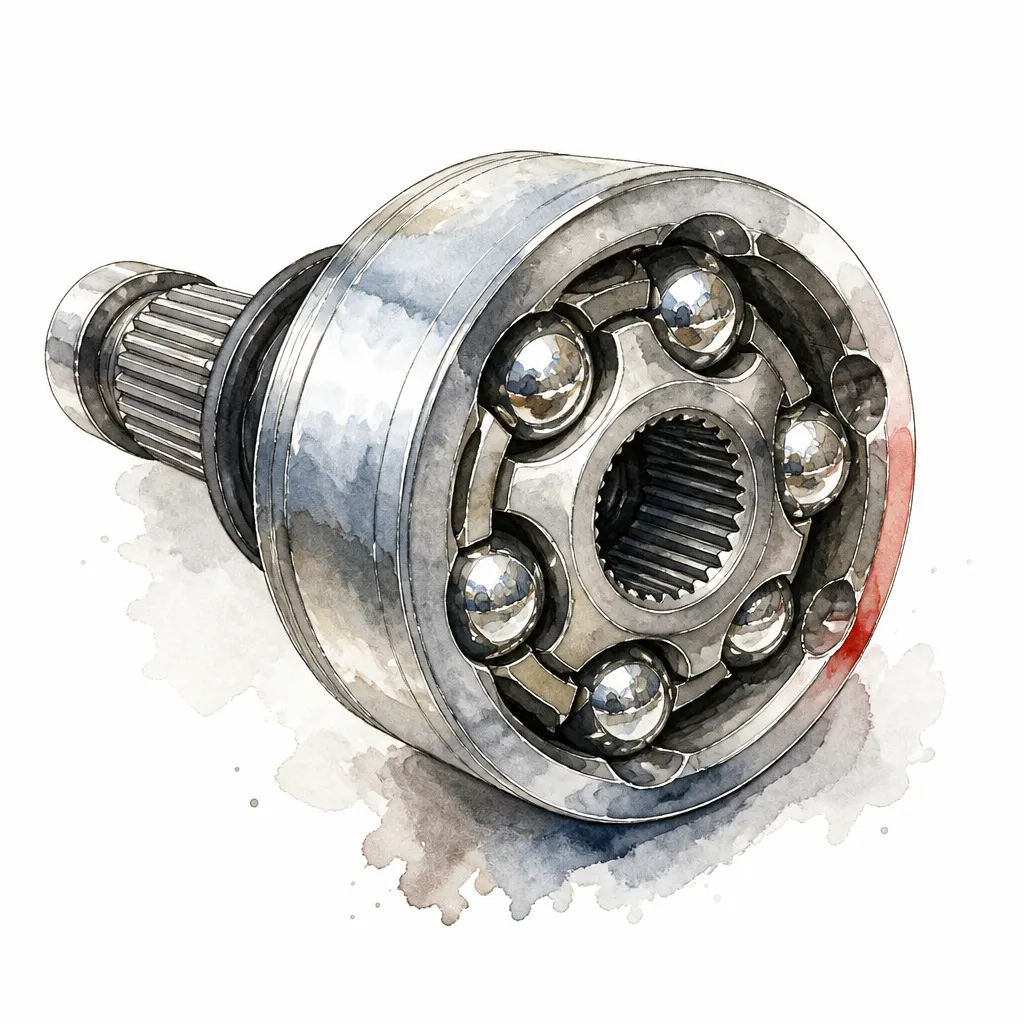
CV stands for constant velocity. On a front-wheel-drive or all-wheel-drive car, each driveshaft has a CV joint at the wheel end and often another at the gearbox end. The joint lets the shaft transmit engine torque smoothly even as the wheel turns left and right for steering and moves up and down with the suspension, all without speeding up or slowing down the rotation through the angle. Inside the joint, hardened balls or rollers ride in machined tracks, packed with thick grease. A flexible rubber or thermoplastic boot seals that grease in and keeps water and grit out. The boot is the weak point: once it splits or its clamp loosens, grease flings out and dirt gets in, and the joint wears quickly. The classic warning is a rhythmic clicking or knocking on full steering lock, often loudest when turning out of a parking space.
Why it matters in Singapore
Singapore driving puts CV joints under steady load: tight multi-storey carpark ramps, frequent U-turns, and stop-start traffic all mean lots of articulation at low speed. The tropical heat ages rubber boots faster than a temperate climate would, so a boot can perish and crack before an owner ever notices. Catching a torn boot early lets the workshop reboot and repack the joint cheaply, before the joint itself is damaged and the whole driveshaft needs replacing.

How Revol Carz handles this
Revol Carz Garage inspects CV boots as part of routine servicing across BMW, Mercedes, Audi, and Volkswagen, checking both inner and outer boots for splits, weeping grease, and loose clamps. Where a boot has failed but the joint is still sound, we reboot and repack it; where the joint is worn, we replace it with OEM-grade parts and check the click is gone on a road test.