Engine mount
An engine mount is the rubber-and-metal bracket that holds the engine to the chassis and absorbs its vibration so it does not reach the cabin.

What it means
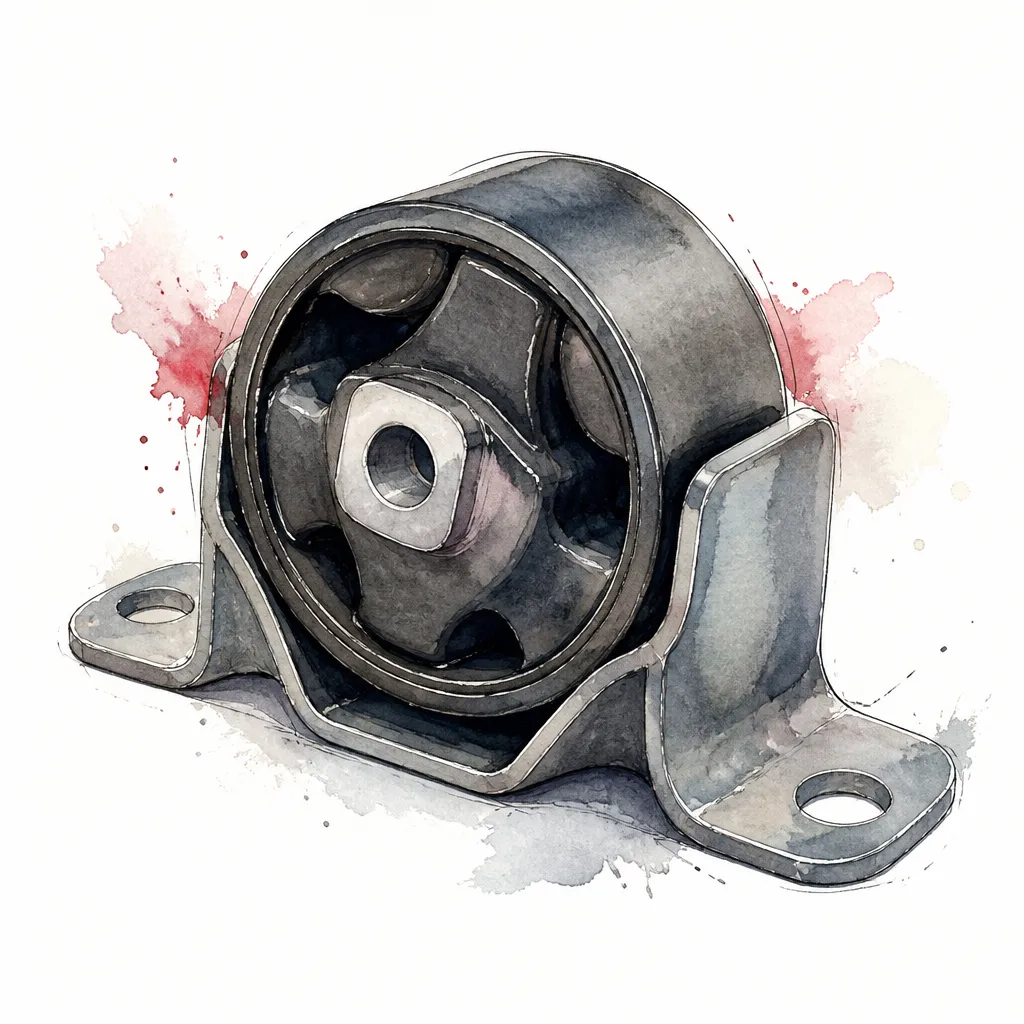
An engine sits on a small number of mounts, usually two or three, that bolt it and the gearbox to the chassis. Each mount is built from metal brackets bonded to a rubber core, and its job is twofold: hold the heavy powertrain firmly in place, and isolate its vibration so the engine's running buzz and the jolt of acceleration do not pass into the body and the cabin. Many European cars use hydraulic mounts, which have a fluid-filled chamber inside the rubber for even better damping. Over time the rubber hardens, cracks, or separates from the metal, and a hydraulic mount can leak its fluid out. A worn mount lets the engine move more than it should. Drivers notice this as a vibration felt through the seat and steering wheel at idle, a clunk when shifting between drive and reverse, and a thud during hard acceleration or braking as the engine rocks on its slack mounting.
Why it matters in Singapore
Engine mounts age on two fronts in Singapore. Constant underbonnet heat hardens and cracks the rubber faster than in a temperate climate, and the daily stop-start cycle of city traffic means the mounts are repeatedly loaded by acceleration and braking. The result is that worn mounts are a common find on cars here well within their ten-year COE life, and the shudder they cause is often mistaken for an engine fault.

How Revol Carz handles this
Revol Carz Garage checks engine and gearbox mounts when investigating idle vibration or driveline clunks on BMW, Mercedes, Audi, and Volkswagen, inspecting the rubber for cracks and hydraulic mounts for fluid leakage. Where a mount has failed, we replace it with an OEM-grade part so the engine is held securely and the cabin stays smooth again.