Shock absorber
A shock absorber is the hydraulic damper at each wheel that controls the up-and-down motion of the suspension after the spring compresses or rebounds.

What it means
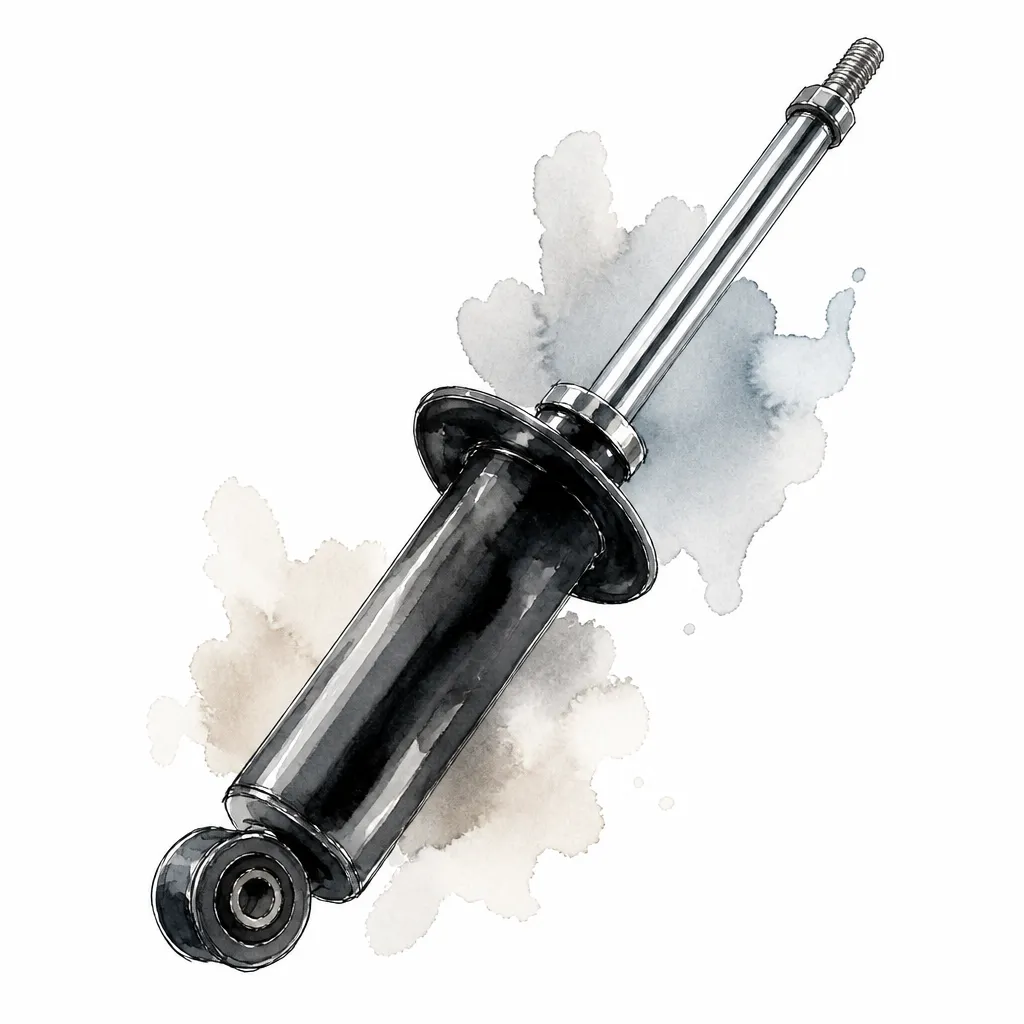
Springs absorb bumps; shock absorbers control how fast the springs return to their resting position. Without dampers, a car would bounce repeatedly after every bump. A modern shock absorber is a sealed hydraulic cylinder with a piston that pushes oil through small valves as the suspension moves. The valving is what controls the damping: stiff for sports models, softer for comfort models, adaptive on cars with electronically controlled suspension. Shock absorbers wear gradually as oil seals leak, valves fatigue, and the internal gas charge bleeds off. Symptoms include: floaty handling over bumps, longer braking distances (the wheel loses contact briefly during the bounce), uneven tyre wear (cupped or scalloped patterns), and visible oil seepage on the damper body. Shocks are normally replaced in axle pairs because uneven damping side-to-side affects handling and stability. On struts (where the damper, spring, and steering pivot share one assembly), replacement is more involved than on cars with separate shock and spring.
Why it matters in Singapore
Singapore's road surfaces are good but the daily mix of expressways, kerbs, speed bumps, and tight carpark ramps puts continuous low-amplitude work into the suspension. Shocks here typically need replacement around 80,000 to 120,000 km depending on the car and how it is driven. Catching weak shocks at a routine inspection avoids the longer-term damage to bushings, bearings, and tyres.

How Revol Carz handles this
Revol Carz Garage inspects shocks at every major service, replaces in OEM-spec axle pairs when wear or leaks are evident, and runs a four-wheel alignment afterwards as standard.