MAF sensor
A MAF sensor is the mass airflow sensor that measures how much air enters the engine so the ECU can meter the right amount of fuel.

What it means
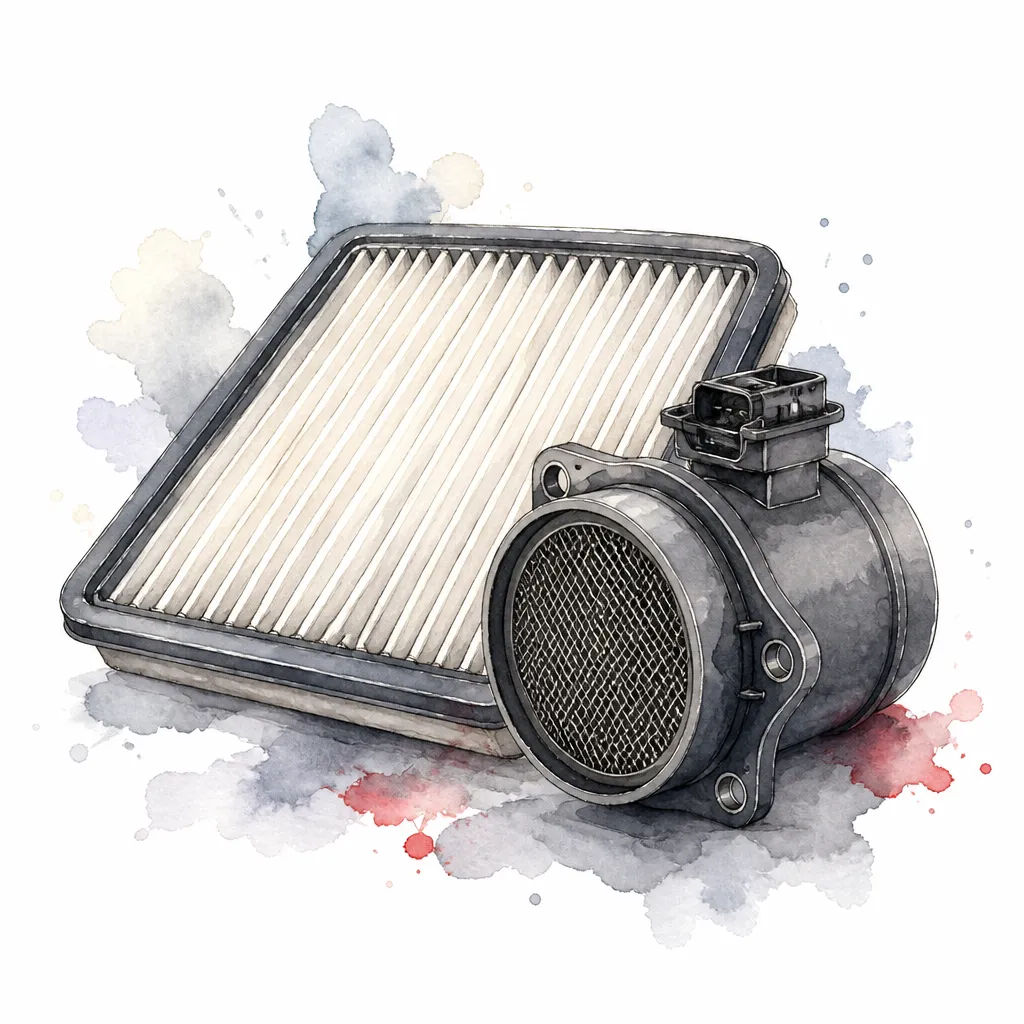
MAF stands for mass airflow. The sensor sits in the intake tract, usually just after the air filter, and measures the actual mass of air the engine is drawing in. Most modern units use a heated element: air flowing past it carries heat away, and the electronics work out airflow from how much current is needed to keep the element at a set temperature. The ECU needs this figure because fuel must be matched to air. Too little fuel for the air and the engine runs lean and hesitant, too much and it runs rich and wastes petrol. The sensing element is delicate and can be fooled by dirt, oil mist from a poorly chosen air filter, or simple ageing, which makes it read low. A drifting MAF sensor causes rough idle, weak acceleration, poor fuel economy, and a check-engine light, often without any single dramatic symptom.
Why it matters in Singapore
Singapore's dusty, humid air and heavy stop-start driving load the intake system, and a clogged air filter or a contaminated MAF sensor slowly erodes both performance and fuel economy. Because petrol is expensive here, a sensor that quietly reads low costs the owner money on every trip. It also matters at the periodic LTA inspection, since a poorly metered engine can run rich enough to affect emissions.

How Revol Carz handles this
Revol Carz Garage reads live MAF values on a diagnostic scan and compares them against the airflow the engine should be producing at a given speed and load. That tells us whether the sensor itself has drifted or whether an air leak or dirty filter is the real cause, so we replace the right part with an OEM-grade unit and clear the fault.