Serpentine belt
A serpentine belt is the single accessory belt that drives the alternator, water pump, air-con compressor, and power steering off the crankshaft.

What it means
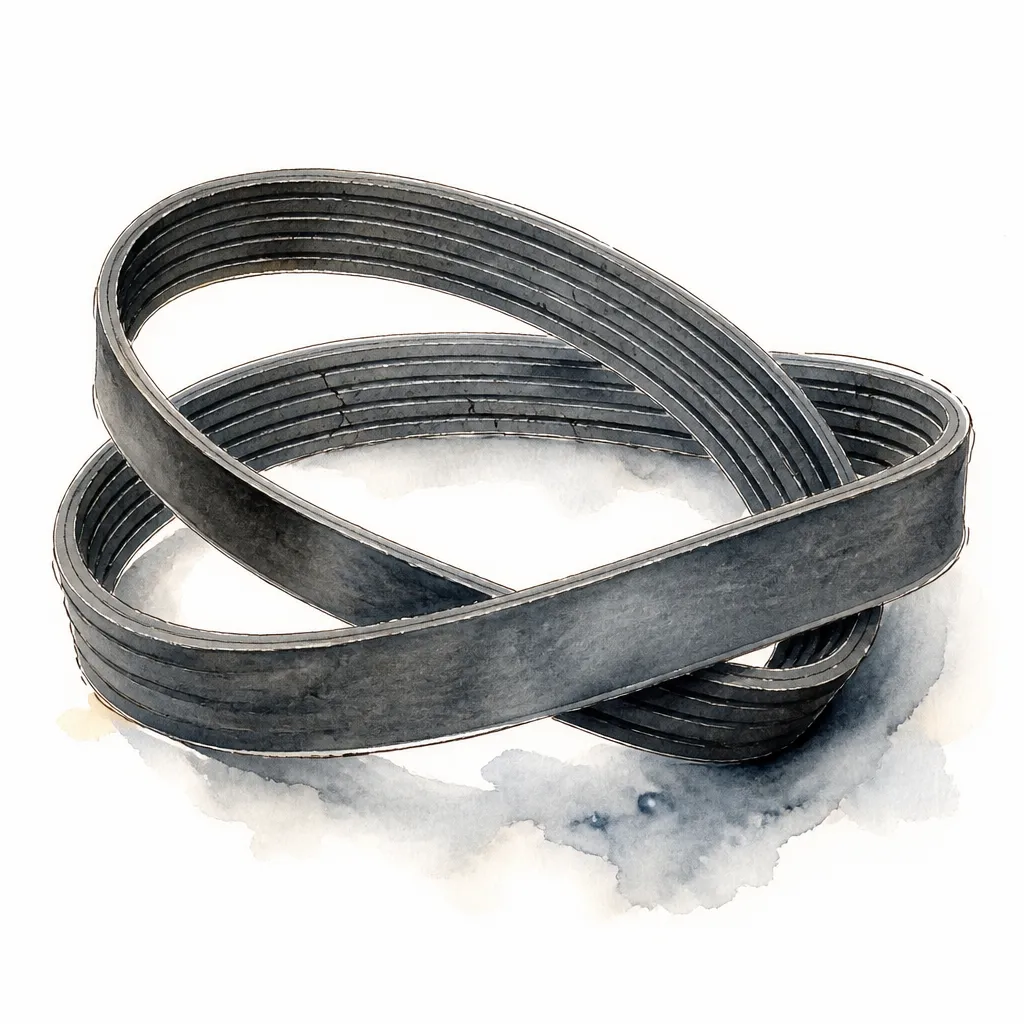
The serpentine belt is one long, flat, ribbed belt that winds around several pulleys at the front of the engine. It is driven by the crankshaft and routes power to the accessories the engine needs to run and the car needs to function: the alternator that charges the battery, the air-conditioning compressor, the power steering pump on hydraulic systems, and on many engines the water pump as well. Its name comes from the snaking path it follows. An automatic tensioner with a spring-loaded pulley keeps the belt at the right tension as it heats up and as it ages. Over time the belt's ribbed surface cracks, glazes, or sheds material, and the tensioner and idler pulleys can develop worn bearings. A belt that snaps stops the alternator and the cooling pump at once, so the car loses charge and begins to overheat within a short distance. A squeal on start-up or after rain is the most common early warning.
Why it matters in Singapore
Constant high underbonnet temperatures and frequent air-con use put the serpentine belt under steady load every day in Singapore, and the rubber ages faster in this heat than the calendar alone would suggest. A snapped belt here is not a minor inconvenience, because the loss of the water pump in tropical conditions can overheat the engine quickly while the car is stuck in traffic.

How Revol Carz handles this
Revol Carz Garage inspects the serpentine belt for cracking and glazing during scheduled servicing for BMW, Mercedes, Audi, and Volkswagen, and checks the tensioner and idler pulleys for worn bearings at the same time. When a belt or tensioner is due for replacement, we fit OEM-grade parts and confirm correct routing and tension before the car leaves.