Throttle body
A throttle body is the valve assembly that controls how much air enters the engine, and carbon or grime buildup here causes rough idle and hesitation.

What it means
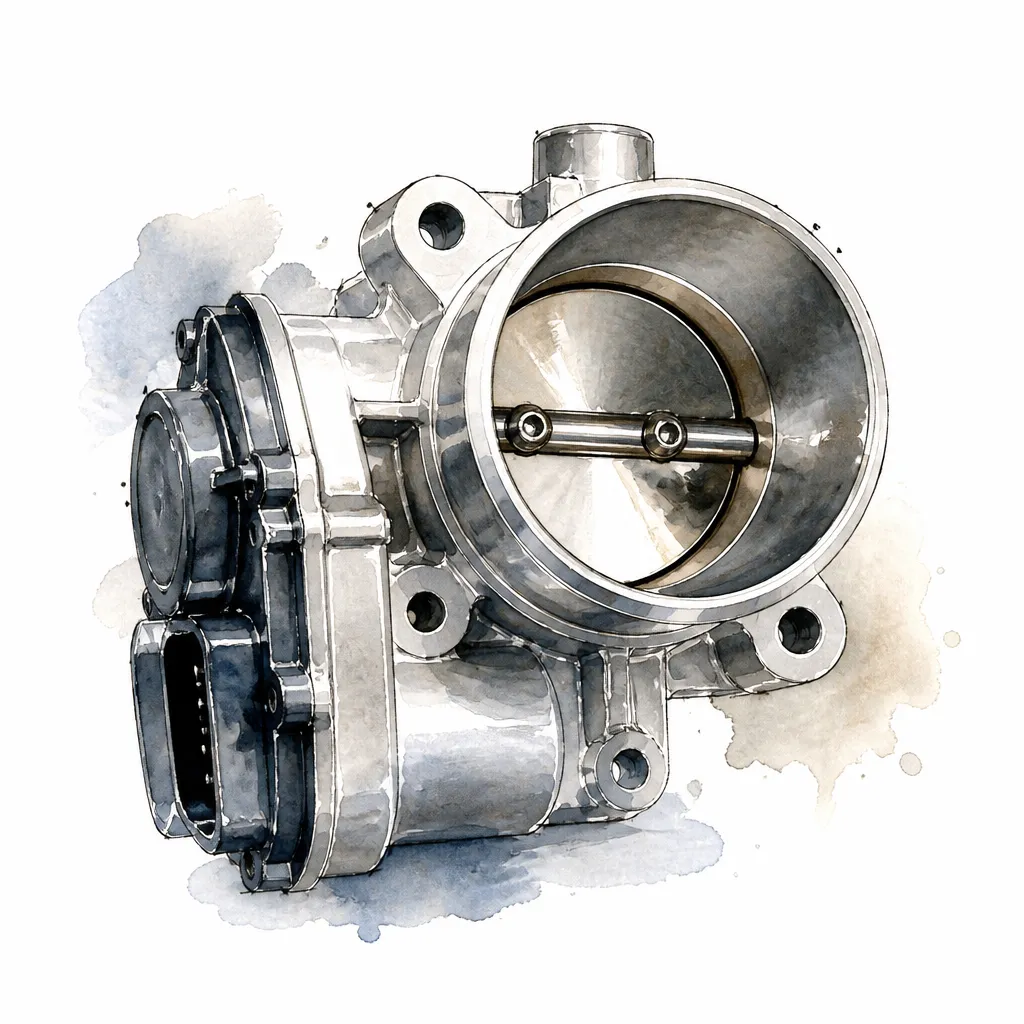
The throttle body sits between the air intake and the engine. Inside is a pivoting disc, the throttle plate, that opens and closes to control airflow. On modern European cars the system is drive-by-wire: there is no cable from the pedal to the engine. A sensor reads the accelerator pedal, the ECU decides how far the plate should open, and a small motor moves it. The same unit also manages idle by holding the plate slightly open when the engine is just ticking over. Over time, a thin film of oil mist and carbon collects on the plate and the bore around it. Because the ECU sets idle very precisely, even a small amount of grime upsets the airflow it expects, which shows up as rough or hunting idle, a stall when coming to a stop, and hesitation off the line. Many cars also need the throttle position relearned after cleaning so the ECU has an accurate closed reference.
Why it matters in Singapore
Singapore driving is almost all stop-start: junctions, expressway crawls, and constant idling in traffic. That pattern keeps the engine ticking over for long stretches, which is exactly when crankcase fumes drift back and leave deposits on the throttle plate. Over a 10-year COE life this buildup is gradual but real, and it is a common, low-cost reason an otherwise healthy engine starts to idle roughly or feel hesitant in traffic.

How Revol Carz handles this
When a car idles roughly or hesitates, Revol Carz Garage inspects the throttle body during European car servicing, cleans the plate and bore where deposits have built up, and runs the throttle adaptation procedure on a diagnostic scan so the ECU relearns the correct closed position. We also check that the symptom is not really an air leak or sensor fault before clearing the codes.