Run-flat tyre
A run-flat tyre is a tyre with a reinforced sidewall (or self-supporting structure) that lets the car keep moving for a limited distance after a puncture, even with no air pressure.

What it means
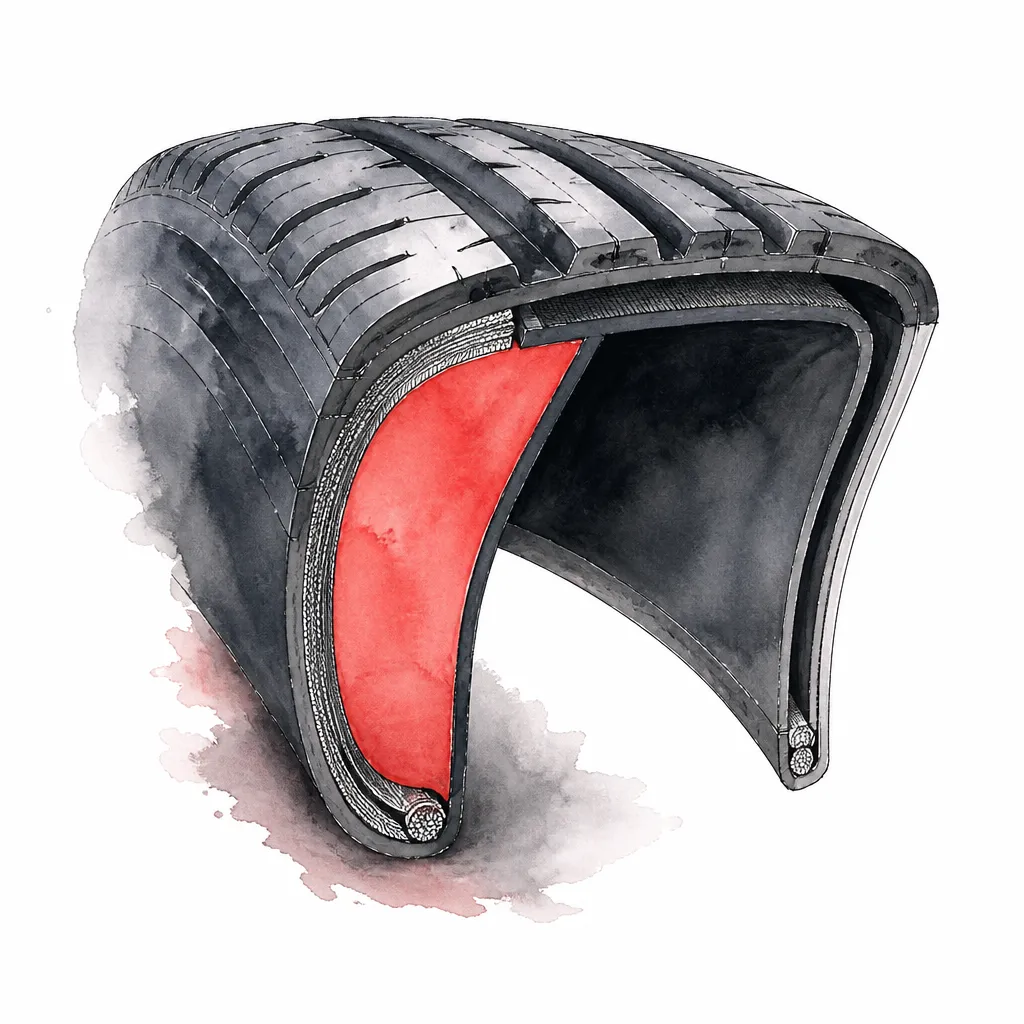
Conventional tyres deflate immediately on a major puncture; the sidewall collapses and the wheel rim damages the inside of the tyre within minutes. Run-flat tyres are built differently. The sidewall is much stiffer, with a thick rubber insert that supports the vehicle's weight even at zero pressure. After a puncture, the driver typically has 80 to 100 km of capability at reduced speed (around 80 km/h max) to reach a workshop or get home. Run-flats let manufacturers eliminate the spare tyre, freeing boot space and reducing weight. The trade-offs are real: run-flats ride harder than conventional tyres because of the stiffer sidewall, are noisier on coarse surfaces, are typically more expensive, and cannot usually be repaired after a puncture (most manufacturers recommend replacement). Run-flats almost always come paired with TPMS so the driver knows when a slow leak is happening, since the stiff sidewall masks the feel of a deflating tyre.
Why it matters in Singapore
Most BMW, Mercedes, and increasingly Audi and Volkswagen models sold in Singapore come on run-flat tyres from the factory. Singapore's climate adds two complications: tropical heat shortens tyre life generally, and sudden monsoon-driven debris (broken concrete, road furniture) raises puncture risk. Knowing the run-flat range and speed limit before you need it is the practical takeaway.

How Revol Carz handles this
Revol Carz Garage stocks and fits OEM-spec run-flat tyres for European cars, balances them on a calibrated machine, and pairs them with TPMS sensor checks.