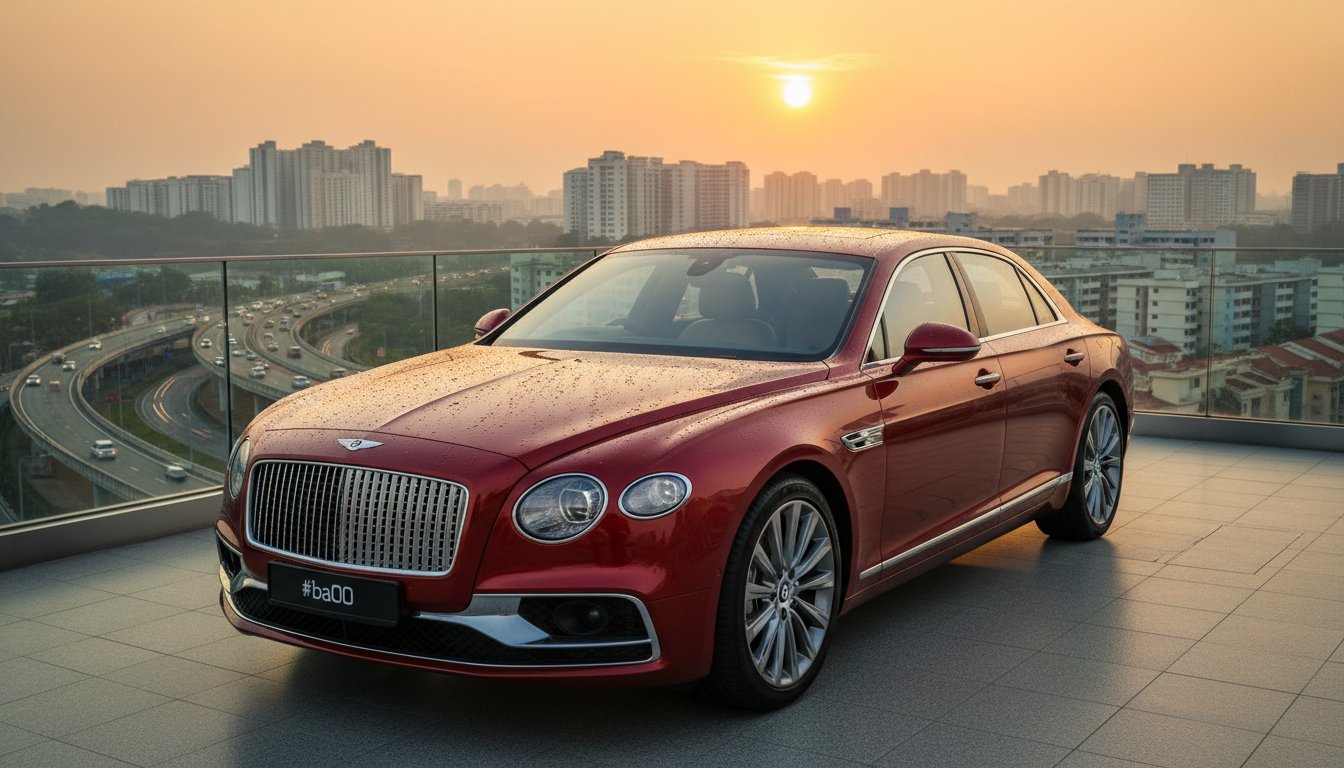
Last Monday, a driver sat stranded on the shoulder of the CTE during the 6:00 PM rush hour, watching their temperature gauge spike while traffic crawled past. It’s a stressful scenario that thousands of Singaporean drivers face annually, as our 90% humidity and constant stop-start driving create a punishing environment for even the most premium vehicles. You’ve likely felt that same anxiety, worrying if a sudden mechanical failure will lead to an expensive repair bill or force an early trip to the scrap yard before your COE cycle even reaches its tenth year.
We understand that your vehicle is a significant investment that deserves unparalleled automotive care. This guide identifies the most common car problems in singapore and offers the professional strategies you need to shield your vehicle from tropical wear and tear. By following these specialized maintenance tips, you’ll gain the confidence to extend your car’s life while maintaining that coveted showroom condition. We’ll examine the critical warning signs of battery decay, cooling system fatigue, and the precise care required to keep Continental cars performing at their absolute best.
Key Takeaways
- Understand how Singapore’s “Tropical Triple Threat” of extreme heat, humidity, and UV radiation accelerates vehicle wear and shortens the lifespan of critical components.
- Learn to identify and preemptively manage the most common car problems in singapore, including premature battery failure and engine overheating caused by intense urban traffic.
- Recognize the subtle warning signs of safety system degradation, such as heat-glazed brake pads and tyre sidewall cracking, to ensure your vehicle remains reliable on the PIE and CTE.
- Discover professional-grade protection strategies to shield your car’s exterior from paint oxidation and acid rain etching, maintaining a pristine showroom condition.
- See why specialized, comprehensive care from dedicated specialists is essential for preserving the performance and resale value of your vehicle in our unique climate.
The Singapore Stress Test: Why Our Climate Kills Cars Faster
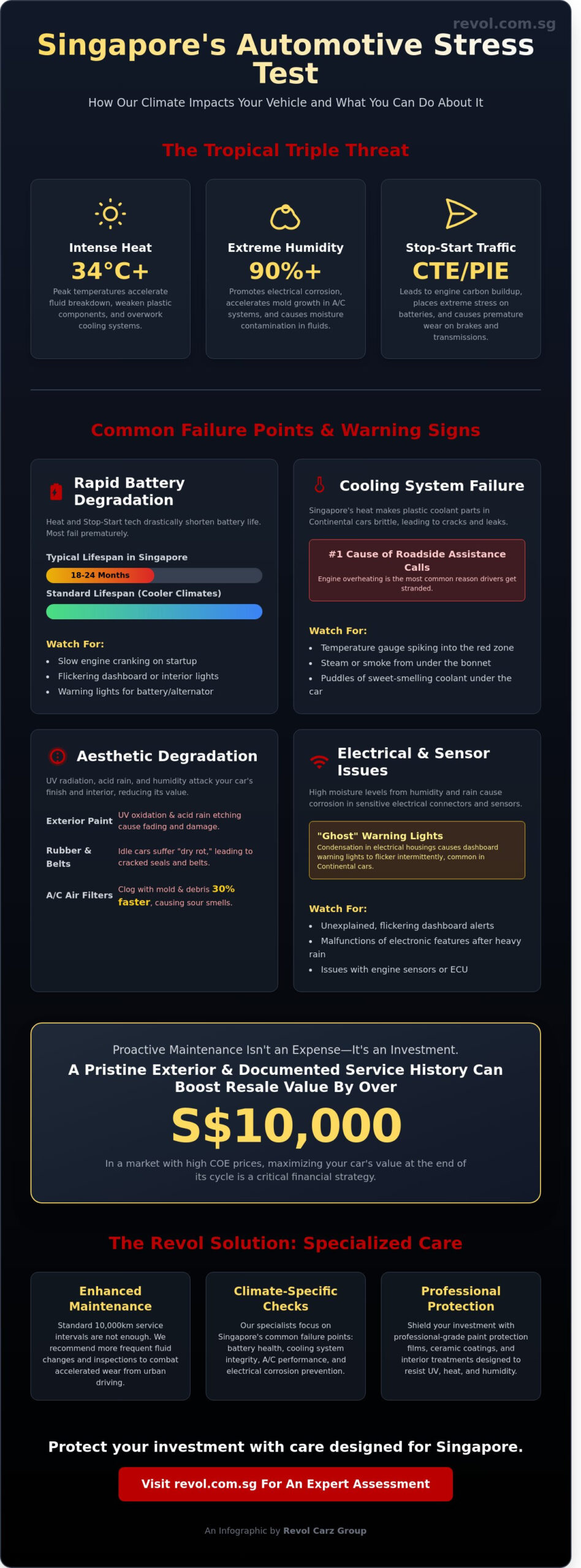
Driving in Singapore is an endurance test for any vehicle. Our environment presents a “Tropical Triple Threat” that most automotive engineers in Europe or Japan don’t fully prioritize: humidity levels that rarely drop below 90%, ambient temperatures frequently peaking at 34°C, and intense UV radiation. These elements work in tandem to degrade rubber seals, oxidize paintwork, and stress cooling systems. Understanding these common car problems in singapore is the first step toward protecting your investment.
In 2026, with COE prices making vehicle ownership a significant capital outlay, maintaining your car in showroom condition is a vital financial strategy. A well-documented service history and a pristine exterior can swing resale values by over S$10,000. Many owners fall for the misconception that a low-mileage car is inherently healthier. However, vehicles that sit idle in damp basement car parks often suffer more from “dry rot” in belts and fluid acidification than those driven regularly on the ECP or AYE. At Revol Carz, our specialists see firsthand how the local climate accelerates wear regardless of the odometer reading.
Humidity and Your Car’s Electrical Nervous System
High moisture levels are the primary cause of terminal corrosion in sensitive sensors, particularly in Continental makes like BMW or Mercedes-Benz. Condensation often forms within electrical housings during our sudden afternoon downpours, leading to “ghost” dashboard warning lights that may flicker on and off. This moisture also impacts the cabin environment; air filters in Singapore clog with organic debris and mold 30% faster than in drier climates, often resulting in a distinct “sour” smell when the AC is first engaged.
Urban Driving: The Silent Engine Killer
The stop-start nature of traffic on the PIE and CTE prevents engines from reaching their optimal operating temperatures. When trips are shorter than 5km, the engine oil doesn’t get hot enough to evaporate accumulated moisture and unburnt fuel. This leads to heavy carbon buildup on intake valves and fuel injectors. To ensure longevity, we recommend performing routine car maintenance tasks more frequently than the standard 10,000km intervals suggested by overseas manufacturers. Frequent oil changes at our BMW workshop or Mercedes workshop help flush out contaminants that build up during long idling periods in peak-hour congestion. Taking a proactive approach is the only way to ensure your car remains reliable under the unique pressures of the Singapore landscape.
Warm regards,
The Revol Carz Team
Mechanical & Engine Issues: Identifying the Red Flags
Mechanical failures represent the most frequent disruptions for drivers on the PIE and AYE. Statistics from 2026 indicate that engine overheating has become the single most common cause of roadside assistance calls in the country. These common car problems in singapore often stem from the relentless combination of high humidity and stop-start traffic conditions. Understanding these red flags allows you to address minor repairs before they escalate into catastrophic engine failure.
The Battery & Charging System Struggle
Most car batteries in Singapore rarely survive beyond 18 to 24 months. The tropical heat accelerates the chemical reaction inside the battery, leading to faster fluid loss and internal corrosion. If you notice your engine cranking slowly or your dashboard lights flickering during startup, your battery is likely nearing the end of its life. Modern “Stop-Start” technology further compounds this issue by forcing the battery to restart the engine dozens of times during a single cross-island commute. Our specialists often find that high humidity levels also lead to premature alternator wear, which prevents the battery from reaching a full charge even during long drives. For those looking to maintain peak performance, following specialized Summer Driving Tips can help preserve the integrity of your electrical components.
Cooling Systems Under Pressure
European vehicles, particularly Mercedes and BMW models, utilize high-grade plastic for coolant pipes and expansion tanks. Over time, the extreme heat cycles in Singapore cause these plastic components to become brittle and develop hairline cracks. A sudden “sweet” or maple-syrup-like smell inside the cabin is a definitive sign of a coolant leak. Ignoring this scent often leads to a spiked temperature gauge and a warped cylinder head. If you suspect a leak, seeking a professional BMW workshop for a pressure test is the only way to ensure your cooling system can handle 34°C afternoons. Identifying these common car problems in singapore early saves thousands in engine replacement costs.
Oil Leaks and Gasket Failures
Audi and Volkswagen engines frequently develop oil seeps around the valve cover gaskets and oil filter housings. While a small drop on your driveway might seem insignificant, oil leaks can quickly contaminate rubber drive belts or soak into the alternator, causing secondary electrical failures. Singapore’s intense ambient heat causes engine oil viscosity to thin prematurely, which compromises the protective lubricant film and accelerates internal component wear.
When the “Check Engine” light appears, the color and behavior of the icon dictate your next move. A solid amber light typically indicates a sensor issue that requires a diagnostic scan within 48 hours. However, a flashing red light or a red thermometer icon means you must pull over immediately and call for a tow. To keep your vehicle in showroom condition and ensure mechanical reliability, you can book a comprehensive diagnostic session with our award-winning team today.
Safety Systems: Brakes, Tyres, and Suspension in the City
Singapore’s dense urban environment and 33°C average afternoon temperatures place immense stress on safety components. Unlike vehicles in temperate climates, local cars face relentless stop-start cycles that accelerate wear on critical systems. Identifying common car problems in singapore early can save you thousands in COE-cycle repairs while ensuring your vehicle remains predictable in emergencies. Many drivers encounter issues like brake squealing or steering vibrations without realizing these are symptoms of tropical degradation.
Braking Performance in Stop-Start Traffic
Constant braking at traffic lights generates extreme heat, often causing brake pads to “glaze.” This creates a hardened, smooth surface that squeals and significantly reduces stopping power. Humidity is an even bigger threat to your safety. Brake fluid is hygroscopic, meaning it absorbs moisture from Singapore’s air, which frequently reaches 80% humidity. This moisture lowers the fluid’s boiling point, leading to “brake fade” where the pedal feels spongy and unresponsive during heavy use.
Drivers must distinguish between standard pad wear and rotor warping. Warping often occurs when hot rotors are suddenly cooled, such as driving through a deep puddle during a flash flood. To ensure your safety, you can refer to the common car issues guide provided by the AAS. For a professional assessment, you can visit our BMW workshop or specialized service centers to check your fluid’s moisture content and pad thickness.
Tyre Health and Alignment
Singapore’s sun-baked asphalt can reach temperatures exceeding 50°C. This heat causes tyre pressure to fluctuate and accelerates rubber oxidation, leading to “sidewall cracking” even if the tread looks deep. If you’re running 19-inch or 20-inch rims, precision alignment is non-negotiable. Misalignment leads to uneven wear and increases the risk of rim damage from curb strikes. While we offer expert spray painting for aesthetic restoration of scuffed wheels, preventing structural tyre failure remains the priority.
Suspension systems also take a beating from the 2,500+ speed bumps across the island and ongoing North-South Corridor construction. You’ll likely hear rattles or feel “looseness” as you hit the 5-year mark. In this climate, rubber suspension bushings dry out and crack much faster than in cooler regions. Swapping these bushings every five years ensures your car maintains its stability and showroom-drive quality. Addressing these common car problems in singapore proactively prevents minor rattles from turning into expensive steering rack failures.
Aesthetic Degradation: Protecting Your Car’s Exterior & Interior
Singapore’s tropical environment is relentless. Intense UV radiation and high humidity are the primary drivers behind many common car problems in singapore. These environmental factors don’t just affect the engine; they aggressively target your vehicle’s visual and tactile appeal. By 2026, rising average temperatures have made aesthetic maintenance a necessity rather than a luxury for car owners who want to preserve their vehicle’s resale value.
The Battle Against Paint Oxidation
The sun’s UV rays act as a constant abrasive on your car’s clear coat. Without a robust barrier, glossy black finishes often fade into a chalky, dull grey within just 36 months of ownership. This oxidation occurs when the paint’s polymers break down under heat. Traditional waxing is insufficient for the 2026 climate because it melts away at high temperatures. Acid rain and bird droppings further complicate this by creating permanent ‘etching’ marks that eat through the paint layers in a matter of hours. To combat this, we recommend a ceramic coating paint protection system. This 9H shield provides a permanent molecular bond that resists chemical stains and UV degradation far more effectively than standard polishes.
Interior Preservation and AC Health
Inside the cabin, temperatures can soar to 65 degrees Celsius when parked in an open Jurong or Changi car park. This extreme heat causes leather seats to lose their natural oils, leading to unsightly cracks and the “melting” plastic dashboard phenomenon. Furthermore, the high humidity creates a breeding ground for mold within the air-conditioning system. If you notice a musty smell upon startup, it’s a sign of bacteria buildup on the AC evaporator, which is the number one comfort issue for local drivers. Regular professional car grooming in Singapore is essential to deep-clean these surfaces and apply specialized UV-resistant conditioners that keep interiors supple.
- UV-induced clear coat failure: Results in white patches and peeling paint.
- Chemical etching: Caused by acidic bird droppings and industrial fallout.
- Leather shrinkage: Leads to torn stitching and hardened surfaces.
- AC Evaporator leaks: Often caused by corrosion from moisture and dust buildup.
Maintaining a pristine appearance requires a careful approach. Our team at Revol Carz has seen thousands of vehicles suffer from preventable tropical damage. We focus on providing unparalleled automotive care that goes beyond a simple wash. We ensure every surface, from the dashboard to the exhaust pipe, is protected against the elements.
Protect your investment from the harsh Singapore sun. Book a professional grooming session with our specialists today.The Revol Solution: Specialized Care for Singaporean Cars
Generalist workshops often apply a one-size-fits-all approach that fails to address the nuances of Continental engineering. For owners of Audi, BMW, or Mercedes-Benz vehicles, this oversight can lead to recurring issues. Revol Carz operates differently. We’ve spent over 21 years perfecting a specialized ecosystem designed to combat common car problems in singapore. Our service model rests on four pillars of automotive excellence: professional paint protection, high-quality spray painting, careful servicing, and deep-clean grooming.
Our ZeTough 9H Ceramic Coating is a cornerstone of this protection. Singapore’s 2026 climate brings intense UV radiation and acidic rain that quickly degrade standard wax finishes. ZeTough creates a permanent, ultra-hard shield that prevents paint oxidation and surface etching. This isn’t just about aesthetics; it’s a financial strategy. As a long-running SGCarMart Star Merchant Award winner, we help drivers maintain a showroom condition that significantly boosts resale value in a competitive market.
- Specialized Diagnostics: We use brand-specific tools that general workshops often lack.
- Proven Reliability: Our thousands of five-star reviews reflect a legacy of trust since 2003.
- Comprehensive Protection: ZeTough 9H ensures your car survives the tropical elements unscathed.
Engine Grooming and careful Maintenance
We believe that a clean engine is a healthy engine. Unlike standard shops, Revol cleans every internal surface, including the engine bay and exhaust pipes. This meticulousness allows our in-house specialists for Audi and Mercedes to spot fluid leaks or perished rubber components early. Catching these common car problems in singapore before they escalate saves you thousands in repairs. Every interaction is finished with our “warm regards” service, ensuring a personal touch that matches our technical expertise.
Booking Your Peace of Mind
Managing your vehicle’s health shouldn’t disrupt your schedule. We’ve designed an intuitive online booking system that lets busy drivers secure a slot in seconds. Whether you’re in the North or West, our strategically located centers in Ang Mo Kio and Toh Guan provide convenient access to world-class care. We don’t just fix cars; we preserve your investment with a level of detail that generalists can’t replicate. Contact Revol Carz today for a comprehensive diagnostic check and let our team provide the unparalleled care your vehicle deserves.
Keep Your Vehicle in Showroom Condition Through 2026 and Beyond
Singapore’s intense humidity and stop-start traffic create a unique stress test that accelerates common car problems in singapore. From engine overheating to the rapid degradation of your vehicle’s exterior paint, the tropical climate demands specialized care that goes beyond standard oil changes. It’s critical to monitor your cooling systems and protect your investment with proprietary technology like ZeTough 9H Ceramic Coating to ensure long-term reliability on our roads.
Don’t leave your vehicle’s health to chance. Revol Carz brings unparalleled expertise as the SGCarMart Star Merchant for 12 consecutive years. Our team has earned thousands of five-star verified customer reviews by delivering careful, professional results every time. Whether you’re identifying mechanical red flags or aiming to preserve a pristine appearance, our modern diagnostics provide the total peace of mind you deserve.
We look forward to helping you enjoy a smooth and worry-free journey. Warm regards, the Revol Carz team.
Frequently Asked Questions
Why does my car battery only last 18 months in Singapore?
High ambient temperatures averaging 31°C accelerate chemical reactions and fluid evaporation inside lead-acid batteries. In Singapore’s tropical climate, heat remains the primary cause of premature failure. Most local drivers find their batteries last between 18 to 24 months compared to 3 to 5 years in cooler regions. Regular voltage checks during your routine maintenance help prevent unexpected breakdowns on the road.
Is it normal for my car air-con to take 5 minutes to get cold?
No, a healthy air-conditioning system should deliver cold air within 60 to 90 seconds of activation. If it takes 5 minutes, you likely have a refrigerant leak or a failing compressor. Singapore’s 80% average humidity places immense strain on cooling components. Our specialized technicians often find that clogged cabin filters or depleted gas are the top common car problems in singapore affecting cooling efficiency.
How often should I really service my car if I only drive short distances in SG?
You should service your car every 6 months or 10,000km, whichever comes first. Short trips under 5km prevent the engine from reaching its optimal operating temperature of 90°C. This leads to moisture buildup in the oil and carbon deposits on intake valves. Following a strict maintenance schedule ensures your engine remains in showroom condition despite the severe driving conditions typical of urban Singapore.
Why are my dashboard lights flickering even though the car drives fine?
Flickering dashboard lights usually indicate a failing alternator or a loose ground connection. Even if the car drives, the alternator may not be providing the steady 13.5 to 14.5 volts required to power electronics. Ignoring this symptom can lead to a total electrical failure while driving. We recommend a comprehensive diagnostic scan to identify the specific error codes stored in your vehicle’s Engine Control Unit.
Does ceramic coating actually help prevent paint problems in Singapore?
Yes, a high-quality ceramic coating like ZeTough provides a sacrificial layer that protects against bird droppings and UV oxidation. Singapore receives roughly 2,300 hours of sunshine annually, which causes paint to fade and peel. An ultra-hard coating prevents these environmental contaminants from etching into the clear coat. It preserves your car’s pristine appearance and makes washing 50% faster by repelling dirt and water.
What should I do if my engine temperature gauge starts rising on the expressway?
Pull over safely to the shoulder immediately and turn off the engine to prevent a blown head gasket. don’t attempt to open the radiator cap while the engine is hot as pressurized steam can cause severe burns. Most overheating issues in Singapore stem from cooling fan failures or coolant leaks. Call for professional towing to a specialized workshop to avoid permanent engine damage which can cost over S$5,000 to repair.
Why is my car making a squeaking sound when I go over speed bumps?
Squeaking sounds usually point to worn rubber bushings or dried-out suspension struts. Singapore has over 2,500 speed humps across its road network, which causes wear on control arm bushings over time. When the rubber cracks or loses lubrication, metal-on-metal friction creates that distinct chirping noise. Replacing these components restores a smooth, quiet ride and ensures your vehicle’s handling remains sharp and predictable.
How can I prevent my car interior from smelling like mold?
Keep your interior dry and service your evaporator coil to eliminate the source of mold growth. Singapore’s high humidity levels allow fungi to thrive in the dark, damp crevices of the air-con system. Using a specialized anti-bacterial treatment kills 99.9% of germs and odors at the source. It’s also helpful to set your air-con to fresh air mode for the last 2 minutes of your drive to dry out the vents.