
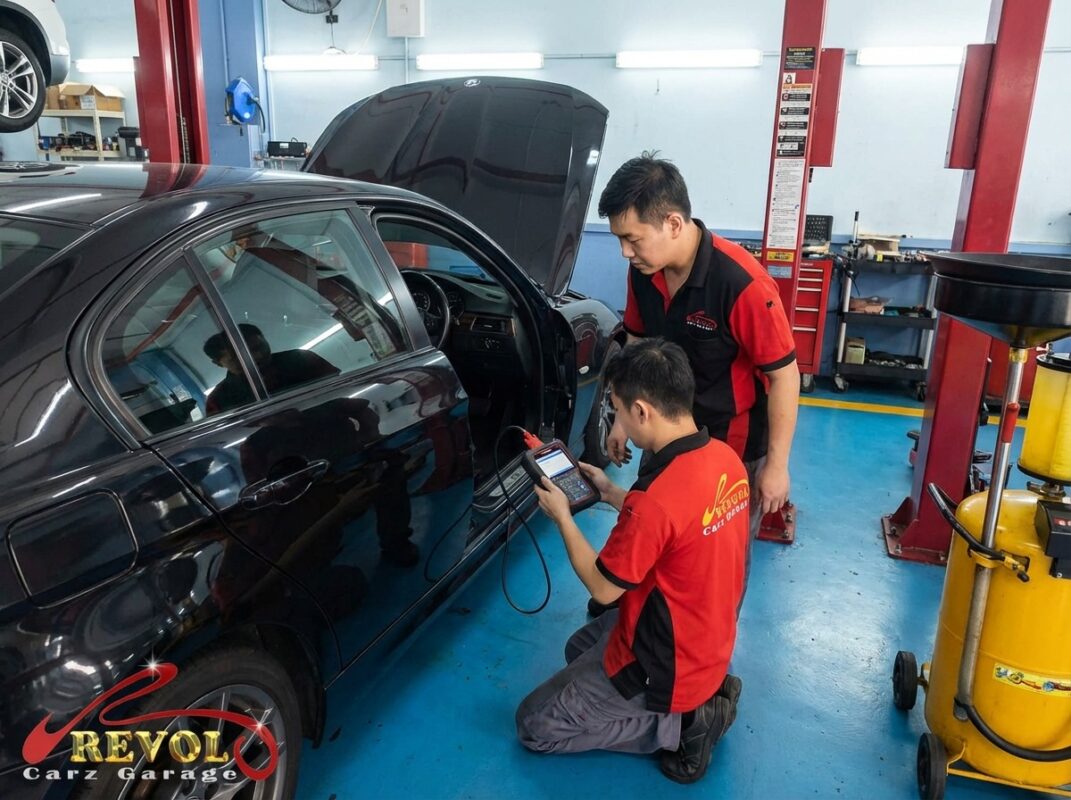
A check engine light diagnosis is the process of finding out why the check engine light turns on in your car. The most common first step is an OBD fault code scan. OBD stands for On-Board Diagnostics. Your car stores fault codes when it detects something outside the normal range. A scan reads those stored codes and helps point to the system that needs attention.
Many drivers worry when the light appears, but the light does not always mean a major breakdown. It can be a minor issue, such as a loose fuel cap, or it may require urgent repair. A proper diagnosis helps you avoid guessing, saves time, and reduces the risk of replacing the wrong parts.
What an OBD Fault Code Scan Does
An OBD fault code scan connects to your car through the OBD port, usually found under the dashboard. A scan tool reads fault codes from the car computer. These codes are grouped by systems such as engine, fuel, air intake, exhaust, and emissions.
It is important to know what a scan can and cannot do. A scan gives clues, not a complete answer on its own. Many codes indicate which area has a problem, but further checks are often necessary to confirm the actual cause.
- Reads stored fault codes that triggered the check engine light
- Shows pending codes that may become confirmed later
- Displays basic live data like sensor readings while the engine runs (depending on the tool)
- Helps plan next steps such as testing sensors, checking wiring, or inspecting for leaks
Common Reasons the Check Engine Light Comes On
The check engine light can turn on for many reasons. Some issues affect drivability and fuel use. Others are mainly related to emissions, which is common in modern vehicles because the system is designed to detect even small changes.
- Loose or damaged fuel cap
- Faulty oxygen sensor
- Worn spark plugs or ignition coils
- Air intake leaks or vacuum leaks
- Mass airflow sensor issues
- Catalytic converter efficiency problems
- EVAP system leaks (fuel vapour control)
- Battery voltage or charging system issues
In Singapore, stop-start traffic and hot weather can make some problems show up earlier, especially for ignition parts and cooling-related sensors. Regular maintenance helps, but a scan is still useful when the light appears without warning.
Understanding OBD Fault Codes in Simple Terms
OBD fault codes usually start with a letter and four numbers. The letter shows the type of system. For example, P codes are powertrain-related, which includes the engine and transmission. The code format helps technicians narrow down the issue faster.
- P codes: engine and transmission related
- B codes: body-related, such as airbags or seat systems (varies by car)
- C codes: chassis-related, such as ABS or steering systems (varies by car)
- U codes: communication-related, such as network or module errors
Two cars can show the same code but have different root causes. For example, a sensor code might be caused by a damaged wire, a connector issue, or a leak that affects sensor readings. That is why a scan should be followed by simple checks and, when needed, a deeper test.
What Happens After the Scan
After reading the fault codes, the next step is to confirm the cause. This is where diagnosis becomes more than just reading the code. A careful process can prevent repeat issues and reduce the chance of the light coming back soon after clearing it.
- Review the code description and related freeze frame data (snapshot of conditions when the code was stored)
- Check basic items like fuel cap seal, visible hoses, and obvious wiring damage
- Test related sensors and circuits where needed
- Inspect for vacuum leaks, exhaust leaks, or EVAP leaks if relevant
- Confirm the fix with a road test and a re-scan
Clearing the code without fixing the cause is usually not a good idea. The light may return, and important information may be lost. In some cases, clearing codes can also reset readiness monitors, which are checks the car uses to confirm emissions systems are working properly.
Is It Safe to Drive With the Check Engine Light On
It depends on how the light behaves and how the car feels. If the light is steady and the car drives normally, it may be safe for short trips, but you should still arrange a diagnosis soon. If the light is flashing, it often suggests an engine misfire that can damage the catalytic converter. In that case, it is better to reduce driving and get help quickly.
- Steady light: usually non-urgent but should be checked soon
- Flashing light: more urgent, reduce driving and diagnose promptly
- Noticeable symptoms: shaking, power loss, strong fuel smell, overheating, or loud noises need immediate attention
Benefits of a Proper Check Engine Light Diagnosis
A proper diagnosis helps you make better choices. It can also help protect your engine and reduce long term costs.
- Finds the most likely cause faster than guessing
- Reduces the risk of replacing parts that are still good
- Helps restore fuel efficiency and smooth driving
- Prevents small issues from becoming bigger repairs
- Supports better emissions control and cleaner performance
Simple Tips to Reduce Future Check Engine Light Problems
You cannot prevent every fault, but a few habits can lower the chance of repeated warnings.
- Tighten the fuel cap until it clicks after refuelling
- Follow service intervals for engine oil, filters, and spark plugs
- Fix small drivability issues early, such as rough idle or hesitation
- Avoid driving with very low fuel often, which can stress the fuel system
- Use good-quality fuel and keep up with basic engine maintenance
FAQ
What is the difference between an OBD scan and a full diagnosis
An OBD scan reads fault codes and basic data from the car computer. A full diagnosis includes tests and inspections to confirm the real cause, such as checking wiring, leaks, sensor performance, and related components.
Can I use a cheap scanner or phone app to read the code
Basic tools can read many common codes, which can be helpful. However, some cars need more advanced tools to access deeper data. Also, reading a code does not always tell you the exact part that is faulty.
Will clearing the code fix the problem
Clearing the code only turns off the light temporarily if the issue is still present. The light usually comes back. Clearing may also remove useful information that helps with diagnosis.
Why does the check engine light come back after repairs
It can return if the root cause was not fully fixed, if there are multiple faults, or if a related part is failing. A follow-up scan and a short road test can help confirm the repair is complete.
How long does a check engine light diagnosis take
A basic OBD scan is often quick. If the code points to something that needs testing, the full diagnosis can take longer depending on access, the type of fault, and whether the issue is intermittent.

