
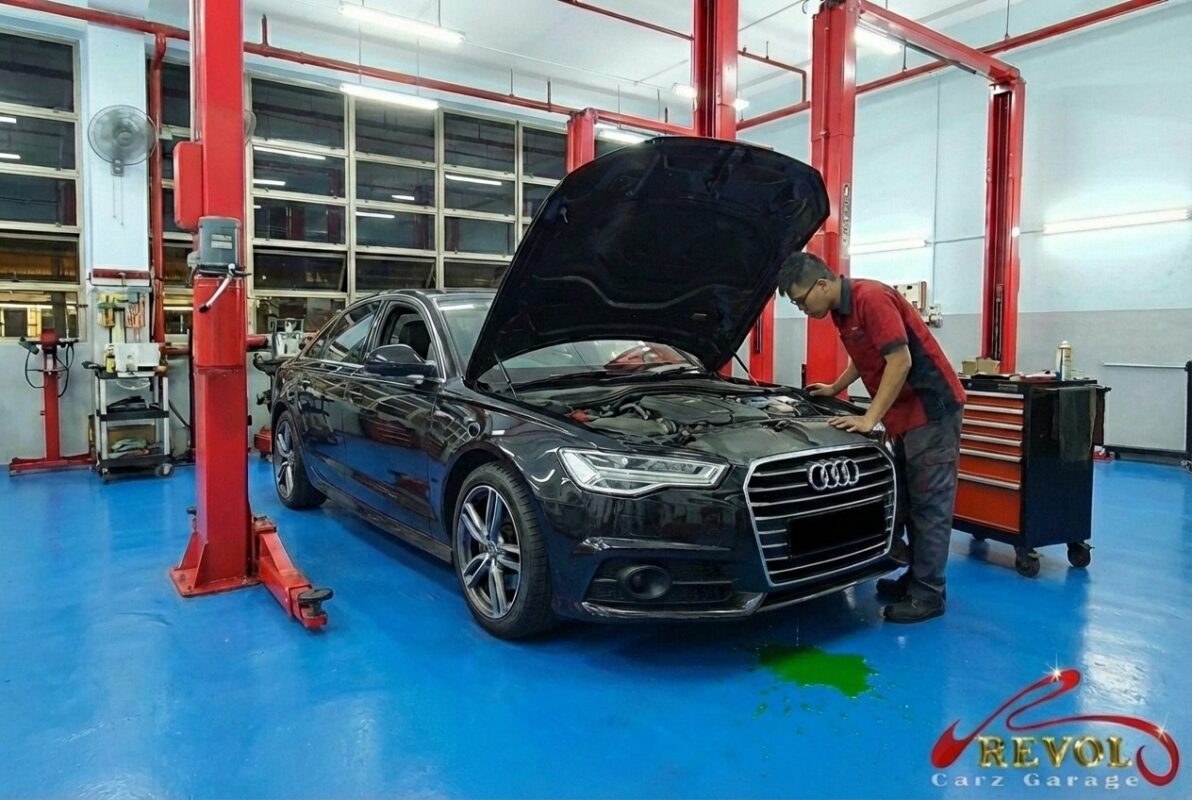
A coolant leak repair is the process of finding and fixing a leak in a vehicle’s cooling system. A pressure test is a simple diagnostic check that helps confirm where coolant is escaping. Together, they help protect the engine from overheating and reduce the risk of expensive damage.
The cooling system moves coolant (a mix of water and antifreeze) through the engine and radiator. This helps control engine temperature. If there is a leak, coolant level drops, heat builds up, and the engine may overheat.
What a coolant leak means
A coolant leak happens when coolant escapes from any part of the cooling system. Even a small leak can become a bigger problem over time, especially in warm climates and heavy traffic where engines run hotter.
- External leak: Coolant drips or seeps out and may be visible under the car or around hoses and joints.
- Internal leak: Coolant may enter the engine through a failed gasket or crack. This can be harder to spot.
What a pressure test is
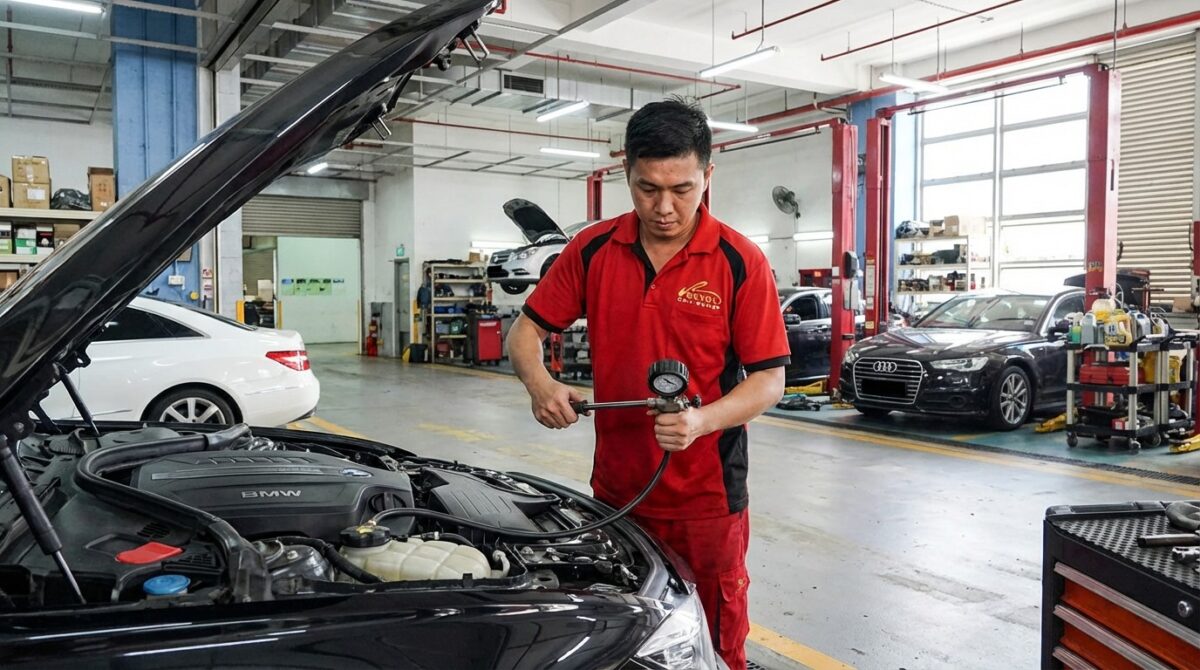
A pressure test checks whether the cooling system can hold pressure without leaking. A technician uses a hand pump tool to pressurise the system (usually when the engine is cool). If the pressure drops, it suggests a leak. Often, the leak becomes easier to see under pressure.
A pressure test can also be used after repairs to confirm the leak is fixed and the system is sealed properly.
Common causes of coolant leaks
Cooling system parts face heat, vibration, and age. Over time, seals harden, hoses soften, and plastic parts can crack. Common causes include:
- Worn or cracked radiator hoses
- Loose or damaged hose clamps
- Radiator cracks or corrosion
- Leaking water pump seal or gasket
- Faulty radiator cap that cannot hold pressure
- Leaking thermostat housing or gasket
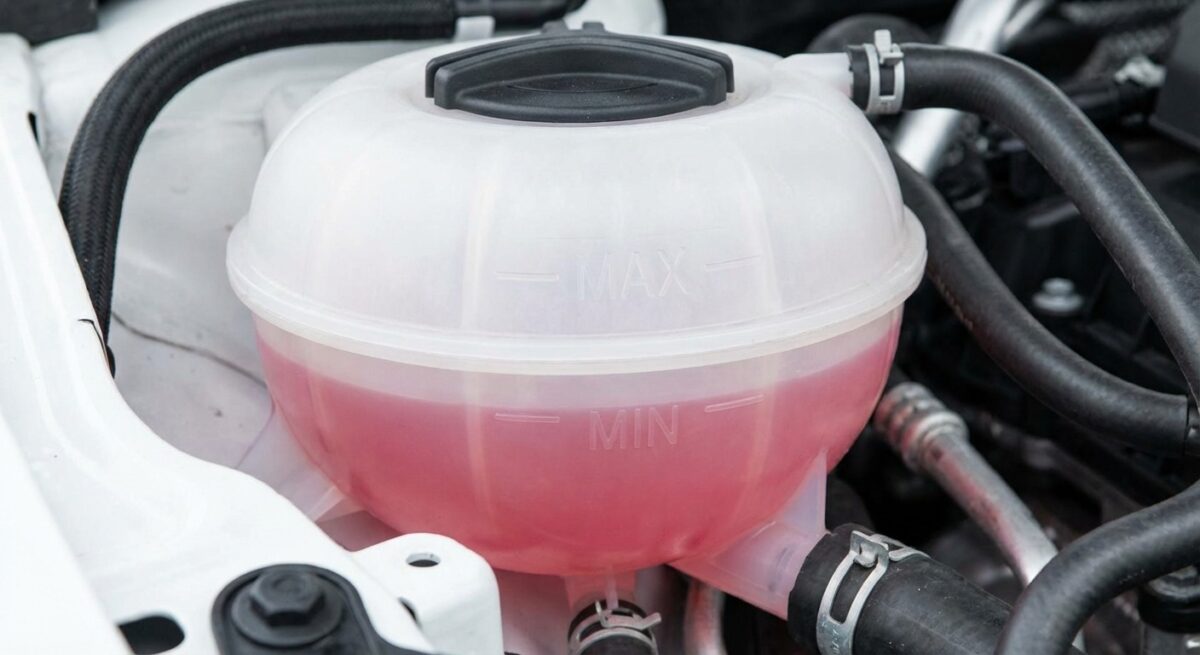
- Damaged coolant reservoir (expansion tank) or cap
- Heater core leaks (may cause damp carpet or sweet smell inside the cabin)
- Head gasket failure or engine block issues (less common, but serious)
Signs of a coolant leak
Some warning signs are obvious, while others build up slowly. Look out for:
- Low coolant level in the reservoir
- Puddles or wet spots under the car (often pink, green, orange, or blue depending on coolant type)
- Sweet smell around the engine bay or inside the cabin
- Overheating warning light or rising temperature gauge
- White steam from the bonnet area (when coolant hits hot parts)
- Weak cabin heater performance (if coolant is low)
- Visible residue or crust around hose joints and radiator seams
If the temperature gauge rises above normal, it is safer to stop and let the engine cool. Driving while overheated can damage the cylinder head, head gasket, and other components.
How coolant leak repair is usually done
Repair steps depend on where the leak is found. In many cases, the process includes both diagnosis and repair checks.
- Visual inspection: Checking hoses, joints, radiator, reservoir, and undercarriage for wet spots or stains.
- Pressure testing: Pressurising the system to reveal leaks that may not show up otherwise.
- Leak confirmation: Identifying the exact source, not just the general area.
- Part replacement or sealing: Replacing a hose, clamp, cap, gasket, water pump, radiator, or other failed component as needed.
- Refill and bleed: Refilling coolant to the correct level and bleeding air from the system to prevent hot spots.
- Re-test: Repeating a pressure test or running the engine to confirm there are no further leaks.
Quick sealant products may be marketed as an easy fix, but they can cause clogging and do not address the root cause. A proper repair focuses on the failed part and system sealing.
Why pressure testing matters
A cooling system can leak only when hot and under pressure, which makes some leaks difficult to spot. Pressure testing helps by:
- Finding small leaks early before they become major failures
- Reducing guesswork by confirming the leak source
- Checking radiator cap sealing and overall system integrity
- Verifying repairs are completed correctly
What happens if a coolant leak is ignored
Ignoring a coolant leak can lead to overheating and knock-on damage. Common outcomes include:
- Frequent top-ups and unpredictable coolant loss
- Overheating in traffic or during long drives
- Warped cylinder head or blown head gasket
- Damage to plastic cooling parts due to repeated heat stress
- Breakdowns and higher repair costs
Fixing a leak early is usually simpler and helps keep the engine running at the right temperature.
Tips to reduce the risk of coolant leaks
Cooling system problems are often preventable with basic care:
- Check coolant level regularly when the engine is cool
- Use the correct coolant type and mixture recommended for the vehicle
- Replace old hoses and caps before they fail
- Do not open the radiator cap when the engine is hot
- Watch for repeated low coolant levels, even if there are no puddles
FAQ
How long does a coolant pressure test take?
A basic pressure test is usually quick, often around 15 to 30 minutes. Extra time may be needed if the leak is hard to access or if further checks are required.
Can a coolant leak only happen when the engine is hot?
Yes. Some leaks appear only when the system builds pressure as it warms up. That is why pressure testing is helpful, as it can reproduce the conditions that trigger the leak.
Is it safe to drive with a small coolant leak?
It is risky. Even a small leak can suddenly worsen and cause overheating. If you must drive a short distance, monitor the temperature gauge closely and avoid heavy loads, but it is better to address the issue as soon as possible.
What does coolant look like when it leaks?
Coolant colour varies by type and brand, commonly pink, green, orange, or blue. It may leave a sweet smell and a slippery feel, and can dry into a white or coloured crust near the leak point.
Do you always need to replace parts during coolant leak repair?
Not always, but many leaks come from worn parts like hoses, clamps, caps, and gaskets. A proper inspection and pressure test help confirm whether a part needs replacement or if a connection simply needs tightening or resealing.

