
A car cooling system keeps the engine at a safe temperature. It moves coolant through the engine and releases heat through the radiator. When the cooling system is not working properly, the engine can overheat. Overheating can lead to expensive damage, so early checks and timely repair matter.
Cooling system repair usually focuses on three key parts: the radiator, the thermostat, and the water pump. These parts work together with hoses, coolant, and the radiator fan to keep temperatures stable in daily driving, including stop start traffic and warm weather.
What the cooling system does
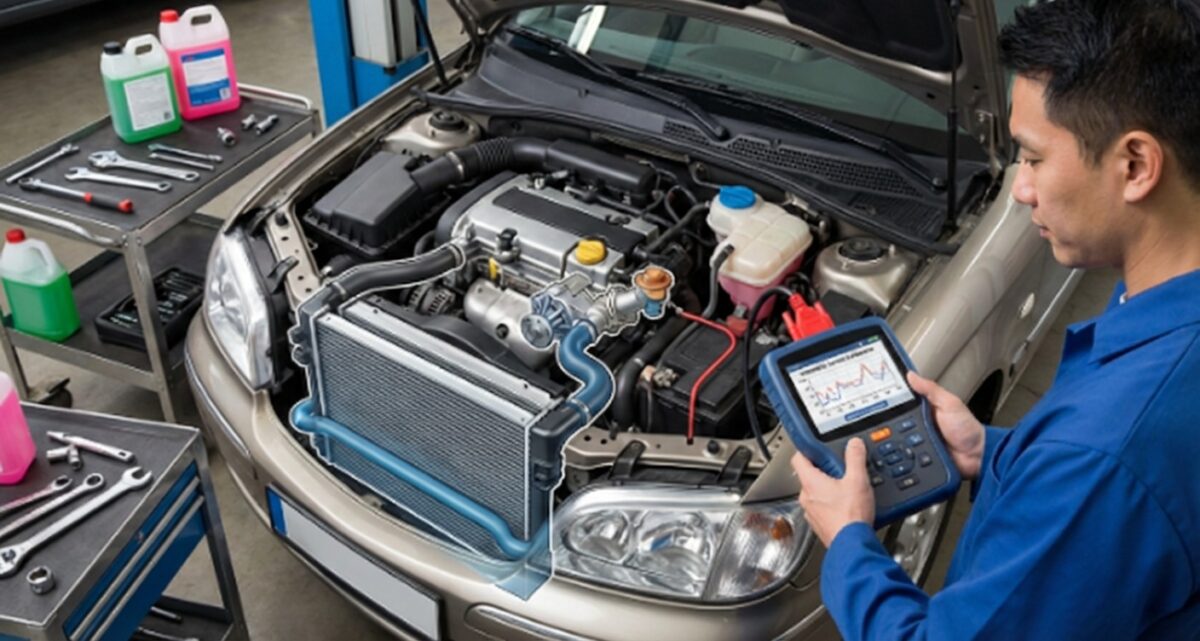
The cooling system removes heat from the engine. Coolant absorbs heat as it circulates through passages in the engine. The heated coolant then flows to the radiator, where air movement helps lower the temperature. The coolant then returns to the engine to repeat the cycle.
- Coolant carries heat away from the engine
- Radiator helps release heat into the air
- Thermostat controls when coolant begins to flow fully
- Water pump pushes coolant through the system
- Hoses and clamps connect parts and keep coolant sealed
Image Prompt 1: Close up photo of a modern car engine bay focusing on radiator, coolant reservoir, and hoses, clean lighting, realistic style
Radiator repair and replacement
The radiator is the main heat exchanger. It cools hot coolant as air passes through the radiator fins. A radiator can fail due to age, corrosion, impact damage, or blocked internal passages.
Common radiator problems include leaks, clogged fins, and weak cooling performance. Some leaks can appear as wet patches near the front of the car or as dried residue around radiator seams. A blocked radiator may not leak, but it can still cause overheating because coolant cannot cool properly.
- Radiator leak: coolant loss, sweet smell, puddles under the front of the car
- Blocked radiator: overheating in traffic, temperature rising during long drives
- Damaged fins: reduced airflow, poor cooling under load
Repair may involve fixing a minor leak, replacing the radiator cap, or replacing the radiator if the damage is severe. A pressure test is often used to confirm where coolant is escaping.
Thermostat repair and replacement
The thermostat is a temperature controlled valve. It stays closed when the engine is cold to help it warm up faster. Once the engine reaches the correct temperature, it opens to allow coolant to circulate through the radiator.
If the thermostat sticks closed, coolant cannot flow properly, and the engine may overheat quickly. If it sticks open, the engine may take longer to warm up, and heating performance inside the cabin may feel weak. Both cases can affect fuel efficiency and overall engine performance.
- Stuck closed: rapid overheating, coolant may boil, heater may blow hot briefly then turn cooler
- Stuck open: slow warm up, weak cabin heat, engine temperature staying lower than normal
- Intermittent sticking: temperature gauge moving up and down
Thermostats are usually replaced rather than repaired. During replacement, it is important to use the correct temperature rating and to bleed air from the system after refilling coolant.
Image Prompt 2: Realistic close up of a car thermostat in a mechanic’s gloved hand beside a clean workbench, clear detail, neutral background
Water pump repair and replacement
The water pump is the part that moves coolant through the engine and radiator. Many water pumps are driven by the engine belt. Some cars use an electric water pump. Over time, the pump bearings, seals, or impeller can wear out.
A failing water pump can cause coolant leaks and poor circulation. If circulation is weak, the engine may overheat even if the radiator and thermostat are in good condition.
- Coolant leak near the pump: wet area around the pump, dried residue, steady coolant loss
- Noise: whining or grinding sounds from the front of the engine
- Overheating: temperature rising especially at low speeds or under load
- Steam: visible steam from the engine bay in severe cases
Replacement often includes inspecting related parts such as the drive belt, tensioner, and pulleys. For some engines, the water pump is linked to the timing system, which can affect labour time and the list of parts replaced together.
Common signs that cooling system repair is needed
Cooling system faults can show up in different ways. Some signs appear early and should not be ignored. If you continue driving while overheating, the risk of head gasket failure and engine damage increases.
- Temperature gauge rising higher than normal
- Warning light for engine temperature or low coolant
- Coolant level dropping between top ups
- Puddles under the car after parking
- Sweet smell from the engine bay
- Heater not working as expected
- Steam coming from the bonnet area
What a typical repair process looks like
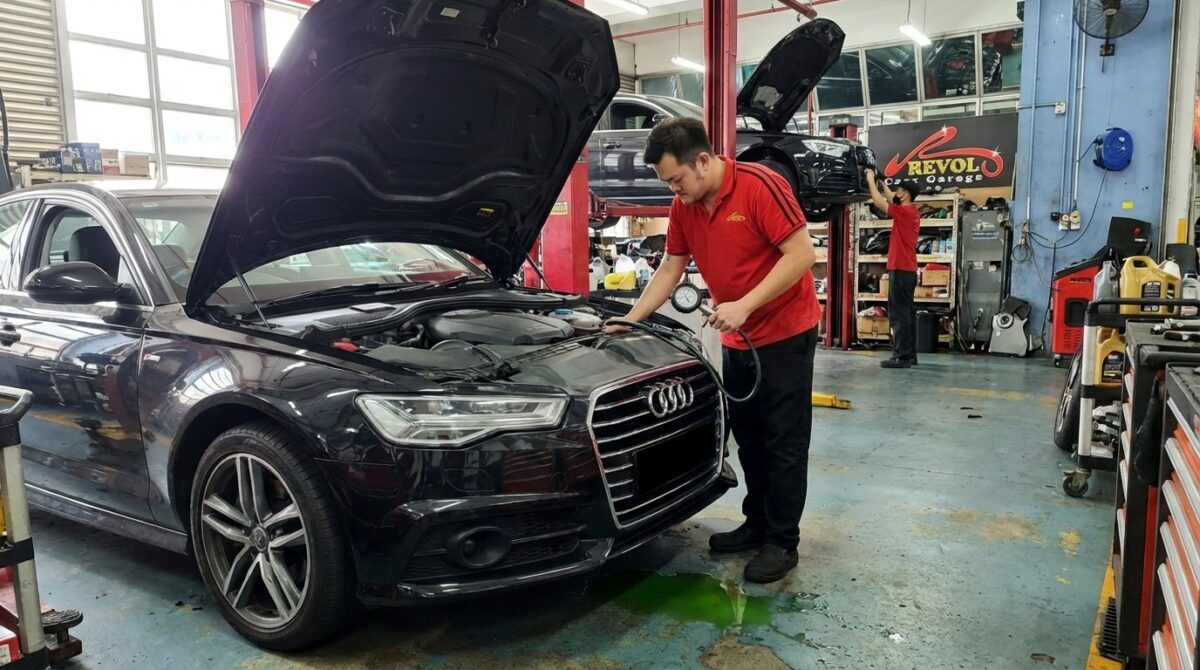
Cooling system repair is usually done in a clear sequence to avoid missed issues. The exact steps depend on the symptoms and the car model, but the process often includes the checks below.
- Visual inspection of hoses, radiator, reservoir, and clamps
- Pressure test to find leaks and weak points
- Thermostat operation check using temperature behaviour and coolant flow
- Radiator fan check to confirm it runs when needed
- Water pump inspection for leaks, noise, and circulation
- Coolant drain and refill with the correct type and mixture
- Air bleeding to reduce hotspots and unstable temperatures
- Final road test to confirm stable operating temperature
Image Prompt 3: Mechanic performing a cooling system pressure test on a car, visible pressure tester tool connected to coolant reservoir, realistic workshop setting
Why coolant type and correct filling matter
Not all coolant is the same. Using the wrong coolant can lead to corrosion, sludge, and leaks. Mixing incompatible coolant types can also reduce protection and create deposits that block narrow passages in the radiator and engine.
Correct filling is just as important. Air trapped in the system can cause hot spots and sudden temperature spikes. Proper bleeding helps remove air and makes the cooling system work smoothly.
How to reduce the risk of overheating
Some cooling system problems cannot be avoided, but good habits can reduce the risk.
- Check the coolant level regularly when the engine is cool
- Fix small leaks early before they become bigger failures
- Replace worn hoses and clamps before they crack or burst
- Use the correct coolant type recommended for your car
- Do not ignore temperature warnings, even if the car still drives normally
Glossary quick terms
This section explains a few common terms used in cooling system repair.
- Coolant: liquid mixture that removes heat and prevents corrosion and freezing
- Radiator cap: cap that helps maintain pressure in the cooling system
- Bleeding: removing trapped air after coolant refill
- Pressure test: test that helps locate leaks by pressurising the system
- Overheating: engine temperature rising above the safe operating range
FAQ
What causes a car to overheat suddenly?
Sudden overheating is often caused by a major coolant leak, a thermostat stuck closed, a failed water pump, or a radiator fan that is not working. A quick check of coolant level and visible leaks can help point to the cause.
Can I drive if the temperature gauge is slightly higher than normal?
It is safer to treat any unusual temperature rise as a warning. Stop when it is safe, let the engine cool, and check the coolant level. Continuing to drive while hot can lead to serious engine damage.
How do I know if my radiator is clogged?
A clogged radiator may cause overheating in traffic or during longer drives without obvious leaks. A workshop can confirm with temperature checks across the radiator, coolant flow checks, and inspection for internal blockage.
How often should coolant be replaced?
It depends on the coolant type and the car manufacturer’s schedule. Many modern coolants last several years, but it is best to follow the service interval for your model and avoid mixing different coolant types.
Is a water pump leak always easy to spot?
Not always. Some leaks are slow and only appear when the engine is hot and pressurised. A pressure test can help reveal leaks around the pump seal and nearby parts.

