
Suspension bushing and control arm replacement refers to changing worn suspension parts that help your car ride smoothly, steer accurately, and stay stable on the road. Bushings are small rubber or polyurethane pieces that cushion joints and reduce vibration. Control arms are metal links that connect the wheel hub area to the car body or subframe, guiding wheel movement as you drive over bumps.
In many cars, bushings are fitted inside the control arm and at other suspension mounting points. When these parts wear out, you may feel more noise, vibration, or looseness. Replacing them helps restore proper handling and can prevent uneven tyre wear and further suspension damage.
Key terms in simple language
This glossary explains the most common terms you may see on inspection reports or quotations.
- Suspension bushing: A flexible insert that sits between metal parts to absorb shocks and reduce vibration.
- Control arm: A suspension link that holds wheel alignment angles and allows controlled up and down wheel movement.
- Lower control arm: The control arm located below the wheel hub area in most car designs.
- Upper control arm: A control arm located above the wheel hub area, found on some car models.
- Ball joint: A joint that allows the control arm to pivot while steering and moving over bumps.
- Bushing wear: Cracking, tearing, softening, or separation of the bushing material.
- Alignment: Adjustment of wheel angles to keep the car tracking straight and tyres wearing evenly.
What these parts do
Suspension parts work together to keep your tyres in good contact with the road. Bushings act like cushions between hard metal components. They reduce harshness, help keep the cabin quiet, and allow controlled movement as the suspension works. Control arms hold key geometry that affects steering feel and stability.
When bushings and control arms are in good condition, the car usually feels planted, steering is consistent, and bumps are handled with less noise and shake.
Common signs of worn bushings or control arms
Wear can be gradual, so symptoms are often most noticeable during braking, turning, or driving over uneven roads. Common signs include:
- Clunking or knocking sounds when going over bumps
- Steering that feels loose, vague, or pulls to one side
- Vibration felt through the steering wheel or floor
- Uneven or faster tyre wear, especially on one edge
- Wandering at higher speeds, where the car does not feel settled
- Shaking or movement during braking
Why these parts wear out
In Singapore, frequent stop and go driving, speed humps, and potholes can add stress to suspension joints. Heat, moisture, and age also cause rubber to harden and crack over time. Once a bushing loses its flexibility, it cannot absorb movement the way it should. A worn ball joint or bent control arm can also happen after curb impacts or accidents, even minor ones.
Replacement options and what they mean
Depending on your car model and the condition of the parts, replacement may involve:
- Bushing replacement only: The worn bushings are pressed out and new ones are installed. This can be cost effective when the control arm itself is still in good shape.
- Control arm assembly replacement: The full control arm is replaced, often including pre-fitted bushings and sometimes a ball joint. This is common when the arm is worn, damaged, or when pressing bushings is not practical.
- Pair replacement: Left and right parts may be replaced together to keep handling balanced, especially when wear is similar on both sides.
What happens during inspection
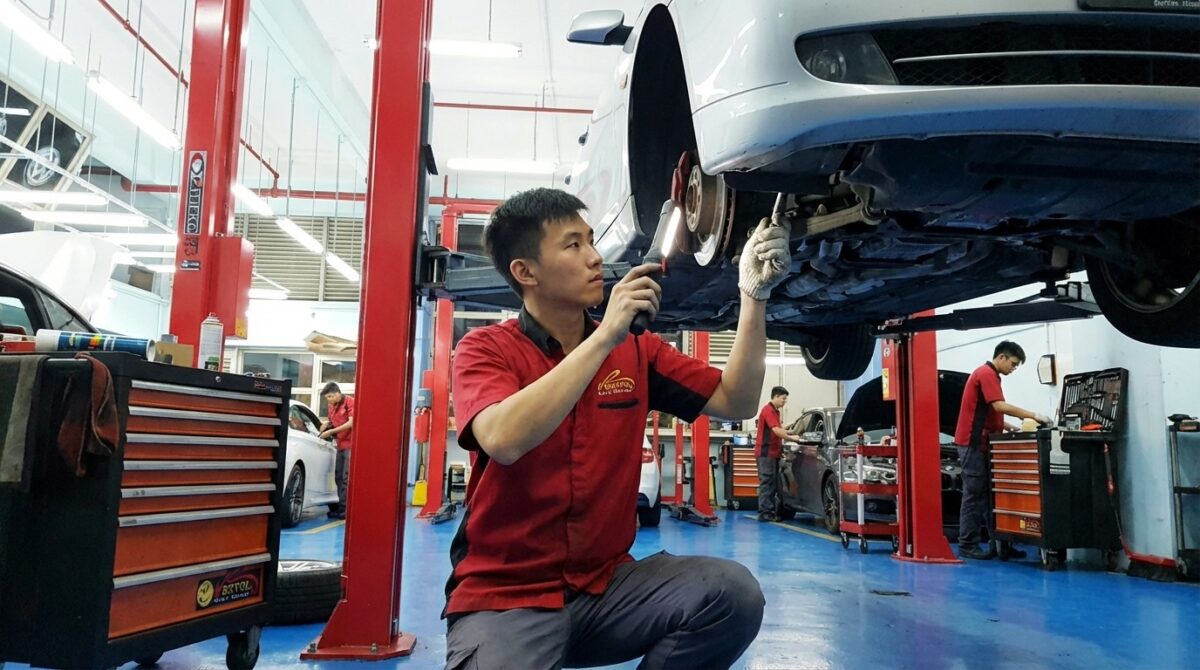
A proper suspension check usually includes a visual inspection for cracks and leaks, and a physical check for play in joints. Technicians may look for:
- Cracked, torn, or separated bushings
- Movement in ball joints when the wheel is lifted
- Bent or damaged control arm shape
- Tyre wear patterns that suggest alignment issues
Some wear is only obvious under load, so the car may be checked at different suspension positions.
After replacement
After bushings or control arms are replaced, wheel alignment is commonly recommended. This helps ensure the car tracks straight and tyres wear evenly. You may also notice:
- Smoother ride over bumps
- More stable steering and braking
- Less noise from the suspension area
If other suspension parts are also worn, they may need attention to get the best result. A single new part can improve the feel, but the suspension works as a system.
How to help the parts last longer
- Slow down for speed humps and rough patches
- Avoid hitting kerbs when parking
- Check tyre pressure regularly to reduce extra stress
- Get alignment checked if the car pulls or tyres wear unevenly
- Address knocking sounds early to avoid knock-on damage
When replacement becomes urgent
Some symptoms suggest you should get the car checked soon. If a bushing is badly torn or a ball joint is loose, the wheel can shift more than it should. That affects braking and cornering stability. If you hear loud clunks, feel sudden steering changes, or notice severe tyre wear, an inspection should not be delayed.
Cost factors in Singapore
Prices vary by car model and parts design. Common factors include the type of suspension, whether bushings can be replaced separately, and whether alignment is included. Labour can differ depending on how easy the bolts are to access and whether parts are seized due to age. Using quality parts and correct installation methods matters, as these parts handle constant load.
FAQ
What is the difference between a suspension bushing and a control arm?
A suspension bushing is a flexible cushion that sits between metal parts. A control arm is a metal link that positions the wheel and helps control movement. Many control arms contain bushings and sometimes a ball joint.
Can I replace only the bushings and keep the control arm?
Sometimes yes. If the control arm is not bent or worn and the design allows pressing out bushings, it can be done. In other cases, replacing the full control arm assembly is more practical.
Do I need wheel alignment after control arm replacement?
In most cases, yes. Control arms affect wheel angles. Alignment helps restore straight tracking and even tyre wear after suspension work.
How long do suspension bushings usually last?
It depends on driving conditions, vehicle design, and material quality. Wear often increases with age, heat, and repeated impacts from rough roads and kerbs.
Is it safe to drive with worn control arm bushings?
Mild wear may feel like small vibrations, but severe wear can affect steering and braking stability. If there are loud knocks, pulling, or uneven tyre wear, get the suspension checked as soon as possible.

