
A wheel bearing is a small but important part that helps each wheel spin smoothly. It sits inside the wheel hub and supports the weight of the vehicle while reducing friction as the wheel turns. Over time, wheel bearings can wear out due to age, heat, water, road dirt, and everyday driving. When that happens, the wheel may no longer rotate as smoothly as it should.
Wheel bearing replacement means removing the worn bearing and fitting a new one so the wheel can spin correctly again. This job matters because a failing wheel bearing can affect handling, tyre wear, braking stability, and overall safety.
What a Wheel Bearing Does
Wheel bearings are designed to handle both the load of the car and the forces created when you turn, accelerate, and brake. A healthy wheel bearing helps with:
- Quiet, smooth wheel rotation
- Stable steering feel
- Even tyre contact with the road
- Consistent braking and control
Modern vehicles often use a sealed wheel bearing unit. These are usually not serviceable, which means they are replaced as a complete unit once worn.
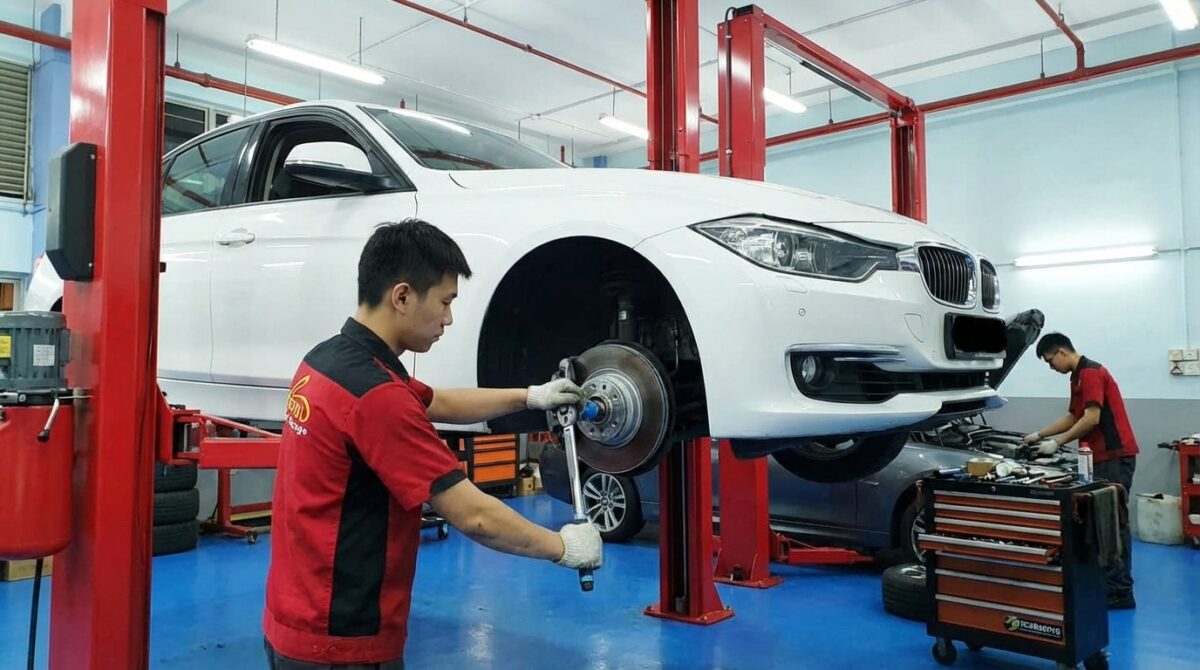
Common Signs a Wheel Bearing May Need Replacement
Wheel bearing wear can start quietly and get worse over time. Some symptoms can feel similar to tyre noise or brake issues, so a proper inspection is useful. Typical signs include:
- A humming, droning, or growling noise that gets louder with speed
- Noise that changes when turning left or right
- Vibration felt through the steering wheel or floor
- Loose steering feel or wandering on the road
- Uneven or faster tyre wear on one corner
- In severe cases, a wheel may feel unstable or develop play
If the sound becomes louder quickly or you feel a strong vibration, it is best to reduce driving and get the vehicle checked soon. A wheel bearing that breaks down completely can lead to major damage to the hub and surrounding parts.
Why Wheel Bearings Wear Out
Wheel bearings are built to last, but they are not lifetime parts in every case. Common causes of early wear include:
- Normal ageing and mileage
- Water or dirt entering the bearing seal
- Hard impacts, such as hitting potholes or kerbs
- Incorrect installation or using the wrong tools
- Over tightened axle nut or incorrect torque settings
- Driving with damaged suspension components that add extra stress
In Singapore, frequent rain and wet roads can make seal condition more important. If water gets past a damaged seal, it can wash out lubrication and speed up wear.
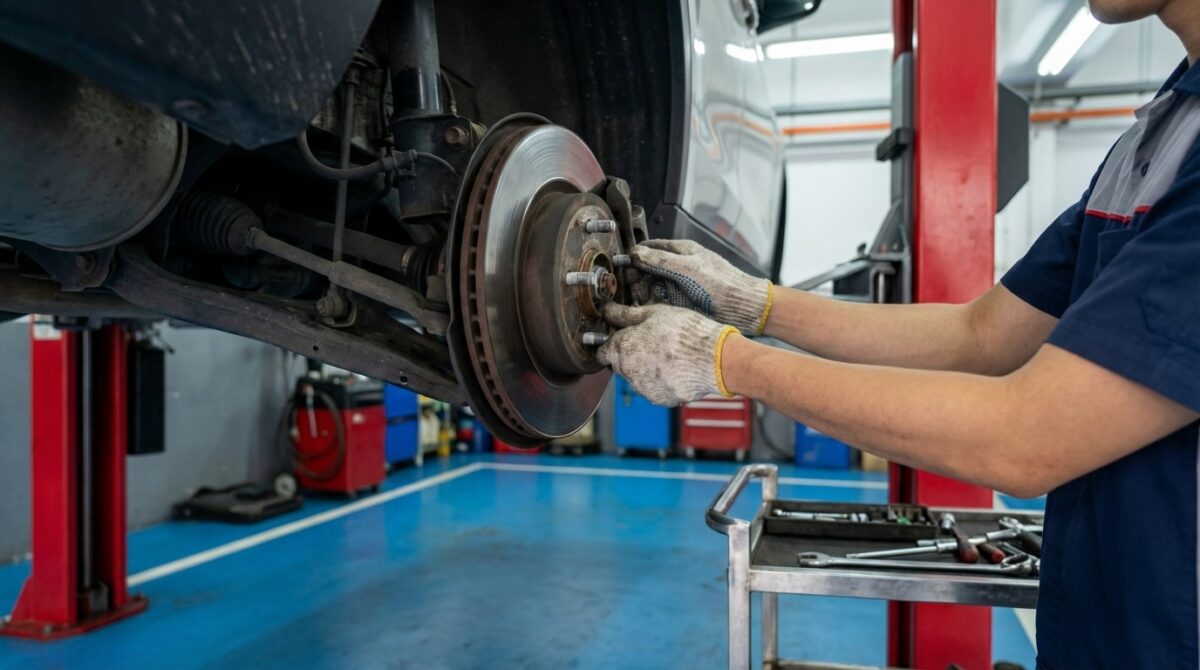
What Happens During Wheel Bearing Replacement
The exact steps depend on the vehicle design, but most wheel bearing replacement jobs follow a similar process:
- Raise the vehicle safely and remove the wheel
- Remove brake components as needed to access the hub area
- Remove the hub or bearing unit, depending on the design
- Press out the old bearing if it is a press fit type
- Clean and inspect the hub, knuckle, and related parts
- Install the new bearing or new hub bearing unit
- Reassemble and torque bolts and axle nut to correct specifications
- Check for smooth rotation and confirm there is no play
- Road test to confirm the noise and vibration are resolved
Some vehicles use a bearing that must be pressed into the steering knuckle. Others use a bolt on bearing hub unit. Press fit jobs usually take more time and require special tools to avoid damage.
Front vs Rear Wheel Bearings
Both front and rear wheel bearings do the same basic job, but the workload can differ:
- Front wheel bearings often deal with more steering forces and may wear faster on some cars.
- Rear wheel bearings can still wear from load, age, and water intrusion, especially on vehicles that carry heavy items often.
The replacement method and cost can vary depending on where the bearing sits and how accessible it is.
What Affects the Cost
Wheel bearing replacement cost is not the same for every vehicle. Common factors that can change the price include:
- The vehicle make and model
- Whether the bearing is a separate part or part of a hub unit
- Press fit design vs bolt on design
- Labour time based on how complex the removal is
- Condition of surrounding parts, such as a seized hub or worn hub surface
- Whether related parts need replacement, such as an axle nut, hub, or sensor ring
In some cases, a noisy bearing may also come with worn tyres or alignment issues, especially if the problem has been ignored for a long time. A quick check can help confirm whether extra work is needed.
How Long the Job Usually Takes
Time needed depends on the vehicle and the type of bearing. A simple bolt on hub unit may take less time than a press fit bearing that needs careful removal and pressing. Rust, tight bolts, and limited space can also add time. A proper road test after installation helps confirm the repair is successful.
Can You Drive With a Noisy Wheel Bearing
It is not ideal to keep driving with a worn wheel bearing. At first, you may only hear a mild humming sound. As the bearing wears, it can overheat and develop play. This can affect steering stability and braking feel. In extreme cases, it can damage the hub and cause more expensive repairs. If you notice clear symptoms, it is safer to have it inspected soon.
How to Help Wheel Bearings Last Longer
You cannot prevent all wear, but a few habits may help reduce early failure:
- Avoid hitting potholes and kerbs where possible
- Fix suspension or steering issues early to reduce extra load
- Do not ignore tyre or wheel vibrations
- Use correct torque settings during wheel and axle work
- Check for seal damage after impacts or accidents
FAQ
What does a wheel bearing sound like when it is failing?
Many drivers describe it as a humming, droning, or growling noise that increases with speed. It may change when you turn left or right.
Is wheel bearing replacement urgent?
It can become urgent if the noise is loud, the vibration is strong, or there is play in the wheel. A severely worn bearing can affect control and may cause further damage if left too long.
Should I replace both wheel bearings on the same axle together?
Not always. If only one side is worn, replacing that bearing may be enough. However, if the vehicle has high mileage or both sides show wear, replacing both can be sensible.
Can a bad wheel bearing affect tyre wear?
Yes. If the bearing develops play, the wheel may not track correctly. This can contribute to uneven tyre wear and handling issues.
Will wheel bearing replacement fix steering vibration?
If the vibration is caused by bearing wear, replacement can help. But vibration can also come from tyres, wheel balance, alignment, or suspension parts, so inspection is important.

