
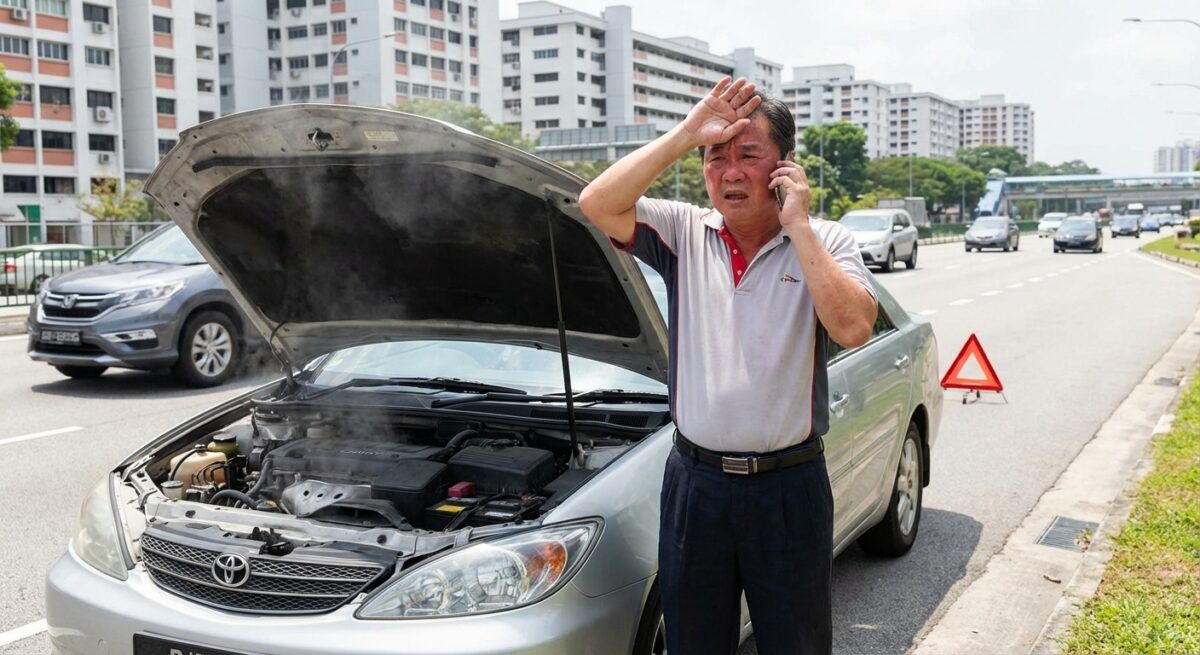
Engine overheating diagnosis is the step-by-step process of finding out why a car engine is running hotter than it should. Overheating can happen suddenly or build up over time. It may be linked to coolant loss, poor airflow, a weak water pump, a stuck thermostat, radiator problems, or other cooling system faults. A proper diagnosis helps identify the real cause so the repair solves the issue and reduces the chance of the problem coming back.
In Singapore, overheating risks can increase in heavy traffic, long idling, and hot weather. If an engine continues to overheat, it can damage parts like the head gasket, radiator, hoses, and even the engine block. That is why diagnosis should focus on both the symptom and the root cause.
What does engine overheating means
An engine is designed to operate within a normal temperature range. The cooling system keeps temperatures steady by circulating coolant through the engine and radiator, while fans and airflow help remove heat. Overheating happens when the system cannot control heat properly. This can be due to low coolant, restricted flow, trapped air, poor heat exchange, or incorrect sensor readings.
Common signs of engine overheating
- Temperature gauge rising above the normal range
- Overheating warning light on the dashboard
- Steam or a sweet smell from the engine bay
- Coolant level dropping over time
- Coolant leaks under the car
- Heater blowing cool air when it should be warm
- Engine power feels weak or the car goes into limp mode
Some cars may not show a strong temperature gauge change, especially if the sensor or thermostat behavior hides the real temperature. That is why a diagnosis should include both visual checks and proper testing.
Typical causes found during diagnosis
Overheating can come from one issue or a combination of issues. Below are common causes that are often confirmed during a proper diagnosis.
- Low coolant level: Often caused by leaks, poor bleeding, or slow evaporation from an aging cap or tank.
- Coolant leaks: Leaks can occur at hoses, radiator seams, water pump seals, thermostat housing, or the expansion tank.
- Radiator blockage: Internal clogging reduces heat removal. External blockage from dirt or debris can restrict airflow.
- Faulty radiator cap: A weak cap can lower system pressure and cause boiling at a lower temperature.
- Thermostat issues: A stuck thermostat may prevent proper coolant flow and cause fast overheating.
- Cooling fan problems: A bad fan motor, relay, fuse, or fan control module can reduce cooling at low speeds and in traffic.
- Water pump wear: A worn impeller or internal leak can reduce circulation and create hot spots.
- Air trapped in the system: Air pockets can stop circulation and cause sudden temperature spikes.
- Head gasket failure: Combustion gases can enter the cooling system, causing pressure, bubbles, and repeated overheating.
- Sensor or electrical faults: Incorrect readings can trigger warnings or hide real overheating, depending on the fault.
What a basic overheating diagnosis includes
A good diagnosis is not just topping up coolant and hoping it is fine. It typically follows a clear sequence to narrow down the cause.
- Interview and symptom review: When overheating happens, such as in traffic, at high speed, or only when the air conditioner is on.
- Visual inspection: Check coolant level, coolant color, oil condition, leaks, hose condition, and signs of dried coolant residue.
- Pressure test: Pressurise the cooling system to find slow leaks that do not show when the engine is cold.
- Radiator cap test: Confirm the cap holds pressure and releases at the correct rating.
- Fan operation test: Verify fan turns on at the correct temperature and responds to air conditioner demand.
- Thermostat and flow checks: Remember that a thermostat can fail intermittently, so testing may include temperature tracking.
- Temperature verification: Compare sensor readings to actual temperatures using a scan tool and an external thermometer.
- Air purge and bleed: Remove trapped air and confirm stable coolant circulation.
- Combustion gas test: Check for signs of exhaust gases in coolant if head gasket issues are suspected.
Image Prompt 2: A realistic photo of an open car bonnet showing the coolant reservoir and radiator area during inspection, clean workshop environment, no people, no text.
Simple checks you can do safely
Some basic checks can help you describe the problem clearly before a full diagnosis. Do not open the radiator cap when the engine is hot.
- Check the temperature gauge pattern, such as overheating only at idle or also while driving
- Look for coolant puddles after parking, especially near the front of the car
- Check the coolant reservoir level when the engine is cold
- Listen for the cooling fan, especially when the air conditioner is on
- Note any white steam, sweet smell, or warning messages
If you see steam, or the warning light stays on, it is safer to stop driving and let the engine cool. Continued driving while overheating can increase repair costs.
How technicians confirm the root cause
Overheating can be misleading because one problem can create another. For example, a small leak can cause low coolant, which then creates air pockets and false temperature changes. A careful diagnosis looks for the starting point, not only the last symptom.
Technicians often use a combination of pressure testing, live data readings, temperature mapping across the radiator, and controlled road tests. If a head gasket issue is suspected, tests may include checking for bubbles in the coolant, abnormal pressure rise, or combustion gases in the cooling system.
What happens after diagnosis
After the cause is confirmed, the repair plan should address:
- The failed part or leak point
- Any secondary damage, such as swollen hoses or contaminated coolant
- Correct coolant type and mixture
- Proper bleeding to remove air
- A verification step, such as a temperature stability test during idling and a road test
When done properly, an engine overheating diagnosis helps prevent repeat overheating by ensuring the repair matches the real issue.
Prevention tips that reduce overheating risk
- Check coolant level regularly when the engine is cold
- Fix small leaks early before they become bigger failures
- Replace worn hoses and caps before they fail
- Use the correct coolant type recommended for your car
- Keep the radiator area clean for good airflow
- Do not ignore warning lights, even if the car seems to drive normally
FAQ
What is the most common cause of engine overheating?
Low coolant from a leak is a common cause. The leak may be slow and only show under pressure, which is why testing is important.
Can I keep driving if the temperature gauge is high?
It is safer to stop as soon as possible and let the engine cool. Driving while overheating can damage the engine and increase repair cost.
Why does my car overheat only in traffic?
This often points to cooling fan issues, weak airflow through the radiator, or low coolant. At higher speeds, airflow can hide the problem.
Does overheating always mean a head gasket problem?
No. Many overheating cases come from leaks, thermostat problems, radiator blockage, or fan faults. A head gasket test is usually done only when there are signs pointing to it.
How long does an overheating diagnosis confirm take?
It depends on the symptom. Some issues are found quickly with a visual check and pressure test. Intermittent overheating may require a controlled test drive and temperature tracking.

