
An oil leak is when engine oil escapes from parts that are meant to stay sealed. In many cars, the most common leak points are the valve cover, the timing cover, and the oil sump. These areas use gaskets and sealants to keep oil inside the engine. Over time, heat, vibration, and age can cause those seals to weaken. A proper oil leak repair fixes the root cause, not just the mess on the outside.
Oil leaks matter because engine oil lubricates moving parts and helps manage heat. If the oil level drops too far, the engine can wear faster and run hotter. Even small leaks can cause problems when oil reaches rubber hoses, engine mounts, or hot surfaces.
What oil leak repair involves
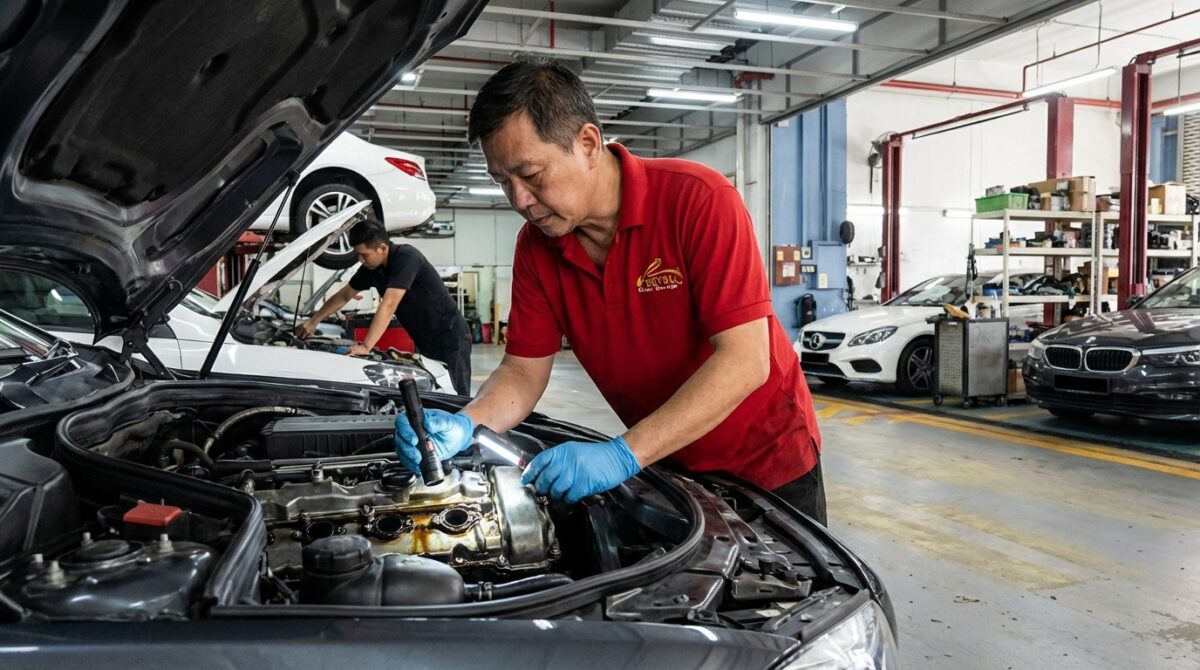
Oil leak repair usually includes three steps: locating the leak, confirming the source, and replacing the failed seal or gasket. Many leaks travel along surfaces, so the visible drip is not always the true starting point. A careful inspection is needed to avoid replacing the wrong part.
- Inspection: Checking the engine for wet areas, oil tracks, and leaks around joints and bolts.
- Cleaning and re-checking: Removing built-up grime so the leak path is easier to see.
- Repair: Replacing gaskets or seals, or reapplying the correct sealant where needed.
- Verification: Confirming the leak is gone after reassembly and a short test run.
In Singapore, stop-start traffic and high heat can speed up gasket ageing. Regular servicing helps because fresh oil and correct oil levels reduce stress on seals.
Common signs of an oil leak
Some oil leaks are obvious, while others start slowly and only show up after weeks or months. Watch for these common signs.
- Oil spots on the ground after parking
- Burning smell, especially after driving
- Smoke from the engine bay if oil reaches a hot surface
- Low oil level between service intervals
- Wet or shiny areas around engine covers and joints
- Oil on the undertray or splash guard
If the oil warning light appears, do not assume it is just a small leak. The engine may already be low on oil.
Valve cover oil leak repair
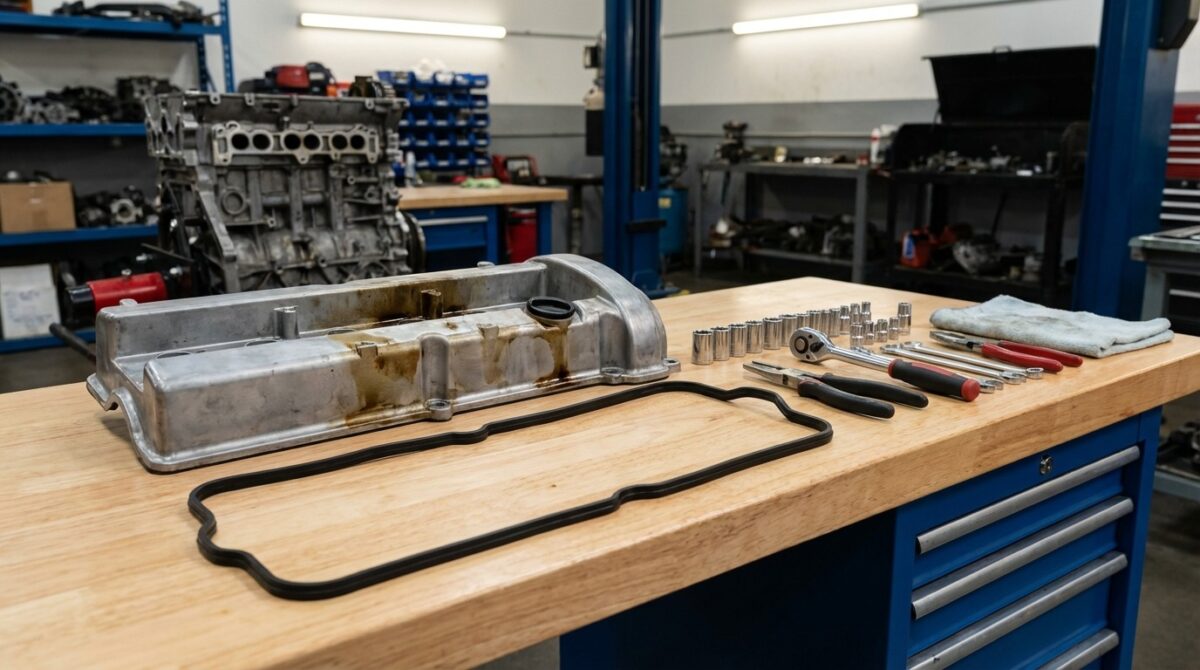
The valve cover sits on top of the engine and helps keep oil around the valve train. A valve cover leak usually happens when the gasket hardens and no longer seals well. Because it is located higher up, leaked oil can run down the engine and make the leak look worse than it is.
Typical causes of valve cover leaks
- Old or brittle valve cover gasket
- Loose or unevenly tightened bolts
- Cracked valve cover (less common)
- Blocked crankcase ventilation system increasing pressure
What the repair often includes
- Removing the valve cover
- Cleaning mating surfaces carefully
- Replacing the gasket and any grommets if used
- Applying sealant only where the manufacturer requires it
- Reinstalling with correct tightening pattern and torque
Valve cover repairs are usually straightforward, but accuracy matters. Over-tightening bolts can deform the cover or squeeze the gasket unevenly, which may cause leaks to return.
Timing cover oil leak repair
The timing cover protects the timing chain or belt area and seals engine oil at the front of the engine. Timing cover leaks can be trickier because the cover may connect to multiple sealing surfaces. Oil can also leak from the front crankshaft seal, which sits near the timing cover area.
Typical causes of timing cover leaks
- Aged cover gasket or sealant failure
- Warped cover or damaged mating surface
- Leaking front crankshaft seal
- Past repair work with incorrect sealant use
What the repair often includes
- Accessing the front of the engine, which may involve removing belts and pulleys
- Removing the timing cover and cleaning surfaces thoroughly
- Replacing gasket or applying the correct sealant type and bead size
- Replacing the crankshaft seal if it is the true source
- Reassembly and leak verification
Because the timing cover area is involved with critical engine components, careful alignment and correct torque are essential. A rushed repair can lead to persistent seepage or new issues.
Oil sump oil leak repair
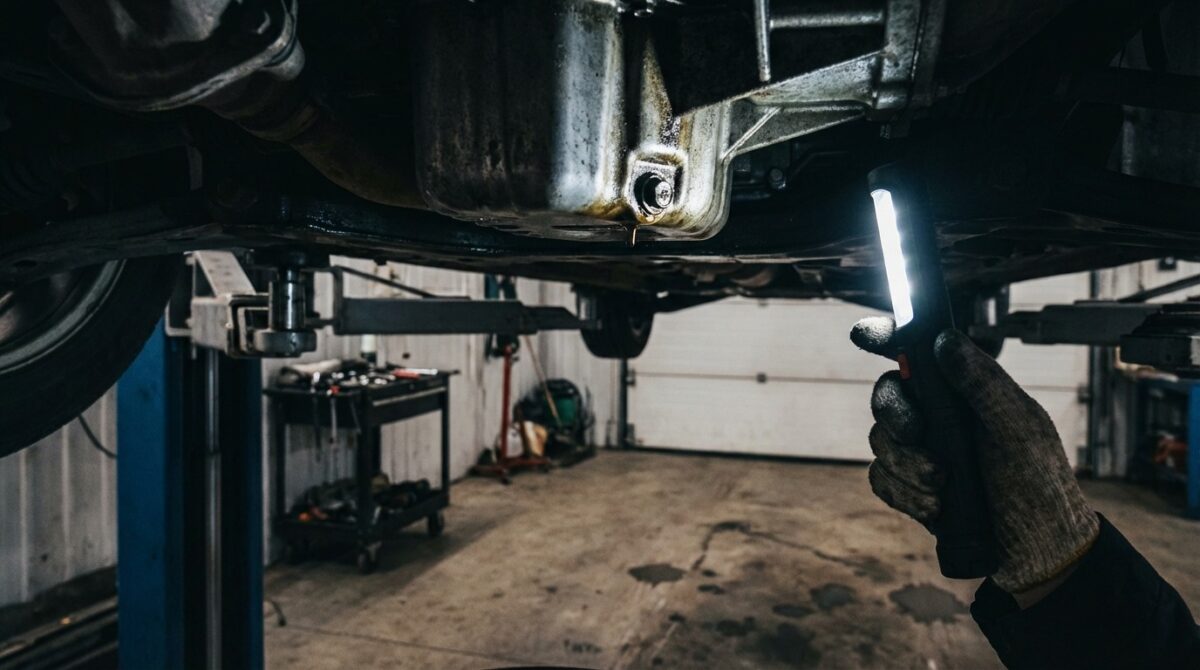
The oil sump (also called the oil pan) sits at the bottom of the engine and stores engine oil. Oil sump leaks are common because the sump is exposed to road conditions and can be affected by impacts, worn seals, or old sealant. Leaks here may show as oil pooling on the undertray or dripping near the front or middle of the car.
Typical causes of oil sump leaks
- Worn sump gasket or sealant breakdown
- Loose sump bolts
- Damaged sump from road impact
- Old drain plug washer or damaged drain plug threads
What the repair often includes
- Draining the engine oil safely
- Removing the sump and cleaning the sealing surfaces
- Replacing the gasket or applying the correct sealant
- Checking the sump for bends or cracks
- Replacing the drain plug washer if needed
- Refilling oil to the correct level and confirming there is no leak
Some cars have a sump design that requires extra parts to be removed for access. A proper repair also checks that the oil pickup area stays clean and free from debris.
Why oil leaks happen in these areas
Valve covers, timing covers, and oil sumps all face heat cycles and vibration. Gaskets and sealants are designed to flex slightly, but they do not last forever. Once the material hardens or cracks, oil can seep through. Oil can also escape when engine pressure rises due to a blocked ventilation system.
- Heat causes gasket materials to harden over time
- Vibration can loosen bolts or stress sealing edges
- Old oil and sludge can affect seals and ventilation
- Incorrect past repairs can leave gaps or uneven sealing
What to expect during an inspection
A good inspection focuses on finding the real source. Oil can spread across engine surfaces, and airflow while driving can move it away from the original leak point. Inspections often include checking from the top of the engine downwards and looking for the highest wet area first.
- Engine top area around the valve cover and nearby hoses
- Front engine area around the timing cover and crank seal region
- Bottom area around the oil sump, drain plug, and undertray
- Signs of oil mixed with dust, which shows a slow leak over time
Can you keep driving with an oil leak?
It depends on the leak size and location, but it is risky to ignore it. A small seep may stay stable for a while, but leaks can worsen suddenly. If oil reaches the exhaust or hot parts, you may smell burning or see smoke. If the oil level drops, the engine can be damaged.
- Check the oil level regularly if you suspect a leak
- Watch for warning lights and unusual smells
- Avoid long trips if you see active dripping
Prevention tips
Not all oil leaks can be prevented, but good maintenance reduces the chance of early gasket failure.
- Follow the recommended service interval and oil grade
- Fix small leaks early before they spread
- Keep the engine area clean enough to spot changes
- Address ventilation issues that can raise crankcase pressure
FAQ
How do I know if the leak is from the valve cover, timing cover, or oil sump?
A valve cover leak often starts at the top of the engine and runs downward. A timing cover leak usually appears at the front of the engine. An oil sump leak is usually seen at the lowest point and may drip onto the undertray. A proper inspection is the best way to confirm the exact source.
Is oil on the ground always an engine oil leak?
Not always. Cars can leak other fluids, such as coolant or power steering fluid. Engine oil is usually brown to black and feels slippery. If you are unsure, an inspection can identify the fluid type and source.
Can an oil leak cause a burning smell?
Yes. If oil drips onto hot engine parts or the exhaust area, it can burn and create a strong smell. In some cases, it may also produce light smoke from the engine bay.
Will tightening bolts stop an oil leak?
Sometimes loose bolts can cause seepage, but over-tightening can damage parts and make leaks worse. Many leaks are caused by hardened gaskets or failed sealant, which usually need replacement rather than extra tightening.
What happens if I ignore a small oil leak?
A small leak can grow over time and may lead to low oil levels, faster engine wear, and mess around rubber parts. It can also make it harder to spot new issues because the engine becomes coated in oil and dirt.

