
You’re cruising down the PIE at 80km/h when a stray pebble kicked up by a heavy vehicle strikes your bonnet with a sharp, sickening metallic crack. For most Singaporean car owners, that sound signals an inevitable $450 respray or a permanent scar on an otherwise perfect finish. We know how frustrating it is to battle stone chips, acidic bird droppings in multi-story car parks, and those stubborn swirl marks that appear after just one poor grooming session. You deserve a vehicle that maintains its showroom-new glow without the constant stress of daily road hazards.
As Singapore’s leading paint protection specialists with over 5,000 5-star reviews, we’ve seen how the right technology transforms the ownership experience. This guide explores how self healing paint protection film uses advanced thermal properties to literally erase surface scratches, ensuring your car stays pristine for 5 years or longer. You’ll discover the specific protection levels that suit our tropical humidity and learn how this single investment significantly boosts your vehicle’s future resale value. We’ve distilled our decades of expertise into this comprehensive 2026 buying guide to help you make the best choice for your ride.
Key Takeaways
- Understand the advanced TPU technology that enables your car’s surface to automatically repair minor scratches and maintain a pristine, showroom-shine appearance.
- Learn how the intense Singapore afternoon sun acts as a natural thermal catalyst to trigger the healing process and keep your vehicle’s exterior flawless.
- Compare the physical impact resistance of heavy-duty shields against chemical coatings to determine the most cost-effective long-term protection for your driving habits.
- Identify the five critical industry standards for selecting a high-quality self healing paint protection film that ensures maximum durability and crystal-clear paint clarity.
- Discover the importance of meticulous surface preparation and expert application techniques required to achieve an unparalleled and seamless protective finish.
What is Self Healing Paint Protection Film (PPF)?
Self healing paint protection film represents the pinnacle of automotive surface care in 2026. It’s a high-tech Thermoplastic Polyurethane (TPU) layer designed to guard your vehicle’s factory finish against the elements. Unlike older, rigid products, this modern Paint Protection Film (PPF) features advanced elastomeric polymers. These specialized molecules possess a chemical memory that allows them to return to their original, flat state when they’re exposed to heat from the sun or warm water. This means light swirl marks and surface defects literally disappear within minutes, keeping the car in showroom condition.
In the current market, static films are considered obsolete. Traditional films offered basic impact protection but became dull over time as they accumulated micro-scratches from washing and daily use. Modern self healing paint protection film variants maintain a permanent high-gloss shine by actively repairing themselves. This technology has become the gold standard for Singaporean luxury vehicle owners who demand a pristine appearance without the need for constant polishing or paint correction.
The Anatomy of a Self-Healing Layer
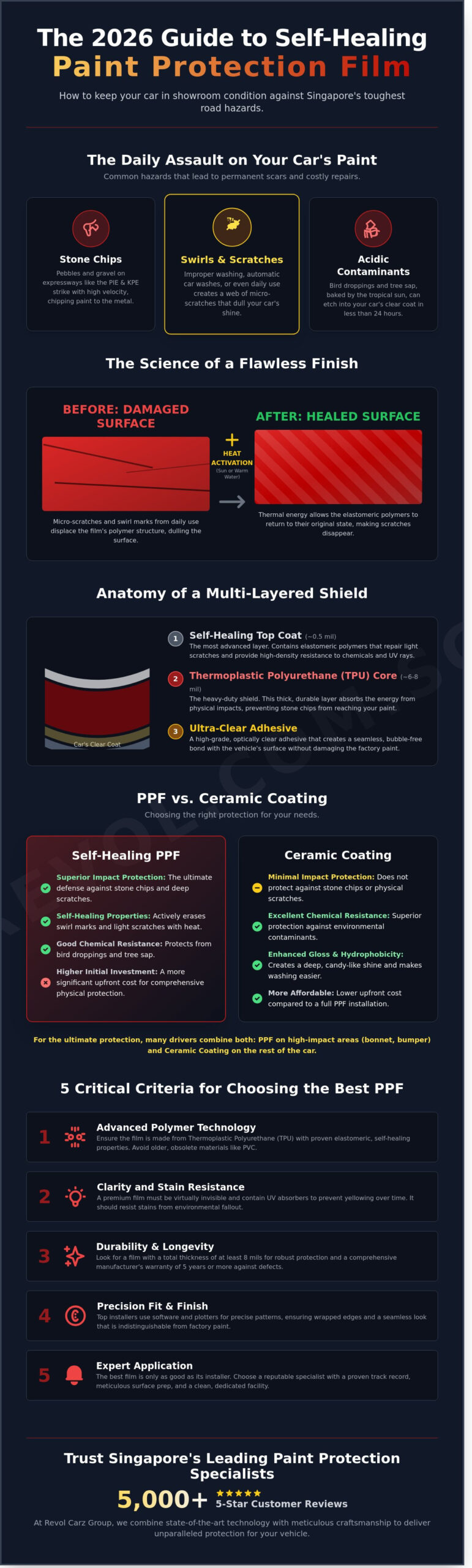
A premium film consists of three distinct, specialized components. First, the 0.5 mil top coat provides the critical healing properties and high-density chemical resistance. Second, the core TPU body acts as a heavy-duty, impact-absorbing shield that prevents stone chips from reaching the paint. Finally, a high-grade adhesive layer ensures a permanent, bubble-free bond to the vehicle’s clear coat. This multi-layered approach provides a level of physical durability that liquid coatings simply can’t match.
Why Singapore Drivers are Switching to PPF
Singapore’s driving environment presents unique challenges that require specialized solutions. On expressways like the KPE and PIE, loose gravel from heavy vehicles frequently causes deep stone chips. In our “City in a Garden,” acidic tree sap and bird droppings can etch into paint within 24 hours under the intense tropical sun. Additionally, the notoriously tight car parks in older shopping malls often lead to frustrating door dings. Installing self healing paint protection film provides a resilient barrier that preserves your car’s resale value. It’s a reliable, hassle-free investment for any driver who values meticulous automotive care.
The Science of Healing: How Heat Activation Works
The magic behind self healing paint protection film isn’t actually magic; it’s advanced polymer chemistry. At the molecular level, these films feature a specialized top coat made of elastomeric polymers. When surface scratches or swirl marks occur, they don’t actually “break” the material. Instead, they displace the polymer chains. This technology, often categorized as Intrinsically Self-Healing Polymers, allows the film to retain a “memory” of its original, flat state. When thermal energy is applied, these chains gain the mobility needed to flow back into their initial configuration, effectively erasing the damage.
- Natural healing: In Singapore, the consistent afternoon sun provides enough ambient heat to trigger the repair of light swirls automatically.
- Forced healing: For deeper marks, applying water heated to approximately 60°C or using a professional heat gun accelerates the molecular realignment.
- The limits of healing: While the film is resilient, it isn’t invincible. Self-healing typically occurs within the top 0.5 mil layer. If a scratch penetrates through the clear coat and into the base urethane layer, the physical structure is severed and cannot be repaired by heat alone.
The Role of Tropical UV and Temperature
Singapore’s climate is often seen as a challenge for car care, but for PPF, the 32°C average daily temperature is a distinct advantage. This constant warmth keeps the film in a perpetual state of readiness to heal. Modern films utilize advanced UV absorbers to ensure that 99% of harmful radiation is blocked, preventing the yellowing and oxidation common in 2015-era products. In the context of polymer flexibility, Glass Transition Temperature is the specific temperature range where the material transitions from a hard, glassy state to a pliable, rubbery state, enabling the molecules to move and fill in surface defects.
Maintenance that Enhances Healing
Even the most advanced film requires care to maintain its performance through 2026 and beyond. Regular professional car grooming is essential to remove industrial fallout and bonded contaminants that can clog the pores of the film. When washing your vehicle, use a pH-neutral shampoo to preserve the top coat’s chemical integrity. Avoid high-pressure jets closer than 12 inches from the edges to prevent lifting. Keeping the surface clean ensures that the “memory” of the polymers remains unobstructed by dirt, allowing for a pristine, showroom-shine finish every day. If you’re unsure about the current condition of your protection, our team can provide a comprehensive surface assessment to ensure your investment remains effective.
Self-Healing PPF vs. Ceramic Coating: Which Should You Choose?
Choosing between a self-healing paint protection film and a ceramic coating depends on your specific driving habits and protection goals. While both technologies aim to preserve your car’s exterior, they function in fundamentally different ways. PPF is a physical, 150 to 200-micron thick thermoplastic urethane barrier designed to absorb kinetic energy from road debris. In contrast, ceramic coating is a nanoscopic liquid polymer that bonds chemically with your clear coat to enhance gloss and repel liquids.
The effectiveness of self healing paint protection film lies in its molecular structure. To understand the technology, one must look at the science of self-healing polymers, which describes how these materials use hydrogen bonding or thermal triggers to repair surface defects. This physical thickness allows PPF to stop stone chips that would easily pierce a ceramic layer.
From a cost-benefit perspective, the initial investment for PPF is higher, but the lifespan is significantly longer. Premium films often carry a 10-year warranty against yellowing or cracking. High-end ceramic coatings typically offer 3 to 5 years of durability. For the “Ultimate Shield” experience, our specialists often apply a hybrid strategy: installing PPF on high-impact zones like the bonnet and fenders, then layering the entire car with a ceramic coating for uniform slickness.
When to Prioritize Ceramic Coating
Ceramic coating is the ideal choice for weekend cars that spend most of their time in sheltered garages. If your primary goal is achieving a permanent “showroom shine” and extreme hydrophobicity, ZeTough 9H is the superior option. It provides a glass-like finish that makes maintenance effortless. Dirt and bird droppings slide off with a simple rinse, ensuring your vehicle remains in pristine condition without the higher price tag of full-body film.
When PPF is Non-Negotiable
For daily drivers frequently navigating the AYE or CTE, self healing paint protection film is a necessity. The high volume of heavy vehicles on these expressways means stone chips are a matter of “when,” not “if.” PPF is also mandatory for owners of matte or “frozen” paint finishes. Since you cannot polish matte paint to remove scratches without creating shiny spots, the film acts as the only viable defense. Protecting your vehicle this way can preserve up to 20% more of its resale value by keeping the original factory paint untouched by the elements.
Buying Guide: 5 Criteria for Choosing the Best PPF in Singapore
Selecting the right self healing paint protection film is a significant investment for any vehicle owner. You must look beyond the brand name and focus on technical performance and installation precision. High-quality film should maintain a crystal-clear finish. Many budget options suffer from “orange peel” texture, which creates a distorted reflection and dulls your car’s original paint. A premium film remains virtually invisible, preserving that deep, showroom-shine condition.
Film thickness is a non-negotiable factor for Singapore roads. We recommend an 8 mil thickness as the industry sweet spot. This provides enough mass to absorb the impact of gravel and road debris on the PIE or KPE, yet it remains flexible enough for a seamless application. Anything thinner risks being pierced by sharp stones, while thicker films can be difficult to bond to complex curves.
- Clarity: Ensure the film has zero distortion and enhances the paint’s natural gloss.
- Thickness: Stick to the 8 mil standard for optimal impact resistance.
- Edge Wrapping: Opt for custom wraps instead of pre-cut kits to avoid visible seams.
- Warranty: Look for coverage against yellowing, bubbling, and cracking.
- Installer Skill: A high-end film will fail if the surface preparation is rushed.
Evaluating the Installer’s Portfolio
The workshop’s reputation is your best guarantee of quality. You should prioritize unprecedented 12-year award winners like Revol Carz, as this longevity proves consistent excellence. Verify their experience with your specific vehicle type. Whether you are looking for a BMW workshop or a Mercedes workshop specialist, check their gallery for “tucked edges.” This meticulous technique hides the film’s boundaries behind body panels, providing a finish that looks like factory paint.
Technical Specs to Demand
Always ask for the data sheet before committing. A top-tier self healing paint protection film should have a clear self-healing threshold temperature, meaning it reacts quickly to sunlight or warm water. Ask about the hydrophobic contact angle; a rating above 100 degrees ensures superior water beading and easier cleaning. Finally, ensure the adhesive is strictly non-yellowing and residue-free. This ensures your car’s value is protected when it’s time to remove or replace the film after 7 to 10 years of use.
Protect your investment with Singapore’s most trusted automotive specialists. Book your professional PPF consultation at Revol Carz today.
Revol Carz: Meticulous Application for Unparalleled Protection
Established in 2003, Revol Carz brings over 20 years of heritage to Singapore’s automotive scene. We’ve earned the SGCarMart’s Star Merchant Award for an unprecedented 12 years running. This track record isn’t just about longevity; it’s about a relentless commitment to excellence. We don’t just slap on a film. Our team understands that even the best self healing paint protection film fails if the foundation isn’t perfect. We perform deep surface decontamination and paint correction to ensure every panel is flawless before installation begins. This meticulous preparation is why we’ve secured 5000+ 5-star reviews from satisfied car owners who trust us with their prized assets.
For the ultimate shield, we often integrate our PPF with our award-winning ZeTough Ceramic Coating. This combination provides total coverage, enhancing the film’s hydrophobic properties while adding an extra layer of ultra-hard protection to uncovered areas. It’s a comprehensive approach that ensures your car remains in pristine condition despite the harsh tropical weather and road debris found in Singapore.
Our Specialized Application Process
Installation happens in a state-of-the-art, dust-free environment. This controlled atmosphere prevents airborne contaminants from being trapped under the film, which is a common cause of bubbling in lower-quality shops. Our in-house specialists are trained to handle complex panel contouring, ensuring the self healing paint protection film wraps seamlessly around every curve of your vehicle. We use precision techniques to eliminate unsightly gaps or lifting. Every car undergoes a final inspection protocol that meets our strict “showroom-shine” standards before we hand back the keys.
Book Your Consultation Today
Your car’s protection shouldn’t be a one-size-fits-all solution. Visit our Ang Mo Kio or Toh Guan locations for a professional paint assessment. We design customized protection packages tailored specifically to your driving habits and vehicle needs. Whether you drive a daily commuter or a high-performance supercar, we have the expertise to preserve its value. Our consultants will walk you through the technical benefits of each package, ensuring you get exactly what your car needs. Book an appointment today to secure your car’s future and enjoy peace of mind on the road.
Warm regards,
The Revol Carz Team
Drive With Confidence and Unmatched Paint Clarity
Investing in self healing paint protection film isn’t just a luxury; it’s a vital shield against Singapore’s road debris and intense UV rays. You now understand how heat-activated polymers erase swirl marks automatically and why professional application beats standard coatings every time. Since 2003, our in-house specialists have focused on the fine details that other workshops miss. We’ve secured SGCarMart’s Star Merchant Award for 12 consecutive years, making us the most decorated name in local automotive care. Our track record includes over 5,000 verified 5-star reviews from satisfied car owners who value precision and reliability. We treat every vehicle with a level of care that ensures a seamless fit, preserving your paint’s depth and clarity for the long haul. Your car deserves the highest standard of protection available in 2026. We’re here to help you maintain that flawless showroom glow every single day.
Secure Your Showroom Shine—Book a Professional Paint Protection Consultation with Revol Carz Today!
Warm regards, Gavin Tan, Randy Phuang, Alan Wong, and Marcus Koh.
Frequently Asked Questions
Does self-healing PPF really fix deep scratches?
Self-healing PPF doesn’t fix deep scratches that penetrate the 0.5 mil top coat or reach the base paint. It’s designed to repair light swirl marks, surface abrasions, and wash-induced marring through heat activation. If a sharp object cuts through the elastomeric polymers, the material can’t reform. For deep gouges, our Revol Carz specialists recommend replacing the individual film panel to maintain the vehicle’s pristine appearance.
How long does the self-healing property actually last?
The self-healing property typically stays active for 5 to 10 years depending on the specific film grade and environmental exposure. High-quality self healing paint protection film like our ZeTough series uses advanced molecular memory to shed surface defects through thousands of heat cycles. Over time, heavy chemical contamination can slow the reaction. Regular maintenance ensures the film continues to perform at its peak throughout the warranted period.
Can I wash my car normally after installing self-healing film?
You can wash your car normally after a 48 hour curing period following the professional installation. It’s important to keep high-pressure washer nozzles at least 30 centimeters away from the film edges to prevent lifting. We recommend using a pH-neutral shampoo and a clean microfiber mitt. Our team has documented over 5,000 5-Star ★ Customer Reviews from owners who find PPF maintenance much easier than caring for bare paint.
Will the film turn yellow under the intense Singapore sun?
Modern aliphatic polyurethane films won’t turn yellow even when exposed to Singapore’s UV index, which frequently hits level 12. Older PVC-based films from a decade ago were prone to discoloration, but our state-of-the-art TPU films are chemically stable. They’re engineered to withstand 365 days of tropical sun without losing clarity. We provide a comprehensive warranty against yellowing to ensure your car maintains its showroom-shine condition for years.
Is it better to get PPF or Ceramic Coating for a new car?
PPF is the superior choice for physical protection against stone chips and door dings that a coating cannot stop. While ceramic coatings offer 9H hardness and hydrophobic properties, they lack the thickness to absorb high-speed impacts. For the best results, many clients apply a ceramic coating over their self healing paint protection film. This combination provides both impact resistance and an unparalleled, easy-to-clean gloss.
What happens if the PPF gets damaged beyond its healing ability?
You simply replace the film on the affected panel instead of repainting the entire car. This preserves your factory paint and protects the vehicle’s resale value, which often drops by 15 percent if panels require a respray. Because PPF is modular, our technicians can meticulously remove the damaged sheet and install a new one in about 3 hours. It’s a hassle-free solution compared to traditional body shop repairs.
How much does a full car self-healing PPF wrap cost in Singapore?
A professional full-car installation in Singapore typically ranges from $3,500 to $7,500 depending on the vehicle size and film thickness. This investment covers the specialized labor required for a seamless, edge-tucked finish. As SGCarMart’s Star Merchant Award winner for an unprecedented 12 years running, we ensure every cent goes toward precision fitment. Prices include a full decontamination and multi-stage paint correction to ensure the surface is perfect.
Does PPF affect the paint color or gloss of the car?
High-quality film actually enhances the depth of your car’s paint and can increase gloss levels by up to 20 percent. The optically clear adhesive ensures there’s no orange peel effect or visual distortion. If you prefer a different look, we also offer “stealth” films that transform glossy paint into a distinguished satin finish. Most observers won’t notice the film is there; they’ll only see a vehicle in pristine condition.

