
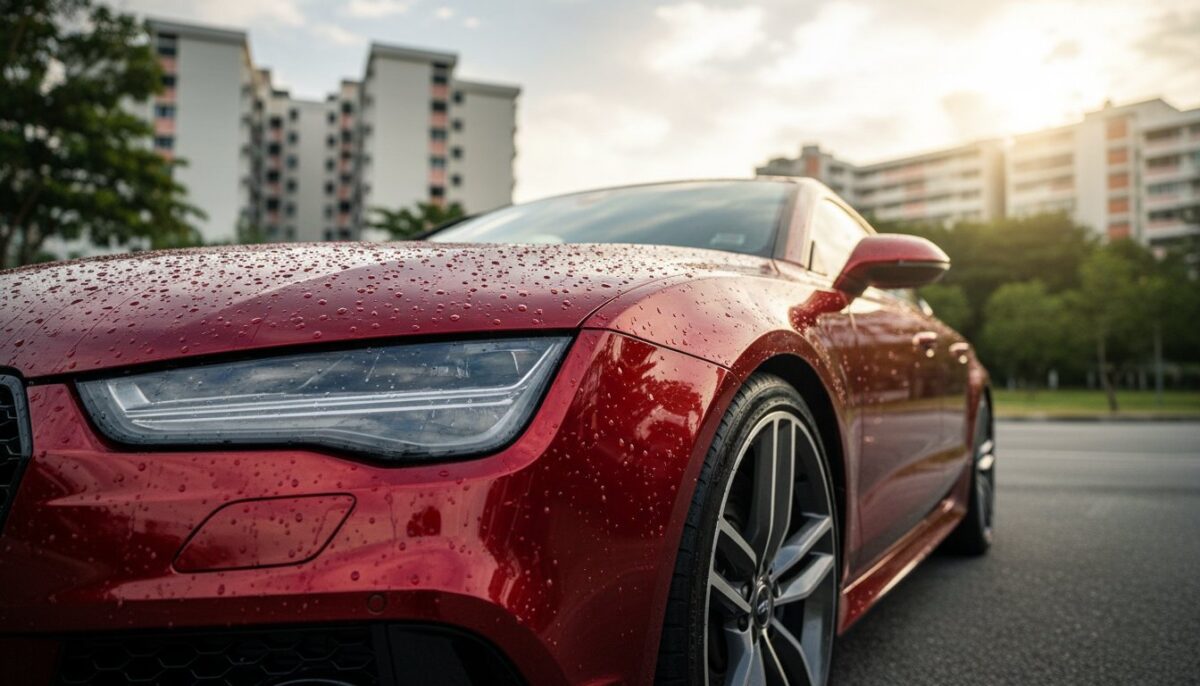
Is your premium car wax actually melting off your bonnet during a typical Singapore afternoon? While many enthusiasts swear by the classic glow of Carnauba, our local humidity and intense UV radiation are incredibly harsh on traditional products. When you evaluate car paint sealant vs wax, you’ll quickly realize that what works in cooler climates often fails under our tropical sun. We understand the frustration of seeing a fresh shine vanish after just one heavy downpour or finding permanent etchings from bird droppings despite your meticulous maintenance routine.
You deserve a protection strategy that matches the investment you’ve made in your vehicle. This guide explains the technical differences between waxes and synthetic sealants so you can choose the right level of preservation for your car. We’ll explore how different barriers stand up to water spotting and paint fading; helping you achieve a long-lasting shine that simplifies your cleaning routine. You’ll gain the expert insight needed to maximize your car’s resale value while learning why advanced solutions like our ZeTough Ceramic Paint Protection have become the professional standard for automotive excellence in Singapore.
Key Takeaways
- Learn the fundamental composition differences between car paint sealant vs wax, contrasting organic Carnauba resins with advanced synthetic polymers.
- Compare the aesthetic outcomes of each protection type to choose between a classic deep glow and a modern, high-gloss mirror finish.
- Understand why Singapore’s extreme heat and UV intensity necessitate a shift from short-term organic protection to durable synthetic barriers.
- Discover how the evolution into professional ZeTough 9H Ceramic Coating provides the ultimate multi-year defense for your vehicle’s paintwork.
Understanding the Basics: Car Paint Sealant vs Wax
Selecting the right defense for your car’s exterior is the first step toward maintaining its long-term value. Deciding between car paint sealant vs wax involves looking at two different philosophies of protection. Both products function as sacrificial layers. These barriers are designed to absorb the impact of environmental contaminants, preventing them from etching into the delicate clear coat of your vehicle. While they share the same goal of preservation, the fundamental chemical structures of these products dictate how they perform under pressure.
Think of these layers as a transparent shield. Without them, your paint is vulnerable to the oxidizing effects of the sun and the corrosive nature of tropical rain. They take the brunt of the damage so your paint doesn’t have to. While both provide a noticeable shine, the way they interact with your car’s surface is what sets them apart. One relies on natural resins, while the other utilizes advanced polymer technology to create a semi-permanent bond.
What is Traditional Car Wax?
Car wax is a natural product, typically derived from the leaves of the Carnauba palm tree found in Brazil. It has been the gold standard for enthusiasts for decades because of the “warm” and deep glow it imparts to the bodywork. Because it’s an organic resin, it doesn’t actually bond with the paintwork; it simply sits on top of the surface. This characteristic leads to a specific limitation in tropical regions. Natural waxes have relatively low melting points. The protection can literally degrade when the car’s surface temperature rises under the midday sun. You’ll find wax in several formats:
- Paste Waxes: The traditional form, offering high concentrations of Carnauba for maximum visual depth.
- Liquid Waxes: Easier to apply and often more durable than pastes due to the inclusion of synthetic boosters.
- Spray Waxes: Perfect for quick maintenance and boosting existing protection during regular car grooming.
What is a Synthetic Paint Sealant?
A Car Paint Sealant represents a significant leap in automotive chemistry. These are lab-engineered liquids containing synthetic polymers designed to cross-link upon application. This chemical reaction allows the sealant to form a much tighter, more resilient bond with the paint surface compared to wax. While wax provides a rich, oily look, sealants produce a sharp, “glass-like” or reflective mirror finish. The primary appeal of a sealant isn’t just the aesthetic; it’s the engineered resistance to heat, detergents, and industrial fallout. This durability is the defining factor in the car paint sealant vs wax debate for many daily drivers who need a level of protection that natural products simply cannot match.
The Core Differences: Composition, Aesthetics, and Application
Choosing between car paint sealant vs wax isn’t just a matter of price; it’s a choice between two entirely different chemical approaches. Traditional waxes rely on organic oils and resins, primarily Carnauba, to create a physical barrier on your clear coat. In contrast, paint sealants are products of advanced laboratory engineering. These synthetic liquids utilize man-made polymers that are designed to cross-link and bond with your vehicle’s surface at a molecular level. While wax provides a thick, sacrificial layer that is easy to apply and remove, the synthetic nature of sealants offers a much thinner, more resilient film that resists environmental degradation far better than any natural alternative.
Understanding how UV radiation and environmental fallout damage car paint is essential for choosing the right barrier. Organic waxes begin to break down the moment they’re exposed to high heat and intense sunlight. Synthetic sealants are specifically formulated to withstand these stressors. If you’re unsure which product suits your current paint condition, our professional car grooming specialists can provide a detailed assessment of your vehicle’s needs.
Visual Performance and Depth
Aesthetics often dictate the final choice for many car owners. Classic car collectors and show car enthusiasts typically prefer high-grade Carnauba wax because it produces a “wet look” with incredible depth and warmth. It fills minor imperfections and makes dark colours look rich and oily. Modern paint sealants provide a different visual result. They deliver a “reflective mirror” finish that is incredibly sharp and clinical. This high-gloss clarity is particularly effective at making the metallic flakes in modern Singaporean car colours pop with brilliance. To the touch, sealants often feel significantly slicker, which helps prevent dirt from clinging to the bodywork during your daily commute.
Application and Curing Requirements
The application process for these products varies significantly in terms of effort and time. Both require a perfectly clean surface, meaning paint decontamination through claying is non-negotiable. Wax is generally more forgiving; you apply it, wait a few minutes for it to haze, and buff it off. It’s a satisfying DIY task that yields immediate results. Sealants require much more patience. Because they rely on a chemical bond, they often need a curing window of several hours where the car must remain dry and out of the sun. Applying these products in direct Singaporean sunlight is a common mistake that leads to streaking and uneven protection. If the sealant doesn’t have time to bond properly, its durability is compromised before you even leave the driveway.
Wax vs Sealant: Comparison of Durability and Protection
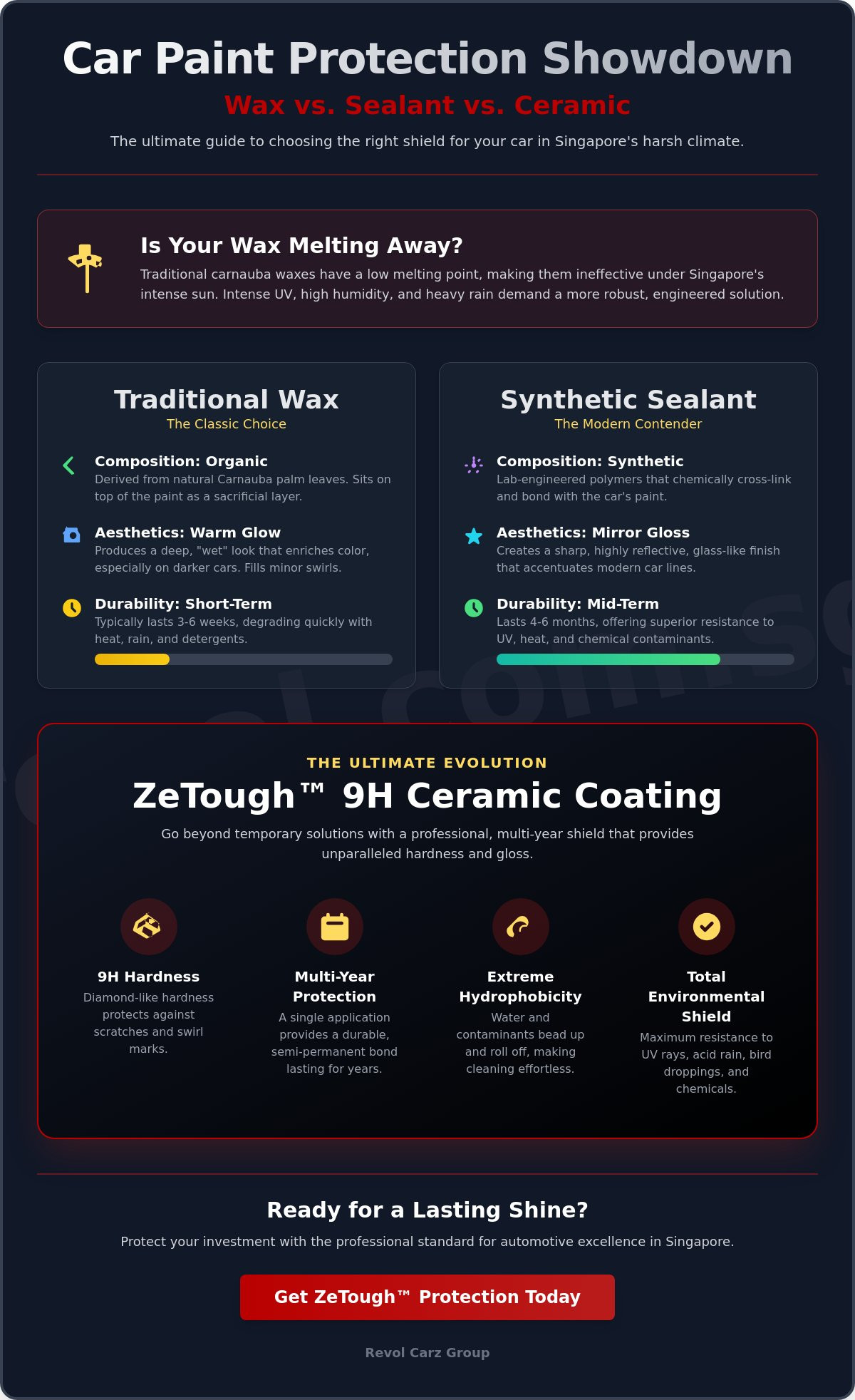
When evaluating car paint sealant vs wax, the most significant differentiator for any vehicle owner is the sheer lifespan of the protection. A high-quality Carnauba wax typically offers a defensive window of 1 to 2 months before the organic oils begin to dissipate. Synthetic paint sealants are engineered for much higher endurance. They generally provide robust coverage for 4 to 6 months. This performance gap is magnified in our local environment. Frequent washing and exposure to harsh detergents can strip away a layer of wax in just a few weeks. Sealants possess a higher resistance to the aggressive surfactants used in many commercial car wash soaps, making them a more reliable choice for daily drivers.
Durability isn’t just about how long the product stays on the car; it’s about how well it performs until the next application. You can easily identify when your protection has failed by observing how water behaves on the surface. Fresh protection creates tight, uniform water beads that roll off effortlessly. Once these beads begin to flatten and “sheet,” your paint is once again exposed to the elements. Over a 12-month period, choosing a sealant reduces your maintenance frequency by half, making it a more cost-effective solution for those who prioritize long-term preservation over a weekend hobby.
Longevity and Reapplication Cycles
Maintaining a consistent barrier is vital for preventing clear coat failure. Because wax has a shorter lifecycle, it requires at least six reapplications per year to remain effective. Sealants only require two to three applications annually to maintain a similar level of defense. This reduced cycle is particularly beneficial for busy professionals who cannot dedicate time every month to a full detailing routine. Before applying any fresh protection, a Professional Car Grooming session ensures the surface is free of bonded contaminants that would otherwise prevent the sealant from bonding correctly to the paint.
Resistance to Environmental Stressors
The chemical composition of your chosen protection determines how it reacts to specific tropical threats. Bird lime is exceptionally acidic and can etch into your paintwork in a matter of hours under the sun. Synthetic sealants provide superior chemical resistance against these biological acids compared to organic waxes. Heat resistance is another critical factor. On a typical 33°C afternoon in Singapore, surface temperatures on a dark-coloured car can exceed 60°C. Since Carnauba wax has a relatively low melting point, it can soften and “melt” away, whereas synthetic polymers remain stable and intact. This heat stability ensures your vehicle remains protected even during the hottest months of the year.
The Singapore Factor: Why Climate Dictates Your Choice
Many local drivers share a common frustration: “I spent hours applying a premium wax, and the protection seemed to vanish after just two weeks.” In the context of car paint sealant vs wax, this isn’t usually a fault of the product itself, but rather a mismatch between organic chemistry and Singapore’s extreme environment. Our equatorial position means we face some of the highest UV indexes in the world, often reaching levels of 10 or higher. While natural waxes are prized for their glow, they are fundamentally biological materials. They simply cannot withstand the relentless solar bombardment that characterizes a typical day in areas like Toh Guan or Ang Mo Kio.
High humidity also plays a significant role in how these products perform. While wax is relatively easy to apply, certain synthetic sealants can struggle to cure correctly if the moisture levels in the air are too high. This is why professional application in a controlled environment is often necessary to ensure the polymers bond effectively. Without a proper cure, even the most expensive sealant won’t reach its full defensive potential, leaving your clear coat vulnerable to the minerals found in our frequent tropical downpours.
UV Degradation and Heat Soak
Dark-coloured cars in Singapore are particularly susceptible to “heat soak.” On a clear afternoon, the surface temperature of a black or dark blue vehicle can easily exceed 60°C. This intense heat causes natural Carnauba wax to soften and lose its structural integrity, effectively “melting” off the paintwork. Synthetic polymers in sealants are engineered for much higher thermal stability. They remain bonded to the surface even during peak sun exposure, preventing the “chalky” oxidation look that eventually leads to permanent paint failure. If your vehicle has already suffered from significant sun damage or clear coat peeling, you might require professional Car Spray Painting to restore the factory finish before applying new protection.
The Monsoon Challenge: Hydrophobicity Matters
During the monsoon season, the ability of your car to shed water rapidly is your best defense against water spotting. When rain sits on a hot bonnet, it evaporates quickly, leaving behind concentrated mineral deposits that can etch into the clear coat. Sealants typically offer superior “sheeting” action compared to the “beading” action of wax. This self-cleaning property means that as you drive through a heavy downpour, the moving water actually helps carry away surface contaminants like bird lime and industrial fallout. This reduces the risk of etching and makes your weekly maintenance significantly easier. Secure your vehicle’s future by making a professional detailing booking to assess your paint’s current health.
Beyond Wax and Sealant: The ZeTough 9H Ceramic Coating Evolution
While the choice between car paint sealant vs wax helps many owners improve their maintenance routine, both solutions eventually reach a performance ceiling. Traditional methods provide a temporary sacrificial layer that requires frequent attention to remain effective. For drivers who prioritize absolute preservation, the evolution into permanent ceramic protection is the only logical conclusion. While a synthetic sealant may struggle to survive beyond six months in our humidity, a professional application of ZeTough Ceramic Coating offers a multi-year defense that fundamentally changes how you maintain your vehicle.
The core of this technology lies in the “9H Hardness” rating. This refers to the highest level on the pencil hardness scale, creating a rigid, glass-like shield over your clear coat. This added layer of protection is significantly more resistant to the fine scratches and swirl marks that often plague cars in Singapore. By upgrading from temporary barriers to a permanent bond, you effectively lock in your car’s factory finish. This investment pays for itself through reduced grooming costs and a significantly higher resale value when it’s time to upgrade your vehicle.
Why ZeTough 9H Beats Traditional Methods
Traditional waxes and sealants sit on top of the paint and eventually wash away. ZeTough 9H utilizes a sophisticated bonding technology that integrates with the paint molecules. This creates a surface with superior chemical resistance against industrial fallout and the high acidity of bird lime. When comparing the long-term outcomes of car paint sealant vs wax, the chemical stability of ceramic is unmatched. Unlike organic resins that soften in the sun, this ceramic barrier remains stable under extreme heat. Research indicates that a single-layer professional application can last between three to five years, while multi-layer packages can extend protection for seven years or more.
The Revol Difference: Award-Winning Excellence
Protection is only as good as the preparation behind it. At Revol Carz Group, we bring a 12-year track record as paint protection specialists to every project. We don’t just apply a product; we perform a meticulous multi-stage polishing process to remove existing imperfections before the coating is sealed. This ensures the 9H barrier bonds to a flawless surface for maximum durability and shine. We invite you to view our Customer Reviews to see why thousands of Singaporean car owners trust us with their most valuable assets. Our commitment to technical excellence ensures your vehicle remains in the safest and most capable hands.
Elevate Your Vehicle’s Defense Strategy
Deciding on the right protection level is essential for navigating the specific environmental challenges of our region. As we’ve discussed, the comparison of car paint sealant vs wax reveals that while traditional products have their place, they often struggle against the relentless heat soak and UV intensity found in Singapore. Upgrading to a permanent 9H ceramic solution ensures your vehicle maintains its showroom brilliance without the need for monthly reapplications. Your car deserves nothing less than maximum preservation.
At Revol Carz Group, we take pride in delivering technical excellence and meticulous care for every asset entrusted to us. As a 12-Year Consecutive Award Winner with over 5,000 5-Star Reviews, we have established ourselves as the premier specialist in BMW, Mercedes, and Audi paint care. Our team is dedicated to preserving your vehicle’s aesthetic perfection and resale value through unparalleled expertise. Experience the Ultimate Paint Protection—Book Your ZeTough 9H Appointment Today! We look forward to providing the professional assurance and reliable results your car deserves.
Frequently Asked Questions
Can I apply car paint sealant over wax?
You should never apply a car paint sealant over a layer of wax. Sealants require a clean, bare surface to cross-link and bond with the paintwork effectively. If you apply it over wax, the sealant will simply slide off during your next wash because it cannot reach the clear coat. Always ensure the surface is stripped of all organic residues before starting your sealant application to ensure a proper bond.
How long does car wax actually last in Singapore’s heat?
Traditional car wax typically lasts between four to eight weeks in Singapore’s tropical climate. However, daily drivers often see this protection degrade in as little as 14 days due to surface temperatures exceeding 60°C. The intense UV radiation and frequent tropical downpours accelerate the breakdown of organic Carnauba resins. This necessitates a very frequent reapplication cycle if you want to maintain any level of defense against the elements.
Is a sealant better than wax for a white car?
Synthetic sealants are generally superior for white vehicles because they provide a crisp, glass-like finish that emphasizes the brightness of the paint. While wax adds a warm, slightly yellow tint that can dull the look of a white car, sealants offer clinical clarity. This helps prevent the “chalky” oxidation look that often affects lighter colours exposed to relentless equatorial sunlight. The reflective mirror finish of a sealant makes white paint look significantly sharper.
Do I still need to wash my car if I have a sealant or coating?
You definitely still need to wash your car regularly even with a high-quality sealant or ceramic coating. While these products provide incredible hydrophobic properties that make cleaning much easier, they don’t make the car self-cleaning in a literal sense. Environmental fallout, brake dust, and road grime still accumulate on the surface. You should safely remove these contaminants every one to two weeks to prevent mineral buildup and maintain the coating’s performance.
What is the best way to remove old wax before applying a sealant?
The most effective way to remove old wax is to use a dedicated strip wash or a high-pH automotive shampoo. This chemical process breaks down the organic oils without damaging the clear coat. For a truly professional result, we recommend following this with a clay bar treatment and a light machine polish. This ensures the paint is perfectly smooth and ready for the synthetic polymers to bond at a molecular level.
Is it worth paying for a professional 9H ceramic coating instead of DIY waxing?
Investing in a professional ZeTough 9H Ceramic Coating is highly recommended for those seeking long-term value and maximum protection. When you compare car paint sealant vs wax for DIY use, you’re still looking at frequent maintenance every few months. A professional 9H coating provides a permanent bond that lasts for years. This significantly reduces your grooming frequency and provides much higher resistance to bird dropping etchings and fine scratches.
Can I use both wax and sealant together?
You can use both together, provided you apply the sealant first as your foundational layer. This technique, often called stacking, allows the sealant to bond to the paint for durability while the wax on top provides extra aesthetic warmth. However, in our local climate, the top layer of wax will still melt away quickly. Many owners find that a high-quality synthetic sealant alone is more practical for daily driving in Singapore.

