
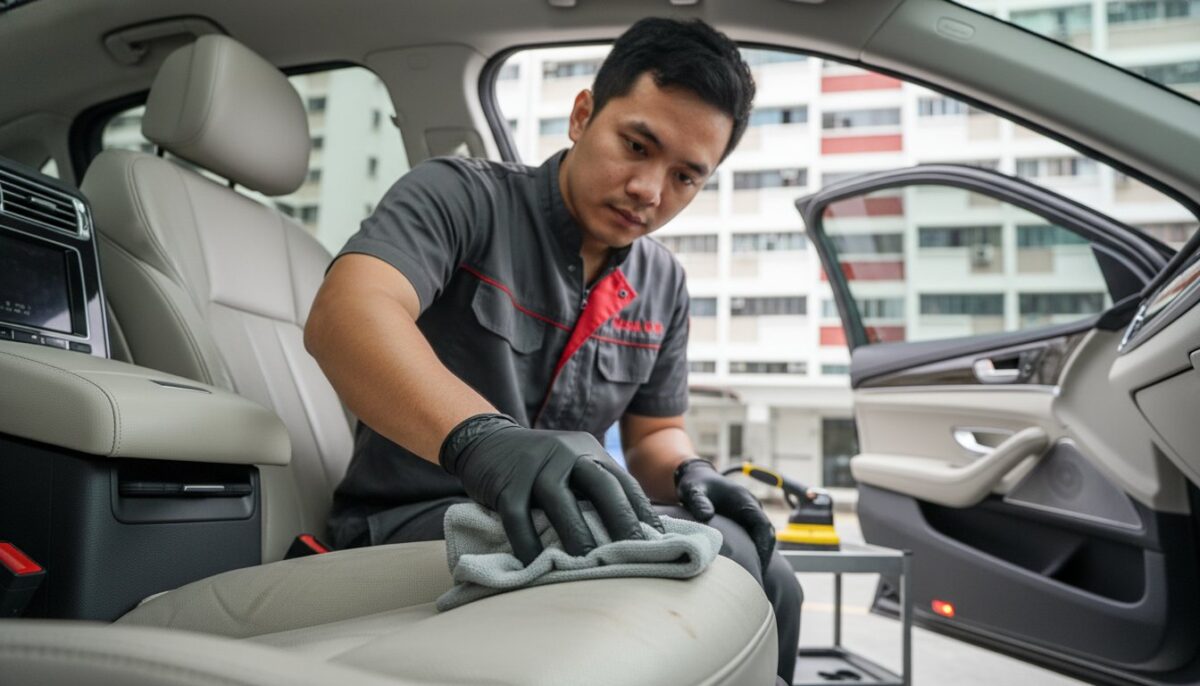
Did you know that Singapore’s 84% average humidity can slash your vehicle’s resale value by as much as 15% in just three years? In our sweltering climate, a simple coffee spill or sweat mark isn’t just an eyesore; it is a breeding ground for bacteria and persistent odours. We understand the anxiety that comes with a fresh mark on your seats, especially when you are caught between the fear of permanent discolouration and the high cost of a full interior replacement if a DIY attempt fails.
This guide will help you master the art to remove stains from car upholstery while protecting your cabin from the unique challenges of the local environment. You will learn how to distinguish between fabric and leather care to ensure you achieve a professional, residue-free finish every time. We are going to walk through the exact steps to eliminate stubborn spots and preserve the aesthetic perfection of your car’s interior. By following these expert techniques, you can maintain a pristine cabin and safeguard your investment against the harsh tropical elements.
Key Takeaways
- Identify the critical differences between organic and inorganic stains to choose the most effective treatment for your specific interior materials.
- Learn safe, material-specific methods to remove stains from car upholstery without risking leather cracking or fabric discolouration.
- Avoid common DIY pitfalls like the “tide mark” phenomenon and chemical burns by selecting pH-neutral cleaners over harsh household detergents.
- Master a professional-grade recovery plan that uses strategic blotting and meticulous vacuuming to lift spills before they set into the fibers.
- Understand the benefits of professional car grooming and detailing for deep-extraction cleaning that protects your cabin from Singapore’s tropical elements.
Common Car Upholstery Stains and the Singapore Climate Factor
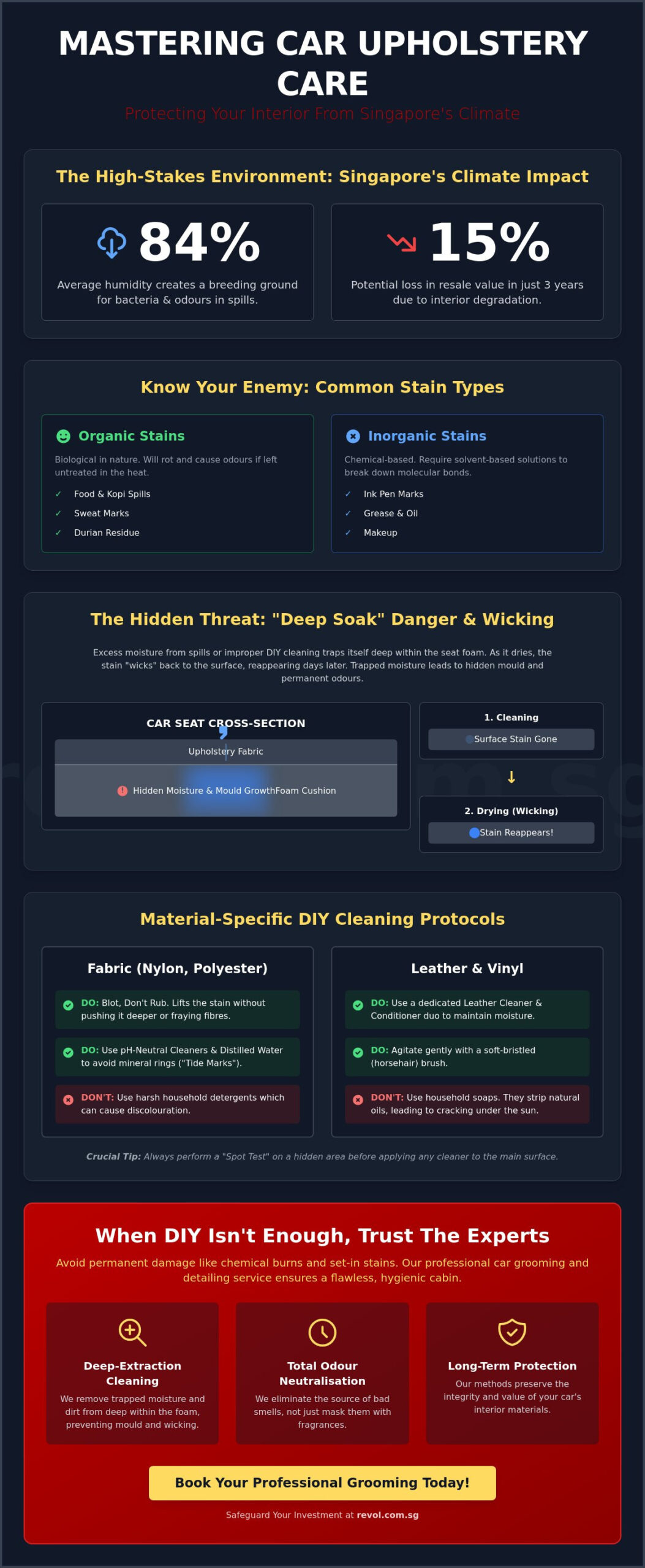
Understanding the chemistry of a spill is the first step toward maintaining a pristine interior. In Singapore, where humidity averages 84%, a simple coffee drip isn’t just a mark; it is a biological hazard. If you don’t act fast to remove stains from car upholstery, the tropical heat will lock those particles into the fibers forever. Moisture acts as a catalyst for bacterial growth, turning a minor accident into a permanent eyesore that compromises your cabin’s hygiene. A neglected spill quickly becomes a deep-seated problem that affects both the air quality and the structural integrity of your seats.
Organic stains include food, sweat, and the dreaded durian residue. These are biological in nature and will rot if left untreated in a closed vehicle. Inorganic stains like ink, grease, or makeup require different solvent-based approaches to break their molecular bonds. Local drivers frequently deal with Kopi-C spills and dampness from sudden monsoon rain. These liquids seep deep into the seat foam, creating a “Deep Soak” danger. Excess water during a DIY cleanup can trap moisture inside the cushion, leading to hidden mould that is nearly impossible to extract without professional intervention. You should always prioritize dry extraction before applying any liquid cleaners to prevent moisture from festering in the padding.
The Science of Upholstery Absorption
Nylon and polyester fabrics are common in modern cars, and they act like magnets for liquid particles. Through a process called “wicking”, a stain might look gone on the surface but travels back up from the padding as the seat dries. This is why many owners see spots reappear days after they think they have successfully managed to remove stains from car upholstery. The intense Singapore sun also acts as a kiln, baking the stain into the material and making it part of the fabric’s DNA. Comprehensive Auto detailing involves understanding these molecular bonds to ensure a truly deep clean that reaches beyond the surface fabric.
Singapore-Specific Stain Challenges
Living near the East Coast or Sentosa introduces salt-air residue into your cabin. This salt can react with existing stains, making them more abrasive to the touch and harder to lift. High UV exposure through your windows can chemically alter a stain on leather seats, leading to permanent discolouration or cracking of the hide. Masking these issues with generic fragrances only hides the underlying problem without solving the hygiene issue. At Revol Carz Group, our car grooming and detailing experts focus on total odour neutralisation rather than temporary cover-ups. We ensure your cabin remains a healthy, professional environment regardless of the external weather conditions.
Effective DIY Methods for Different Upholstery Materials
Before you apply any cleaning agent, you must follow the “Spot Test” rule. This involves applying your chosen cleaner to a hidden area, such as the underside of a headrest or a low corner of the seat base. Doing this ensures the chemical doesn’t cause discolouration or texture changes. Many drivers make the mistake of using abrasive “magic erasers” or harsh household detergents. These can strip the protective topcoat off your interior surfaces, leading to premature wear and expensive repairs. To safely clean different upholstery materials, you need a tailored approach that respects the specific chemistry of each surface.
The Fabric Cleaning Protocol
Fabric seats require a balance of moisture and agitation. When you try to remove stains from car upholstery made of nylon or polyester, always use distilled water rather than tap water. Singapore’s tap water is high quality, but it still contains minerals that can leave faint white rings once dry. Use a pH-neutral cleaner and apply it sparingly. The “Blot, Don’t Rub” technique is vital here. Rubbing a stain often frays the fibres and pushes the liquid deeper into the cushion. Instead, use a white microfibre cloth to lift the stain. If you have a wet-dry vacuum, use it to extract as much moisture as possible immediately after cleaning to prevent the wicking effect mentioned earlier.
Leather and Synthetic Vinyl Care
Leather is a natural material that requires a dedicated cleaner and conditioner duo. Avoid household soaps at all costs. These soaps are designed to strip grease from dishes and will quickly dry out leather, causing it to crack under the intense Singapore sun. For deep cleaning, a soft-bristled horsehair brush is the professional’s tool of choice. It gently agitates the pores of the leather to lift trapped oils and dirt without scratching the surface. If you are dealing with ink or dye transfer from new denim, act immediately with a specialized leather cleaner. If the stain persists or if you notice the leather feeling stiff, it’s a sign you may need professional car grooming and detailing to restore the material’s integrity.
Alcantara and Suede Maintenance
Alcantara and suede are delicate and easily ruined by excess liquid. These materials have a “nap”, which is the direction the tiny fibres lay. Use a dedicated suede brush to keep these fibres standing up and looking uniform. If a spill occurs, blot it with a dry cloth first. Never use circular motions, as this can permanently mat the fibres together. Maintaining these luxury materials requires a light touch and a commitment to regular, dry maintenance to prevent oils from your skin from flattening the texture over time.
When DIY Fails: The Risks of Improper Home Cleaning
The urge to immediately remove stains from car upholstery with kitchen supplies is strong, but the damage is often irreversible. High-pH detergents, found in many multi-purpose household cleaners, are too aggressive for automotive-grade materials. These chemicals don’t just lift dirt. They can dissolve the structural integrity of the fibres, leaving behind brittle or faded patches that no grooming can restore. Once the chemical bond of the fabric is broken, the texture will never feel the same again.
Another common failure is the “Tide Mark” phenomenon. When you wet a single spot without cleaning the entire panel, dissolved dirt travels to the edge of the damp area. As it dries, it leaves a dark ring of concentrated grime. This happens because home cleaning lacks the powerful extraction capabilities found in professional car grooming and detailing at Revol Carz Group. Instead of removing the soil, you’re simply redistributing it, which makes the original problem look significantly worse.
In our local climate, trapped moisture is a major risk. Residual liquid in the seat foam becomes a sanctuary for mould and foul-smelling bacteria. These lingering sour smells can permanently damage your car’s resale value. Aggressive scrubbing also creates “faded” spots that signal a lack of professional care to potential buyers. These marks are often more eyesore than the original stain and can lead to a lower valuation during a trade-in.
The Danger of Household Cleaners
Dish soap is designed to strip grease from hard surfaces, making it far too harsh for automotive leather. It removes essential oils, leading to rapid cracking under the sun. Bleach-based products are even more dangerous, especially on seatbelt webbing. These chemicals weaken the high-tensile fibres of the belt, creating a major safety hazard. While vinegar and baking soda are often suggested online, they can etch plastic trims or scratch clear-coated interior surfaces if they aren’t used correctly.
Identifying Permanent Damage
You must recognize when a stain has transitioned from a surface issue to permanent damage. If a spill has “dyed” the fibre, the pigment has chemically bonded with the material. At this point, trying to remove stains from car upholstery with home remedies will only fray the fabric. Cracked leather also indicates that simple cleaning is no longer the solution. For deep-seated protein spills like milk, professional extraction at Revol Carz Group is the only way to prevent a permanent, nauseating odour from taking hold of your cabin.
Step-by-Step Recovery Plan for Stubborn Car Stains
Recovering your cabin’s aesthetic perfection after a significant spill requires a disciplined, technical approach. In Singapore’s sweltering heat, speed is your greatest ally. A systematic method ensures you don’t push the contaminant further into the seat foam or damage the material’s protective topcoat. This recovery plan is designed to deliver a residue-free finish while safeguarding the structural integrity of your interior. Following these steps carefully will help you remove stains from car upholstery before they become a permanent part of your vehicle’s history.
- Step 1: Immediate Vacuuming. Remove all loose debris and dry particles first. If you skip this, you risk turning dry grit into abrasive mud once you apply liquid cleaners.
- Step 2: Strategic Blotting. Use a clean, white microfibre cloth to soak up excess liquid. Always work from the outside of the stain toward the centre to prevent the spill from spreading further.
- Step 3: Targeted Application. To effectively remove stains from car upholstery, apply a material-specific cleaner to your cloth rather than spraying it directly onto the seat. This prevents over-saturation of the cushion.
- Step 4: Controlled Agitation. Use a soft-bristled brush in small, circular motions. This lifts the stain from the fibres without causing fraying or “pilling” of the fabric surface.
- Step 5: Rapid Drying. Position a high-velocity fan or dehumidifier inside the car. In a climate where humidity hits 84%, you cannot rely on natural air drying to prevent mould growth.
Removing Oil and Grease Stains
Grease stains from fast food or mechanical work require a specialized chemical strategy. You can use cornstarch or talcum powder to “pull” oil out of the fabric through capillary action. Sprinkle the powder over the spot and let it sit for at least 30 minutes before vacuuming it away. For deep-seated grease, steam cleaning is a superior approach. The high temperature breaks down the molecular bonds of the oil, allowing it to be lifted easily without harsh scrubbing. Always finish with a mild degreaser to ensure no slippery residue remains on the surface.
Odour Elimination Strategies
Hanging a scent card is a temporary fix that only masks the problem. For true odour elimination, activated charcoal bags are excellent natural absorbers for the Singapore climate. They pull moisture and smells out of the air continuously. If a smell persists, it might be trapped in your AC vents or deep within the seat padding. An ozone treatment is the gold standard for killing bacteria at the source. If your cabin still has a lingering scent after a DIY attempt, it is time to book a professional car grooming and detailing session to ensure a deep, hygienic clean.
Professional Car Grooming: The Revol Carz Group Standard
While the recovery plan in the previous section is effective for immediate spills, achieving a factory-fresh finish requires the industrial precision of Revol Carz Group. Our 13 consecutive SGCarMart Star Merchant Awards and over 7,000 five-star reviews reflect a commitment to excellence that DIY methods simply cannot match. We meticulously address every crevice, ensuring that when we remove stains from car upholstery, we are also restoring the interior’s overall health and aesthetic perfection. Our seasoned specialists treat your vehicle with the meticulous attention to detail that has made us a market leader for over two decades.
Deep Extraction and Steam Sanitisation
Surface scrubbing is often a cosmetic fix that leaves the root of the problem untouched. At Revol Carz Group, our industrial-grade extractors reach two inches into the seat foam, pulling out the deep-seated contaminants that cause the “wicking” effect. We combine this with high-temperature steam sanitisation to eliminate hidden bacteria and dust mites that thrive in our tropical environment. This process doesn’t just clean; it restores the original supple texture of your upholstery and provides a level of hygiene that a standard car wash cannot provide.
Long-Term Protection Solutions
Prevention is the ultimate goal for any diligent driver. After our deep extraction process, we apply ZeTough Ceramic Coating to all interior fabric and leather surfaces. This proprietary treatment creates a hydrophobic shield that prevents liquids from bonding with the fibres. This barrier ensures that future spills bead up on the surface, allowing for an effortless wipe-down. Secure your vehicle’s resale value and experience the ultimate in cabin preservation by booking your Professional Car Grooming and Detailing session with Revol Carz Group today.
Secure Your Vehicle’s Future Aesthetic Perfection
Maintaining a pristine cabin in Singapore requires more than just luck. You now understand that material-specific chemistry and rapid moisture extraction are vital to prevent mould and permanent damage. While DIY methods can handle surface spills, they often fall short of the deep cleaning required to fully remove stains from car upholstery without leaving behind hidden residues. Your car is a significant investment. Its interior deserves the same level of technical care as its mechanical components.
As a 13-year consecutive award winner with over 7,000 five-star reviews, Revol Carz provides the expertise you can trust. Our specialised ZeTough 9H technology and industrial-grade extraction systems ensure every fibre is restored and protected. Don’t let a minor spill diminish your driving experience or your vehicle’s resale value. We are here to help you maintain that elusive showroom finish year after year.
Restore your car’s interior to showroom condition; Book a Revol Car Grooming session today!
Take the first step toward a healthier, more beautiful cabin. We look forward to giving your vehicle the meticulous attention it deserves.
Frequently Asked Questions
Can I use hairspray to remove ink stains from my car seats?
Hairspray is an outdated remedy that can cause more harm than good to your vehicle’s interior. Modern hairsprays often contain conditioners and oils that can leave a sticky residue or permanently discolour the material. To safely remove stains from car upholstery, you should use a professional-grade ink solvent. These specialized cleaners break down the ink’s molecular bonds without damaging the protective topcoat of your leather or fabric seats.
How do I get rid of the smell of vomit or spilled milk in my car?
Eliminating organic smells like milk or vomit requires removing the source from deep within the seat padding. Surface-level sprays only mask the odour temporarily while the bacteria continue to fester in the foam. Our industrial-grade extractors pull these liquids from two inches deep to ensure total sanitisation. This deep-cleaning approach is the only reliable way to stop the rotting process and restore a healthy, fresh environment inside your cabin.
Is it safe to steam clean leather car upholstery?
Steam cleaning leather is only safe when performed by experts using specialized low-moisture equipment. Excessive heat can cause natural leather to shrink, harden, or crack, leading to permanent structural damage. We recommend using pH-neutral leather cleaners and high-quality conditioners instead of high-temperature steam for home maintenance. Professional grooming ensures the leather remains supple and protected against the intense UV exposure common in Singapore’s tropical climate.
Why do stains keep reappearing on my car seats after I clean them?
Stains often reappear due to the “wicking” effect, where trapped dirt in the seat foam travels back to the surface during the drying process. If you only clean the top layer, the moisture acts as a bridge for deeper grime to rise. To remove stains from car upholstery permanently, you must use a powerful extraction method. This ensures that every particle of soil is physically lifted out of the material rather than just redistributed.
What is the best way to clean Alcantara steering wheels and seats?
Cleaning Alcantara requires a very light touch and a dedicated suede brush to maintain the material’s unique texture. You should avoid using excess water, as this can cause the fibres to mat together permanently. Use a slightly damp microfibre cloth for blotting and always brush the “nap” in a single direction. Regular dry maintenance is essential to prevent body oils from flattening the delicate surface of your steering wheel and seats.
Can I use a pressure washer on my car’s interior carpet?
You should never use a pressure washer on your car’s interior carpet. The high-pressure stream can force water into sensitive electrical components and under-floor insulation, leading to rust and electrical malfunctions. This excess moisture also creates a perfect environment for mould growth in our 84% humidity. A wet-dry vacuum or a dedicated carpet extractor is a much safer and more effective tool for deep-cleaning your vehicle’s flooring.
How long does a professional car grooming session take at Revol?
A comprehensive professional grooming session at Revol typically takes between three to six hours. This duration allows our specialists to meticulously clean every surface and ensure the interior is thoroughly dried using controlled methods. Speeding up this process can trap moisture inside the cabin, which is a significant risk in Singapore. We prioritize a thorough, detail-oriented approach to ensure your vehicle returns to you in pristine, showroom condition.
Will professional cleaning remove old, set-in blood stains?
Professional cleaning can often remove old blood stains using enzymatic cleaners and cold-water extraction techniques. It is vital to avoid using heat, as high temperatures will “set” the proteins in the blood and make the stain permanent. Our team uses specialized chemicals that break down organic matter without damaging the underlying fibres. While immediate treatment is always best, our industrial tools offer the highest chance of successful recovery for set-in marks.

